After Our Trip in July: I Wouldn’t Tell Everyone to Avoid Japan in Summer
Japan in July forced us to travel differently - and showed us why summer isn’t always a dealbreaker.
When I tell people that Japan summers are no joke, most are quite surprised.
“You mean it’s hotter than Florida?”
I get that all the time.
But if anyone’s been to Japan in the summer, they know it’s no joke.
We’re talking sweltering summer heat amplified by the “urban heat island effect” - and you start sweating from pores you didn’t know existed.
As I’ve written in my articles, I would warn first-timers to avoid the summer months like the plague. This was mainly because I didn’t want anyone’s first impression of Japan to be soured by the heat when there are roughly ten other months of the year that are more conducive to travel.
Our recent trip in July, though, helped me to realize that there is no definitive, one-size-fits-all answer to the question, should I avoid traveling to Japan in the summer?
The following are our travel observations and how this trip changed our view of Japan summer travel altogether.
The Heat Changed Our Definition of "Close"
Of the nine hotels we stayed in on this trip, almost every hotel was within a ten minute walk to a station.
Normally, during the pleasant weather months in spring or fall, a ten minute walk would be no sweat - in fact, that would be the fun part where you’d discover things organically.
After taking taxis for the first four days in Shinjuku, we were staying at the Edition Ginza, at the heart of it all, and figured, hey, why not walk a bit to see if we stumble across anything. We had lunch reservations at the Ginza Onodera Honten and the map showed a ten-minute walk.
That would turn into one of the hardest walks of our entire trip.
Every two minutes, we had to duck into a pharmacy or convenience store to get some shade and cold air. We sound like wimps. Maybe we are. But I kid you not, I didn’t know I could sweat so badly from simply standing that I could feel it rolling down my back.
What I’d forgotten about is that the summer heat in Japan sticks with you for a bit. It lingers. So if you walk in the heat for several minutes, you won’t necessarily cool down the moment you walk into an air-conditioned space - instead, you’ll just keep sweating. Ick.
After what felt like thirty minutes, we finally made it to the restaurant. As we waited, other couples and families showed up, and I could tell, it didn’t matter where you’re from, no one is used to this level of heat. We all stood, huddled under some shade as we waited for our lunch seating. Meanwhile I’m sweating like a pig and Cory’s face is cherry red.
We later saw reports about "hidden heatstroke" - the idea that dehydration and heat illness can develop without you immediately realizing how badly the heat is affecting you. That was enough to send our (Cory’s) paranoia into overdrive.
We quickly bought every electrolyte drink, supplement and "special" water we could find.
We ended up being perfectly fine, but even healthy people in their prime were getting heatstroke (on the news, so it must be true), so we were determined to never walk out in the sun around peak heat again.
The takeaway for us is that summer travel is still enjoyable, but you will have to adjust your outdoor explorations to the early morning or evening times to be comfortable.
You may also end up taking far more taxis than you usually do. Also, not all taxi stands have shade and can be quite busy, so downloading a taxi app may be wise if you don’t want to get cooked looking for one.
Also, if we travel in the summer again, we’ll pay more attention to the hotel location. Hotels like the JW Marriott Tokyo and Waldorf Astoria Osaka have an underground passage or covered passages connecting to malls and train stations - such hotels could make traveling around the hottest parts of the day much easier.
We Started Appreciating Hotels Differently
Spa area at the Park Hyatt Tokyo - incredibly worth your while
Speaking of hotels, summer reshaped how we appreciated certain hotel perks.
It was nice to wake up and have a nice breakfast without stepping outside. We’d go shopping or sightseeing for a few hours, come back during the hottest part of the day, use the pool/ spa/ lounge, and then go out again.
And maybe that’s part of why we struggled to love the Ginza Edition. It lacked many of the amenities we suddenly wanted to use while killing time during the hottest parts of the day.
The two hotels mentioned above that shined the most with proximity to train stations were also the hotels we only got to stay in for one night. Even so, we got a taste of how convenient each location would be, with its shaded passages and underground access.
On our next summer trip, we might opt to stay in similar hotels for longer. We especially enjoyed walking below-ground in Osaka, where hotels like the Waldorf Astoria, Osaka Station Hotel, and the Ritz Carlton have easy access to multiple malls and train stations.
The takeaway? Summer might actually reward a slower, base-style trip. Where you choose that base matters even more.
We Did Less "Traveling" Without Necessarily Doing Less
Still can’t believe this just opened a week before our visit!
This style of summer trip may work especially well if it isn’t your first time in Japan.
Cory recently started a new office job in Boston. Her new job would necessitate two days in the office, and her boss had told her that it’s business casual.
That was music to Cory’s ears, as that would justify all of her shopping in Japan - the land of business-casual clothes and shoes.
Of course, it didn’t take long for her to realize that business-casual is more of a preference rather than a hard rule - as her manager walked in with a T-shirt that read, attempted murder.
I digress.
We spent a lot of time at Shinjuku Station, shopping at the different flavors of Lumine Mall (I, II, and EST), even stumbling on a newly opened Onitsuka Tiger Flagship store.
While our shopping experience was largely successful (I bought a pair of amazing handmade Onitsukas even though I was being a hater not long before the purchase), we did miss walking outside.
Walking around and randomly discovering our next favorite thing has been something we’re both proud of - and we genuinely missed having more of those moments on this trip. The few times we did walk, we found crazy things that changed our trip - like new shoes, new matcha we didn’t know about, and boutique shops - so, imagine what else we could’ve found if we walked the entire trip!
If your trip is centered around shopping, food, museums, hotels, and indoor attractions, summer may not be nearly as bad as you imagine. If wandering neighborhoods on foot is one of the main reasons you love Japan, though, you may feel like something is missing.
What I learned is that flexibility matters. If you’re willing to take more taxis, walk less, and save outdoor exploring for cooler parts of the day, a carefully planned summer trip can still be immensely rewarding.
The Heat Was Awful. Surprisingly, Some Things Weren't
Some things are incredible in summer
In our last decade of travel, we’ve only been to Japan in the summer twice: once in August and this last time in mid to late July.
Our first trip was something of an anomaly. Unusual cloud cover affected parts of Japan that summer and even damaged some rice crops, but it also meant our experience wasn't nearly as intensely hot as this most recent visit.
Since it had been more than seven years since our last summer visit, we'd mostly forgotten about some of the good things that come with traveling during these months.
First and foremost, we were flabbergasted by restaurant wait times.
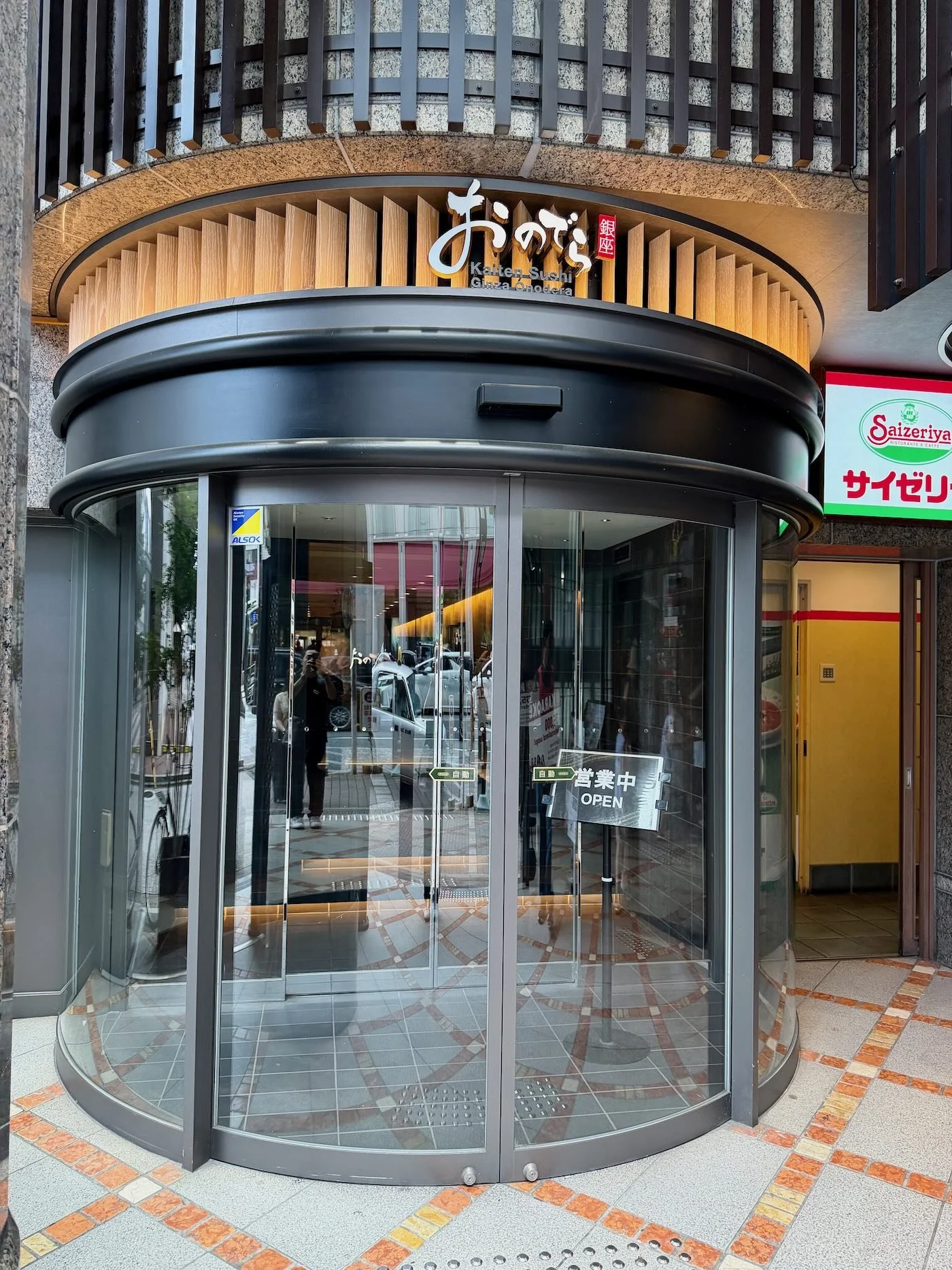
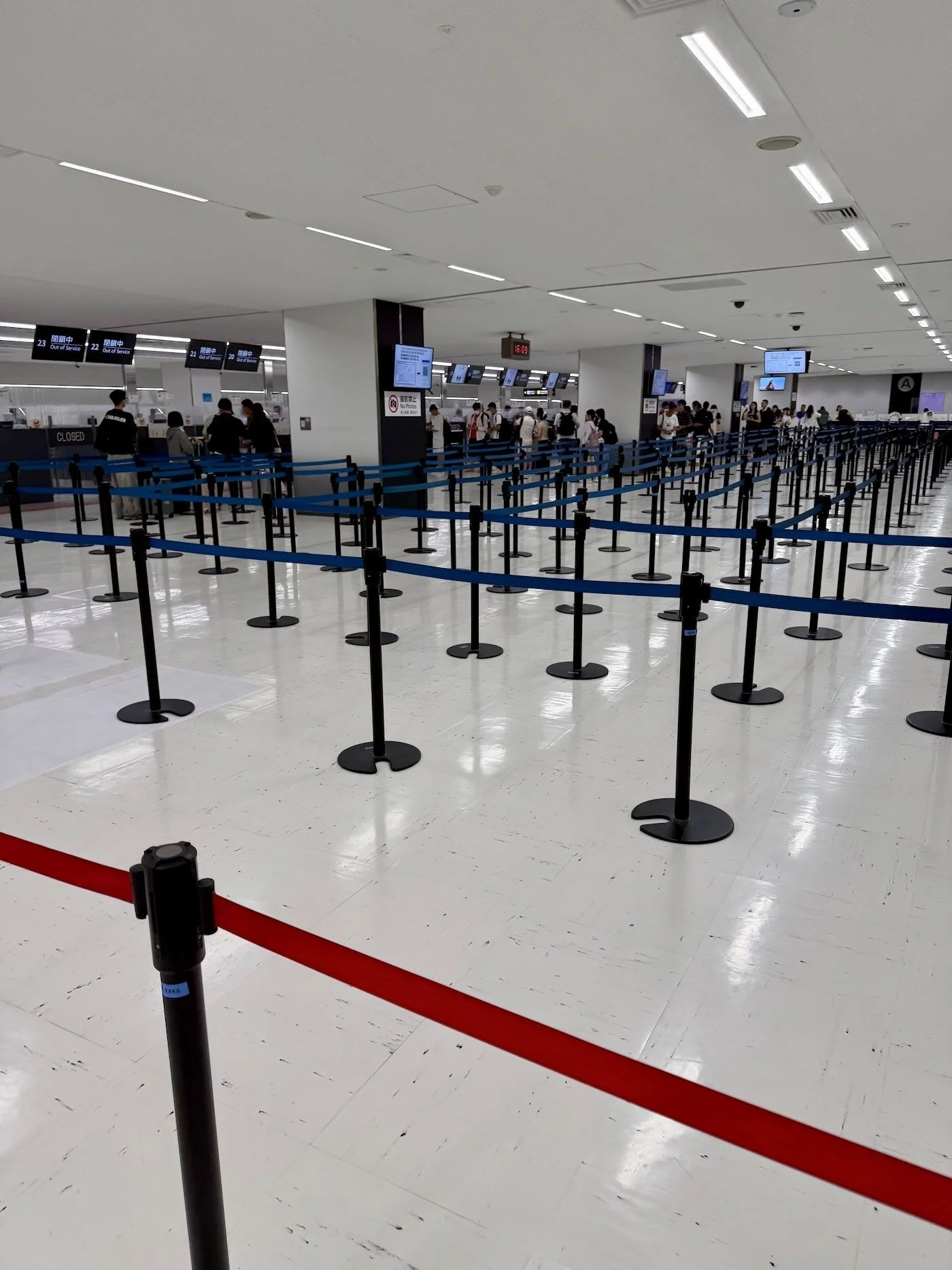
On our October 2025 trip, we took our friends to Kaiten Sushi Ginza Onodera Kyoto, one of our all-time favorites for both beginner and seasoned sushi lovers, and were turned away at 6:30 PM. Seating tickets had already been claimed through 9:30 PM.
Since they don't take online or phone reservations, you have to show up and get a ticket. But sold out for the entire evening by around 6 PM? Yes, we recommend it, but it isn't that cheap and it isn't necessarily the best sushi you'll find in Japan.
We did end up securing seats the next day for lunch, which turned out to be our friends’ favorite meal of the trip.
Remembering that experience, we weren’t taking our chances this time. We arrived at 5 PM, hoping to get tickets for a 6 or 6:30 PM seating.
To our biggest surprise, they seated us immediately!
I was so shocked that I immediately looked online for any horror stories or recent Onodera mishaps. Nothing. You can’t entirely blame us, we had just left the States when news of explosive diarrhea from raw lettuce leaves was everywhere.
After we settled in, we noticed something else unusual: there were plenty of Japanese families and couples eating there too. On our previous visits, the restaurant had been overwhelmingly filled with tourists.
Even stranger, when we left around 6 PM, there were still open seats. Not empty, but nowhere near full.
No line.
Just a few storefronts away was a viral gyoza shop our friends had wanted to try the previous October. Back then, the queue was enormous - around a 90-minute wait - and we skipped it. This time?
Open restaurant. People calmly eating dinner inside. No line in sight.
Again, we were in shock.
If you’re a foodie or have your eyes set on restaurants and cafes that don't accept reservations, summer may offer an unexpected advantage.
To us, this was a really eye-opening experience. Since I was still suspicious, I even verified it with the cashier at Onodera, who confirmed that during peak season they get absolutely mobbed, while the slower season usually calms down considerably.
And then there was the fruit.
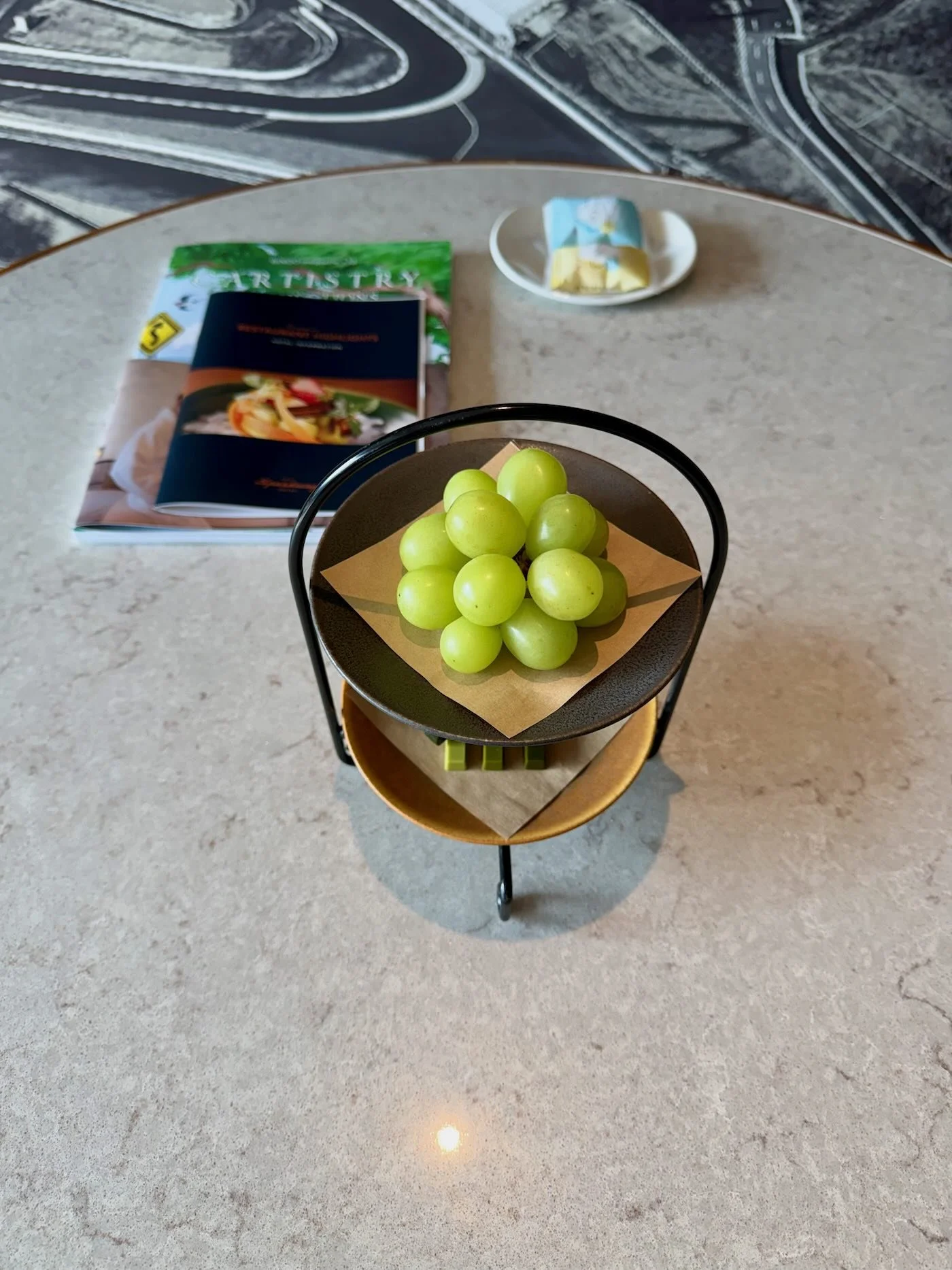
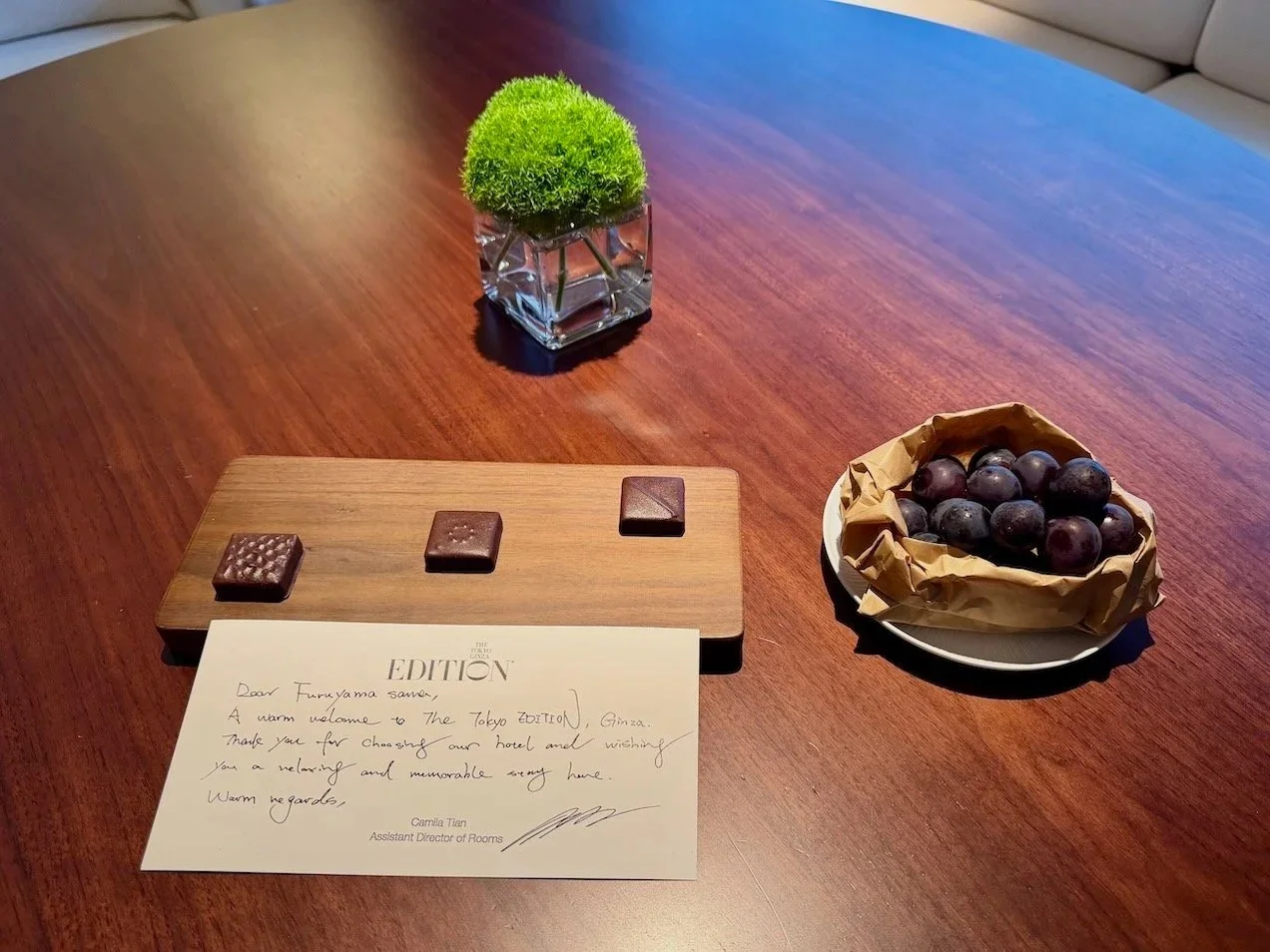
In every season, we look forward to seeing what's available locally. During our July trip, some of our favorite Japanese fruit was in season. Kyoho and Shine Muscat grapes aren't impossible to find back home anymore, but eating them in Japan - where entire produce sections are filled with enormous, camera-perfect bunches - is a different experience.
Also, at almost every hotel we stayed at, the welcome fruit was a generous bunch of grapes - a really nice seasonal touch. And these little discoveries add a lot of value to traveling in each season.
No, I'm not flying to Japan just for the grapes.
But when we're there, we're constantly reminded how much Japanese culture embraces the changing seasons - through food, clothing, traditions, and events like fireworks and summer festivals.
There's even the tradition of koromo-gae, the seasonal changing of wardrobes, when clothes from the previous season are put away and the new season's clothes come out.
Again, appreciation for the seasons is just part of the fun - and visitors get to immerse themselves in it, too.
So... Would We Go Back in the Summer?
I think so!
Cory, most surprisingly, said that this was one of her favorite “solo” trips together (without traveling with friends). She is not hard to please, but she is also more susceptible to the heat and to complicated travel logistics.
I definitely pushed the limits on this trip by cramming in 9 different luxury/boutique hotels in 13 days across 4 prefectures - coupled with heat stress and a few super rainy days.
So for her to say that she enjoyed this trip - I must have done something right.
And that is what it all comes down to: stick to your travel goals. Make sensible decisions that work with or around the summer heat. Respect the heat, and you should still have an absolute blast.
We certainly did, and we would do it again.
Is it our favorite season to travel to Japan?
No.
Would I recommend it to a first-timer?
Also, no.
But if you don’t mind a little sweat, enjoy less waiting, appreciate pleasant seasonal surprises, and like the idea of spending noticeably less on hotels - with points or cash - I would recommend giving it a try.
I still don't think summer is the best time to visit Japan. But after this trip, I'm much less convinced that there needs to be a best time at all.
Summer simply asks you to travel differently, and to enjoy the moments you can only find in summer.
