Four Luxury Hotels in Tokyo - What They Taught Me About Choosing the Right One
Kimpton Shinjuku, Park Hyatt Tokyo, EDITION Ginza, and JW Marriott Tokyo - four luxury hotels, four very different experiences, and four very different reasons to stay.
On our most recent trip in steamy July, we stayed at four very different luxury hotels in Tokyo that I’ve been itching to visit. We stayed first at the Kimpton Shinjuku, then the newly renovated Park Hyatt Tokyo, the iconic EDITION Ginza, and finally another highly anticipated luxury addition to Tokyo, JW Marriott Tokyo.
After staying at all four, I realized that choosing a Tokyo hotel isn't really about finding the "best" one. It's about figuring out what you want the hotel to do for your trip.
Kimpton Shinjuku
Of the four hotels we stayed at, the Kimpton surprised me with how well it worked as our first stop in Tokyo.
I had been curious about the hotel since it opened in 2020, but I never really thought of it as an "arrival hotel." After this trip, I do.
Location
The hotel isn't directly connected to Shinjuku Station, and getting there from Narita wasn't completely seamless. We took the Narita Express to Shinjuku and then a short taxi to the hotel. But once we arrived, the Kimpton was exactly the kind of place I wanted after a long travel day.
One Thing to Note About “Arrival Hotels”
Technically, the limo-bus service stops across the street at the Park Hyatt Tokyo - but it’s still a five minute taxi ride to get across the quirky road to the Kimpton. I could have stayed there first to avoid this slight inconvenience but I also didn’t want anything to mess up our arrival time (delay/ cancellation/ weather in Japan) and in the unlikely event that we miss a night or two, if it were the Park Hyatt I would be in tears.
I would also be really sad about missing the Kimpton stay, but you understand that a lot more is at stake with an ultra luxury hotel like Park Hyatt than a lifestyle boutique hotel like the Kimpton (they are also hundreds of dollars apart per night).
Our NY-Sized Room
True to its Manhattan meets Tokyo concept, our room was compact - surprisingly so, considering we had been upgraded to a room with a soaking tub - but it was beautifully appointed and felt luxurious despite its size. The hotel also immediately felt warm and approachable rather than overly formal, which I think comes partly from its playful, New York-inspired personality.
The Sugoi In-Room Dining
The most surprising thing for us was the quality of the in-room dining. It actually blew us away! We expected a decent, 7.5/10 meal - something fresh, prepared well, and tasty - the baseline for most Japanese boutique hotels.
What we got was a 9/10 meal. Cory’s vegetable pasta was cooked to perfection, my sea-bream dish was perfect, and the fruit bowl actually looked fresh - not like it had been sitting under plastic wrap in a refrigerator for 12 hours waiting for its calling. The plating certainly matched its quality.
Hospitality
The manager overseeing breakfast was a very cool Japanese-French man who effortlessly made us feel welcome. He remembered details from previous conversations, and we had a fun time chatting about life in Japan.
I noticed the other servers taking a genuine interest in their guests too, offering suggestions for places to visit and restaurants to try.
All of this made us feel much more at “home” almost like we were visiting New York - in Tokyo. It made for a very comfortable transition from the States to Japan.
The Takeaway
You don't necessarily need your "best" hotel at the beginning of a Japan trip - you want somewhere that's (relatively) easy to get to, comfortable and welcoming enough to help you recover from a long travel day, and has excellent food on-site when the last thing you want to do is venture back out.
Who I'd Recommend the Kimpton For
Good vibes from start to finish!
I'd recommend the Kimpton Shinjuku for travelers who want a comfortable, approachable luxury hotel for their first few nights in Tokyo - especially if you want to stay in Shinjuku without jumping straight into an ultra-luxury hotel.
The rooms may be compact, but the warm hospitality, excellent food, and relaxed atmosphere make it an easy place to settle into after a long flight.
I also think it's a great fit for couples who want something stylish and fun without the formality that can sometimes come with luxury hotels in Japan. And if Shinjuku is already where you want to be, the Kimpton gives you a comfortable home base while still feeling special enough to kick off a Japan trip.
Park Hyatt Tokyo
That smile above the entrance says it all
Speaking of formality - if the Kimpton shows up in designer sneakers and a perfectly fitted T-shirt, the Park Hyatt Tokyo arrives in a beautifully tailored suit - and looks completely at home in it.
I'll admit, I found the Park Hyatt slightly intimidating at first. Everything felt so polished and composed that I almost felt like I needed to be on my best behavior. That same level of polish carried through to the service, where even the smallest details seemed to be noticed and handled with care.
But then, a couple of staff members stumbled over their words while chatting with us - and oddly enough, that helped. It was a little reminder that underneath all that perfectly tailored luxury were actual people, and that formal luxury doesn't necessarily mean cold luxury.
(Private) Location
Despite being practically across the street from the Kimpton, the Park Hyatt somehow feels much more removed from the chaos of Shinjuku. It's not the kind of hotel where you simply step outside and immediately find yourself in the middle of everything - it seems very intentional and that's part of its appeal.
You're still in Shinjuku, with easy access to the station (they offer a free shuttle to the west side of the station) and the rest of Tokyo, but once you retreat back into the hotel, it feels like you've left much of the city behind.
Amenities Fit For a Staycation
View from the spa area
With panoramic views of the city from the 45th or 47th floor, the pool, gym and spa are all quite breathtaking.
For the exorbitant price the hotel commands per night, you’d expect the spa facilities to be free - but they are not. Since one of my biggest reasons for staying here was to get some sauna and cold plunge time, I paid 5,500 Yen to access the spa area.
Boy, was it worth it.
I rarely saw anyone else there, and it felt extremely well maintained and well designed. After starting my day and ending it with a decadent spa visit (they have drinks and snacks), I felt golden. In my opinion, it’s a must-try.
Not Just a Roomy Room
Loved our room. Photos will never do it justice
We upgraded our room to a deluxe, which added a couple more windows and gave the room more depth, with an extra sofa and larger seating area.
We found the room to be extremely comfortable, and appreciated the massive sink area and well-thought, practical design throughout.
We had stayed nearly a decade ago, when the hotel was showing its age. But since its renovation, many travelers seemed uninspired by its facelift - stating that they expected more. I agree that when I first saw photos, it seemed rather simple, even bland. But being there was a totally different story. We loved the subtle design features and upgrades throughout the room. They stayed true to the original design and palates, but it certainly feels more elevated than before.
It was precisely the kind of room that feels like a waste to leave - and that you're really happy to return to.
Our New Favorite Restaurant
After a more American introduction to our trip, we were both craving Japanese food. We had already enjoyed a Japanese breakfast at the Kimpton, so we decided to do lunch and dinner at the hotel’s Japanese restaurant, Kozue.
I don’t know why the Google reviews aren’t stronger for this restaurant, but the food was outstanding. I’ve been let down before at similar caliber Japanese restaurants, so my expectations were tempered. I figured the positive reviews were mostly from the views and the ambience.
Wrong.
The food was so incredible, Cory and I both agree that this is now a must-visit restaurant for future trips. We ordered a-la-carte for dinner, which blew us away, and the lunch course the following day also left a lasting impression. I can’t wait to share more on this, in a future article comparing the Park Hyatt in Tokyo and Kyoto.
The Takeaway
This isn't a hotel I'd book if I planned to leave first thing in the morning and come back exhausted at night. The hotel itself deserves some of your time.
Between the room, spa, views, restaurants, and the feeling of being tucked away from the rest of Shinjuku, staying here made us want to slow down and actually enjoy where we were. At these prices, I think that's important - you're paying for much more than a luxurious place to sleep.
If I'm staying at the Park Hyatt Tokyo again, I'm planning the trip around having enough time to enjoy it.
Who I'd Recommend the Park Hyatt For
I'd recommend the Park Hyatt Tokyo for travelers who want their hotel to be part of the experience - not simply somewhere luxurious to return to at the end of the day. If you appreciate polished service, beautiful rooms, exceptional wellness facilities, and the ability to retreat from Tokyo without actually leaving it, this is where the Park Hyatt really shines.
Just make sure you're willing to give it some of your Tokyo time. Otherwise, I think much of what you're paying for may turn into a missed opportunity.
EDITION Ginza
Photogenic.
It’s an interesting word to me. When Cory and I were still dating, a friend of mine said that Cory was very photogenic, which made me happy. But on the other hand, it also made me wonder - is Cory not as good looking in person? So we had somewhat of an awkward conversation where he had to confess that he thought Cory was pretty in either dimension.
Why are we even talking about this?
Because the EDITION Ginza is the definition of photogenic to me. Prior to the trip, out of the four Tokyo hotels, I was actually the most excited for the EDITION Ginza. The pictures, reviews, the very aesthetic of the hotel oozed with modern minimalist luxury and quiet flex.
And yet, to my greatest surprise, once we experienced it - it was the let down of the four - our least favorite hotel in Tokyo.
To put it simply, the hotel designer’s intention was to create a design that deliberately avoids grand, self-contained resort luxuries to act as a frictionless, hyper-local gateway that propels guests out into the city (paraphrased). Literally, the hotel TV proudly displays this hotel antithesis on its welcome screen, as ironic as that sounds.
I’d say he executed his intent perfectly. Maybe too perfectly.
It didn’t help that the cash rate for the Park Hyatt Tokyo and the EDITION Ginza were similar, and in terms of award prices, the Park Hyatt is much easier to afford than the EDITION.
Complicating things further, I had originally booked the EDITION Toranomon, which offered more of the amenities I was hoping to enjoy. I ultimately switched to Ginza because its reviews were significantly stronger. After staying there, though, I struggled to understand some of that enthusiasm given what the hotel costs and what we value in a luxury stay.
To be fair, I realize that my expectations for a $1,000-per-night hotel don't necessarily align with what the EDITION Ginza is trying to be - and that's okay. What disappointed us may be exactly what appeals to someone else. I just wish I had understood that distinction before we stayed.
All About the Location, Location
If there’s one world-class thing about this hotel - it’s the address.
The striking building is right in the middle of it all, in Ginza. Unlike the Park Hyatt, you can walk right out into the bustling, exciting buzz of Ginza. Heck, there’s a Starbucks Reserve store steps from the hotel.
But perhaps that’s also why some of the hotel designs let us down. We expected the outside to match the inside.
We were upgraded to a more spacious Premier Room, with a long sofa lining a massive window. But the massive window comes with a catch: shoppers in the buildings across the street can look directly into the room. The lady showing us the room even advised us to have the privacy screen curtain drawn at all times. So we sat in a dark room with no views. Again, encouraging us to go outside - I get it.
Stay on a higher floor? Nope. The Itoya store across the street is just as tall. Ugh
Food was the Saving Grace… or Sophie
We had free breakfast and a $100 credit, so we tried out Sophie at EDITION - an Italian restaurant that also serves as the breakfast venue.
Sophie did not disappoint. The Italian was quite good, and the drinks were great. The decor also infused more energy and character, which is largely lacking inside the hotel rooms.
Would I specifically go to Sophie just for a meal? Probably not. But it was a great option inside the hotel and something we’d be happy to spend the credit on again if we ever return.
Sadly, the world renowned Punch Room was closed for the two nights we were there. But if you love bars and cocktails, this would be a no-brainer destination.
Who I'd Recommend the EDITION Ginza For
Bar/ buffet area in Sophies
I'd recommend the EDITION Ginza for travelers who prioritize location above almost everything else and want their hotel to act as a stylish launching point into the neighborhood rather than a destination of its own.
If shopping, dining, cocktails, and exploring Ginza are the center of your plans, it's hard to argue with the address. And for someone who doesn't care about resort-style amenities or spending much time inside their hotel, some of the things that disappointed us may not matter at all.
Seasonality probably matters here, too. We visited in July, when the outdoor temperatures were brutally hot. We still ventured out, but I bet we would've enjoyed the EDITION's entire concept more during a season when we could comfortably wander Ginza throughout the day.
The Takeaway
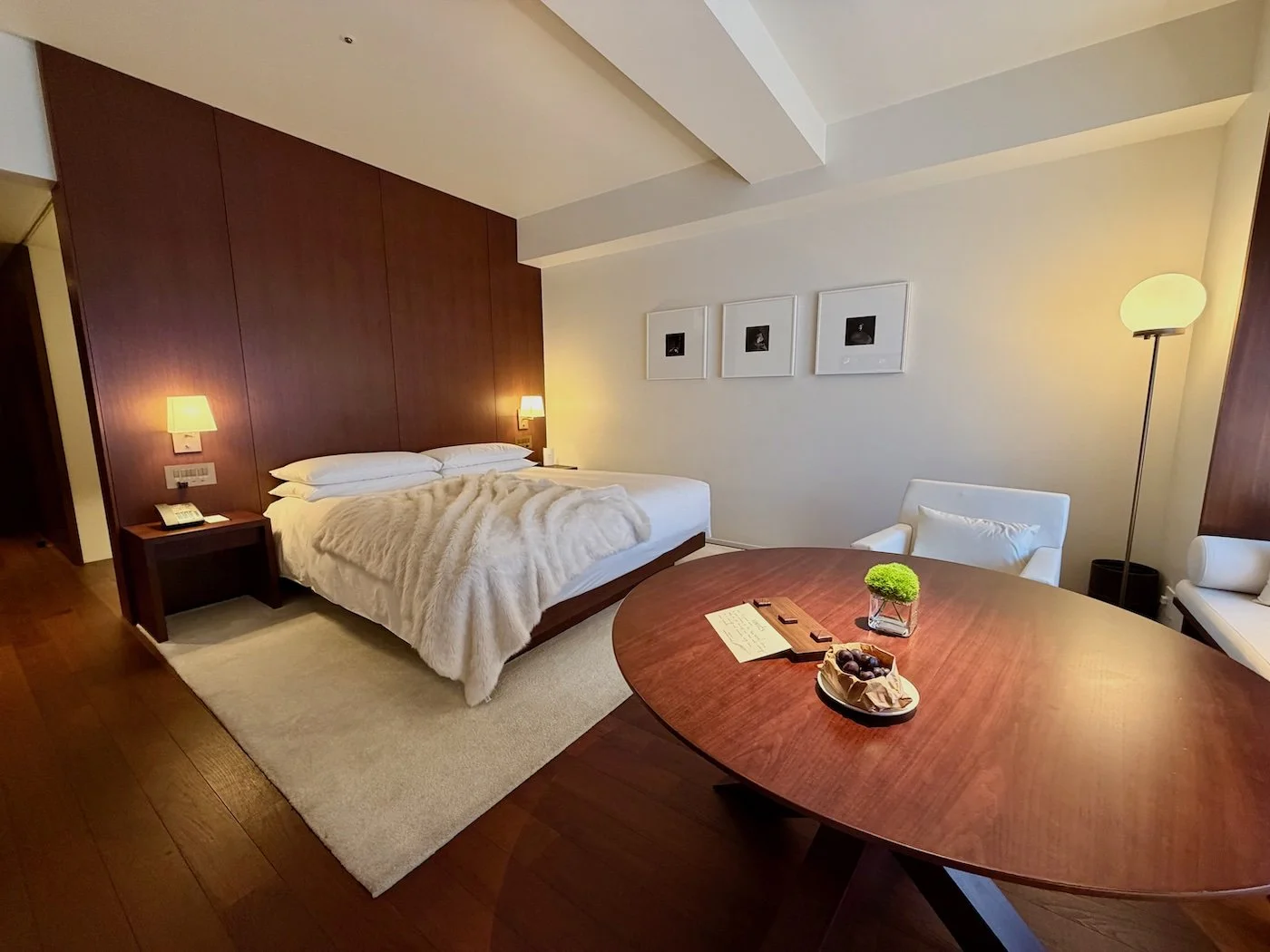
We really wanted to love it… and it looks so pleasing
A hotel can execute its concept perfectly and still be completely wrong for the way you like to travel.
The EDITION Ginza wants Ginza itself to be the destination. If you want a beautiful, stylish home base that puts you steps from some of Tokyo's best shopping, restaurants, and nightlife - and you plan to spend most of your time out exploring - I can understand the appeal.
But that's not what I'm looking for when I'm spending this much on a luxury hotel. At this price point, I want the hotel itself to add something meaningful to the trip - a room I don't want to leave, amenities I'm excited to use, exceptional dining, or some other reason to spend time there.
For us, the EDITION Ginza did its job almost too well: it made us want to leave the hotel and experience Ginza.
JW Marriott Tokyo
We loved the moody, modern twist to Japanese design
After leaving the EDITION Ginza underwhelmed, the JW Marriott Tokyo was almost the opposite experience.
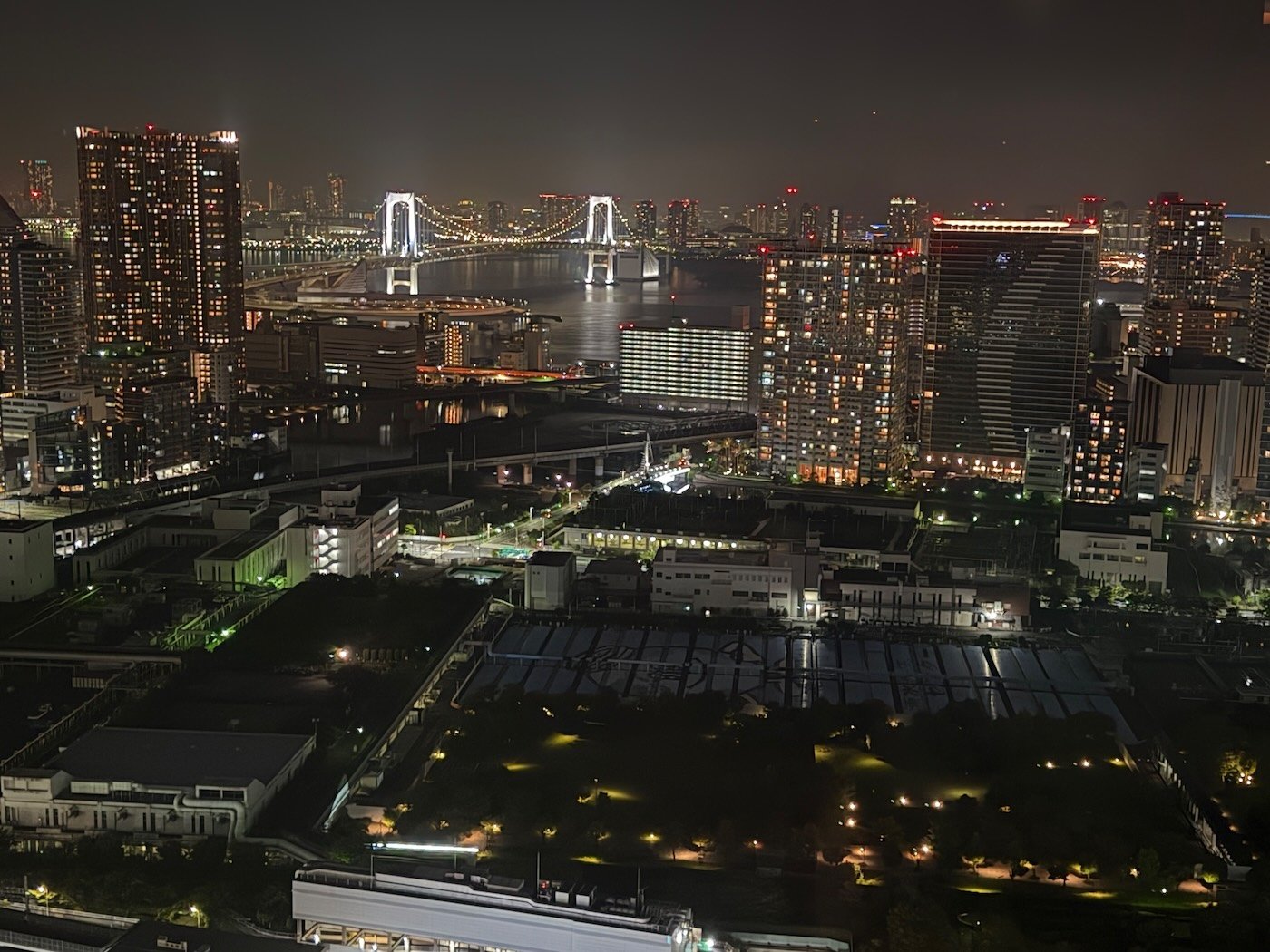
As one of Tokyo's newest luxury hotels, everything still had that unmistakably new feeling - pristine, polished, and almost excessively fancy in places. Our room in particular immediately impressed us, with beautiful finishes, plenty of space, and the kind of bathroom where the soaking tub faces a wall of glass, overlooking the Takanawa area of Tokyo.
What surprised me most, though, was how quickly we wished we had given ourselves more time here. We only had one night, and almost immediately it felt like a hotel we would've happily settled into for several.
The hospitality wasn't flawless or quite as consistent as the physical hotel itself, but that didn't stop us from walking away extremely impressed.
A Refreshingly Different Location
Truly a gateway. Multiple malls and a train station just steps from the hotel - all connected!
The JW Marriott Tokyo is part of the massive new Takanawa Gateway City development, with easy access to Takanawa Gateway Station. The hotel even has its own dedicated entrance from the ground floor of the surrounding complex, which made coming and going incredibly convenient.
After spending time in the crowds of Shinjuku and Ginza, the entire area felt refreshingly calm. We had a lot of fun simply exploring the new development and doing some shopping without constantly weaving through masses of people. It may not have the established energy of Tokyo's more famous neighborhoods, but for shopping, I actually loved it.
And the convenience was hard to beat. We could wander around, buy whatever caught our eye, and simply walk everything back to the hotel before heading out again. Everything felt shiny, new, spacious, and surprisingly relaxing for Tokyo.
Lounge Access and Amenities
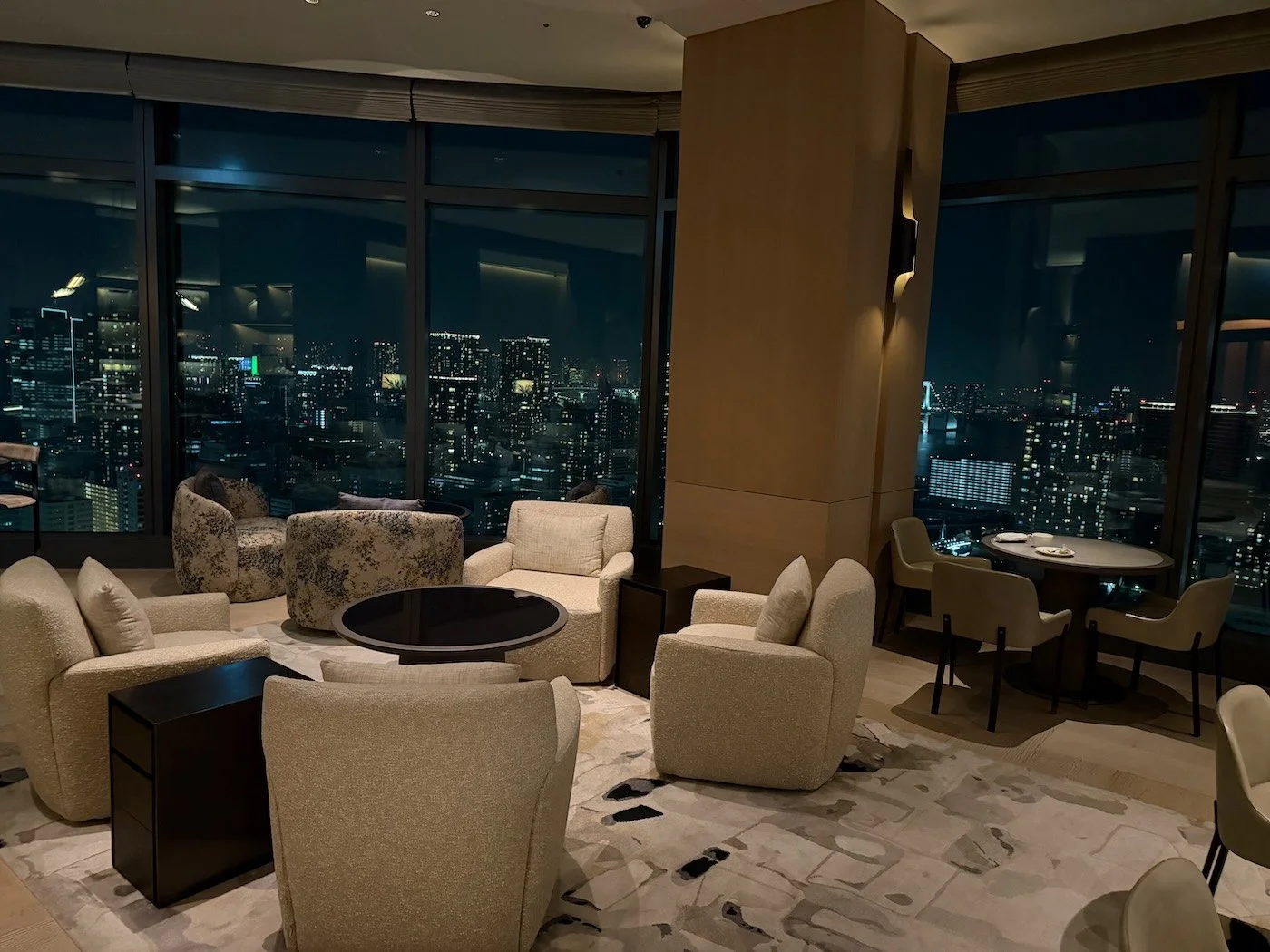
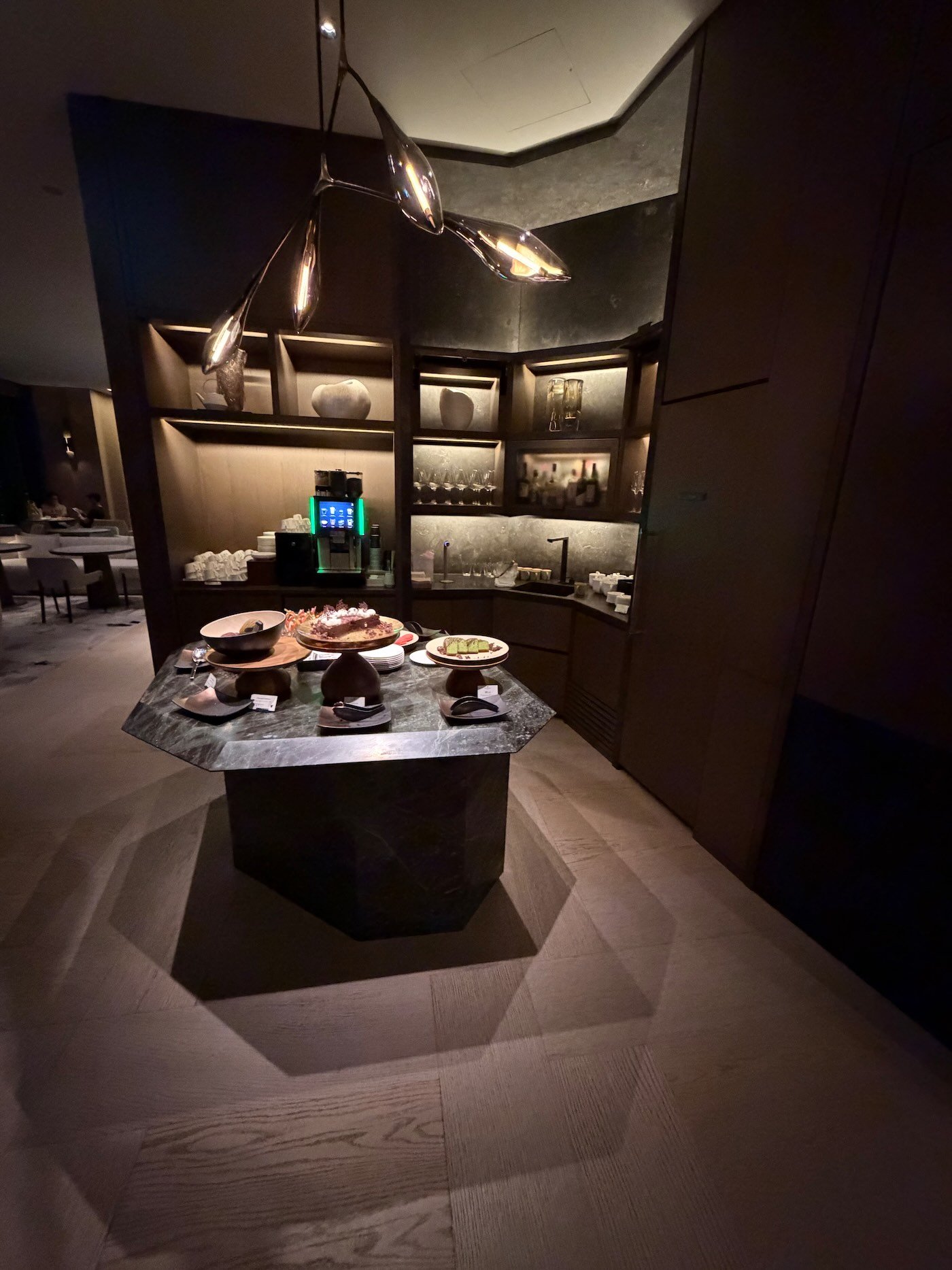
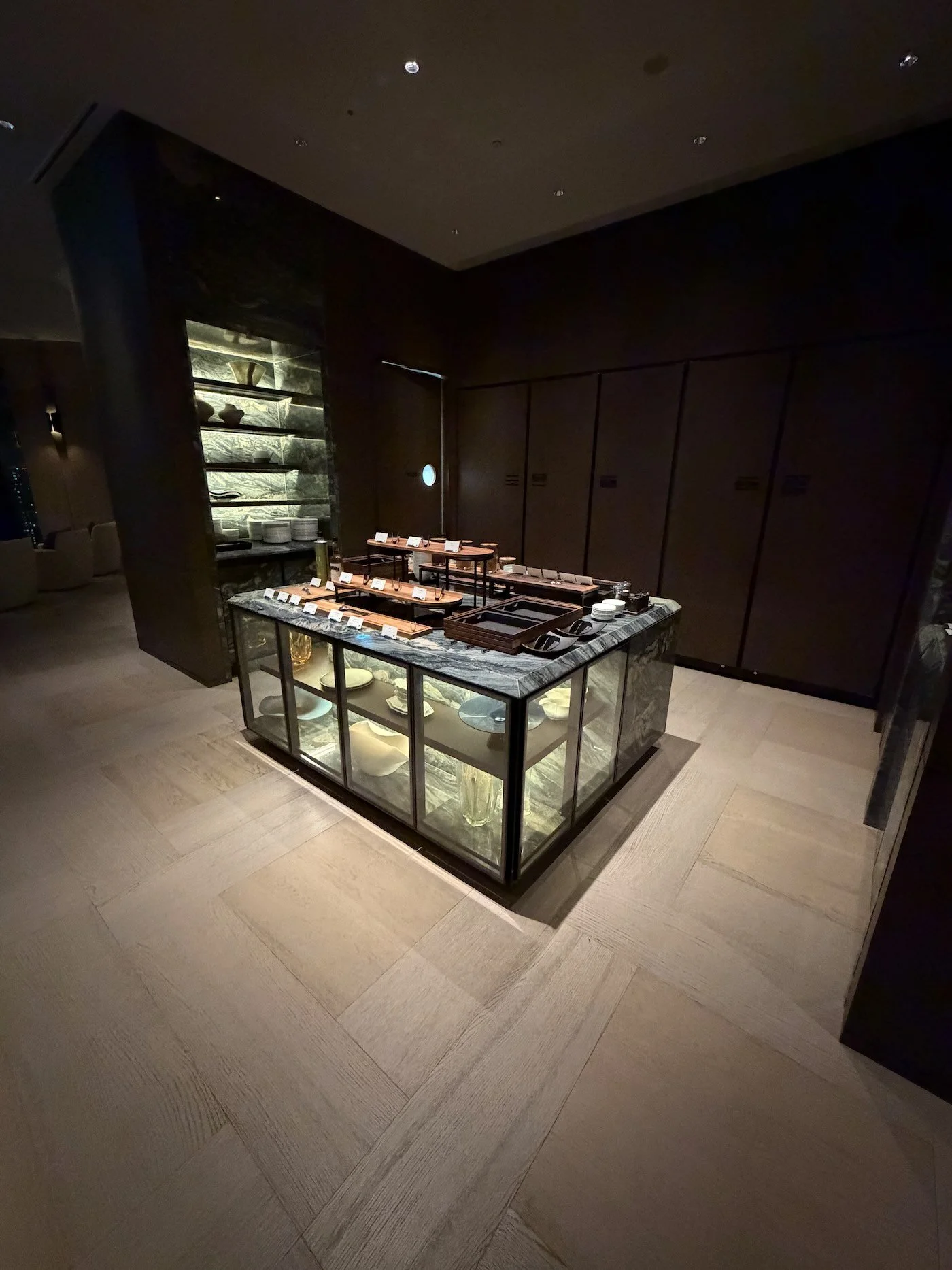
We had access to the Executive Lounge, (since I have Marriott Platinum status) where we checked in and were immediately given a welcome drink that was unusually good - Cory and I looked up at each other, surprised that it wasn’t just another generic cold green tea.
The lounge offers food and drinks throughout the day, and I especially enjoyed stopping by for dessert toward the end of the night after dinner at the hotel's Japanese restaurant, KAKŌ.
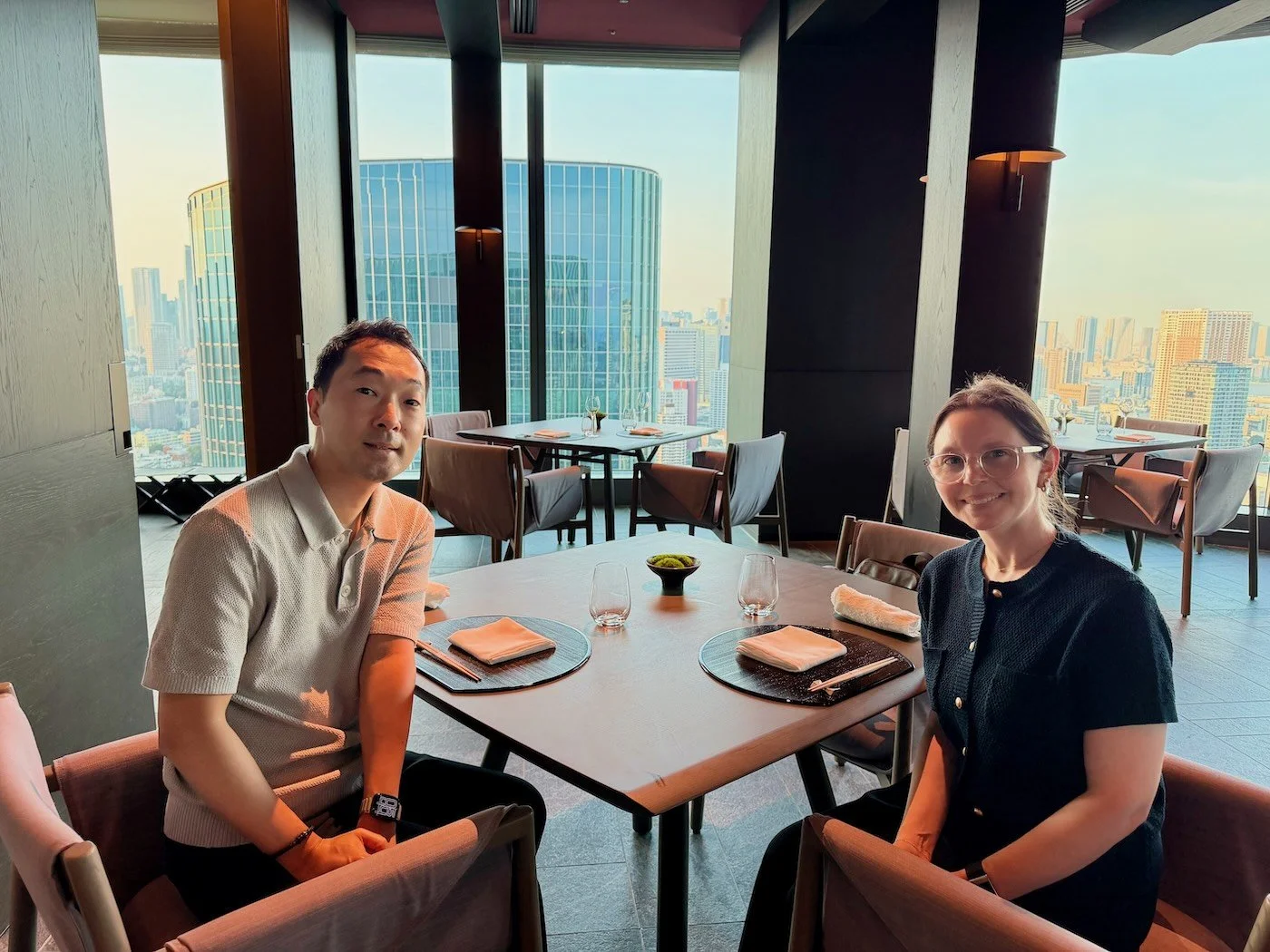
KAKŌ itself was a bit of a mixed experience for us. The staff were kind, and the restaurant is visually stunning, with dramatic design and beautiful views. The food, however, was just okay for the price - especially after our incredible meals at Kozue at the Park Hyatt Tokyo.
One thing that certainly helped was the whopping 30% discount we received as Marriott Platinum members. At that discount, I was much happier with the value. We probably wouldn't return specifically for the food, but I'm glad we tried it - and the restaurant gave me some of my favorite photos from the entire hotel.
The hotel also has an impressive wellness setup, including a 25-meter indoor pool, sauna, and fitness center. I only used the dry sauna, and without a cold plunge, I couldn't really do the multiple hot-and-cold rounds that I enjoy. Still, it was another amenity that made the JW feel like much more than simply a beautiful room.
Restaurant Kako
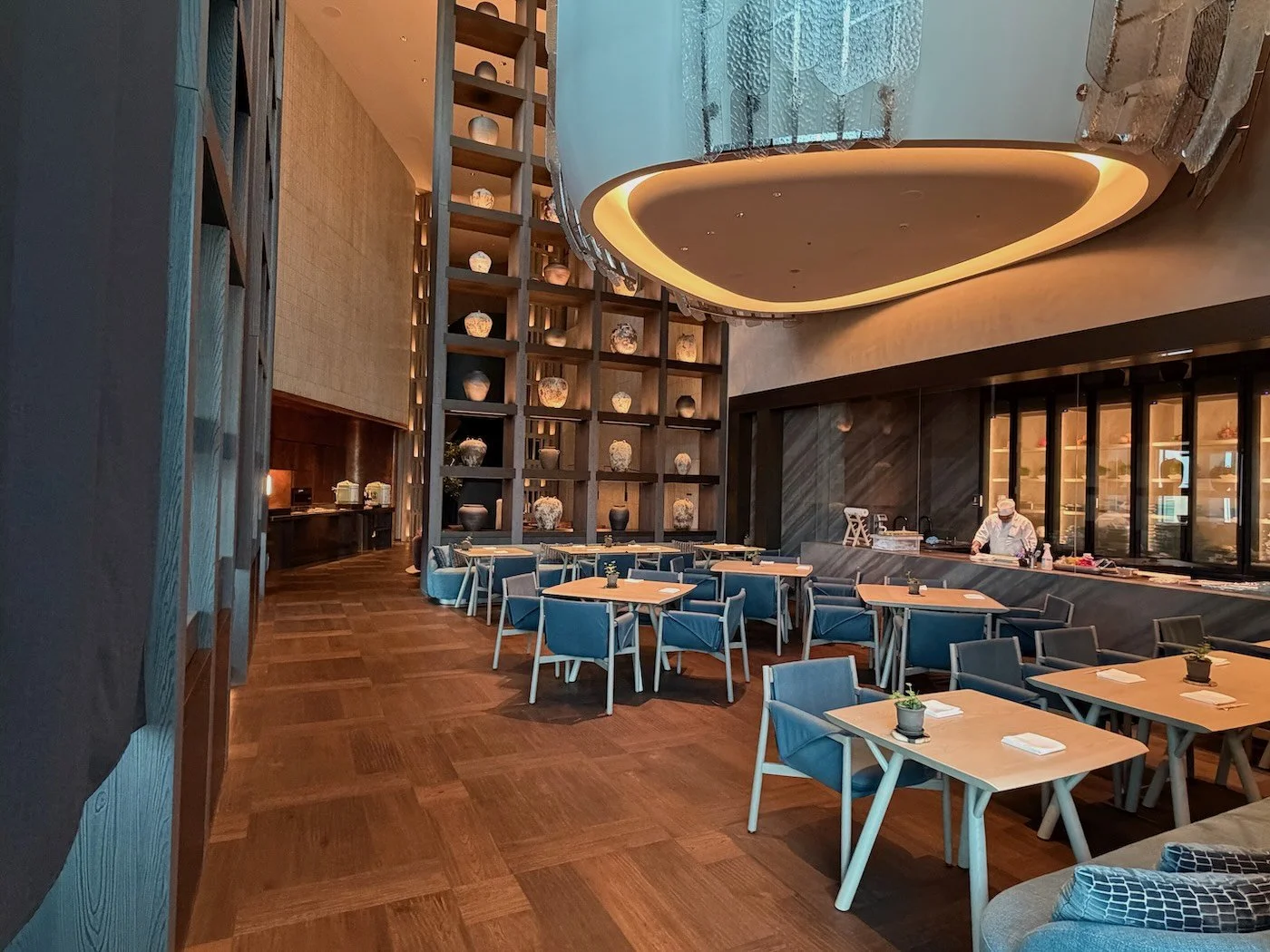
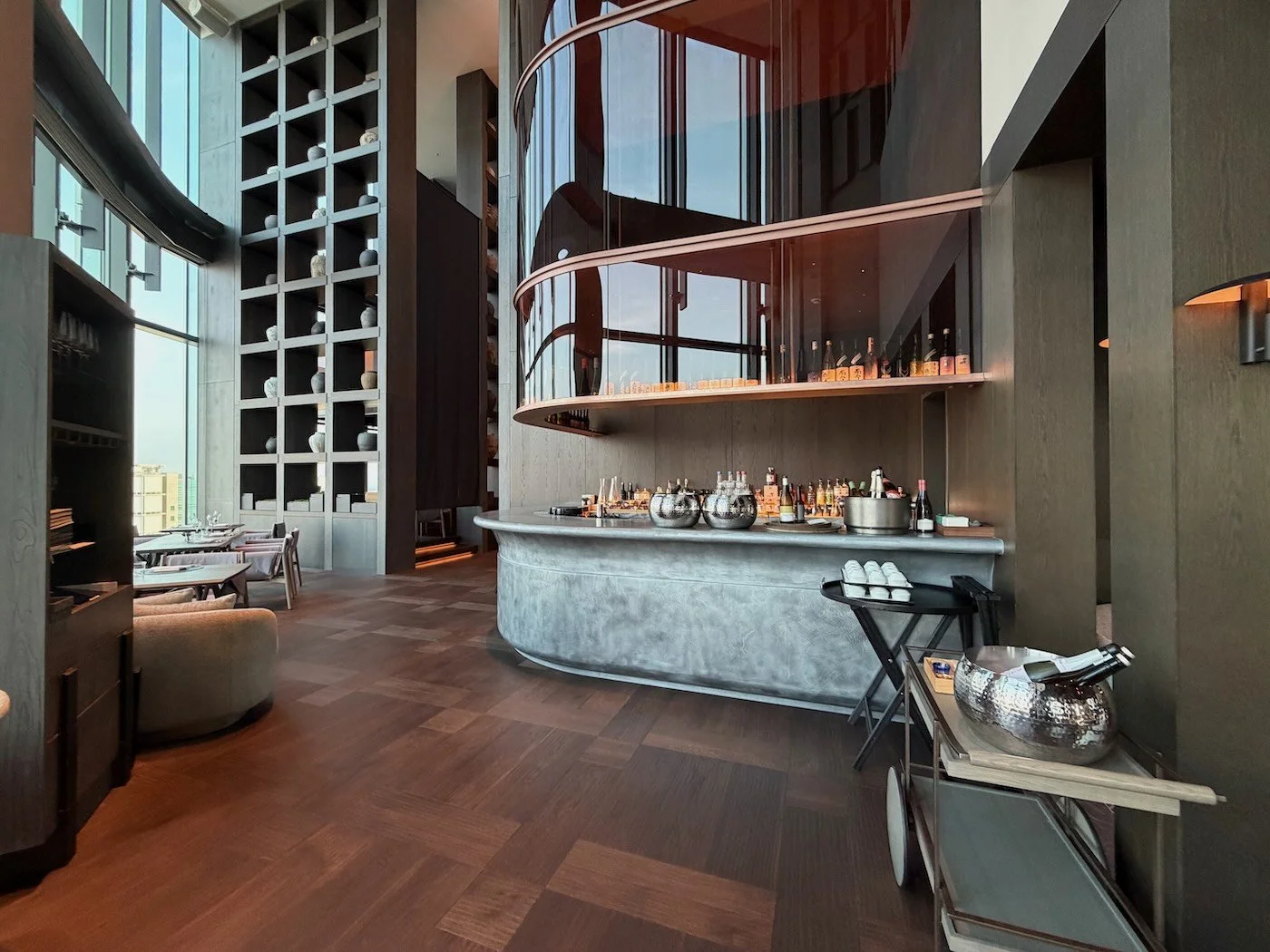
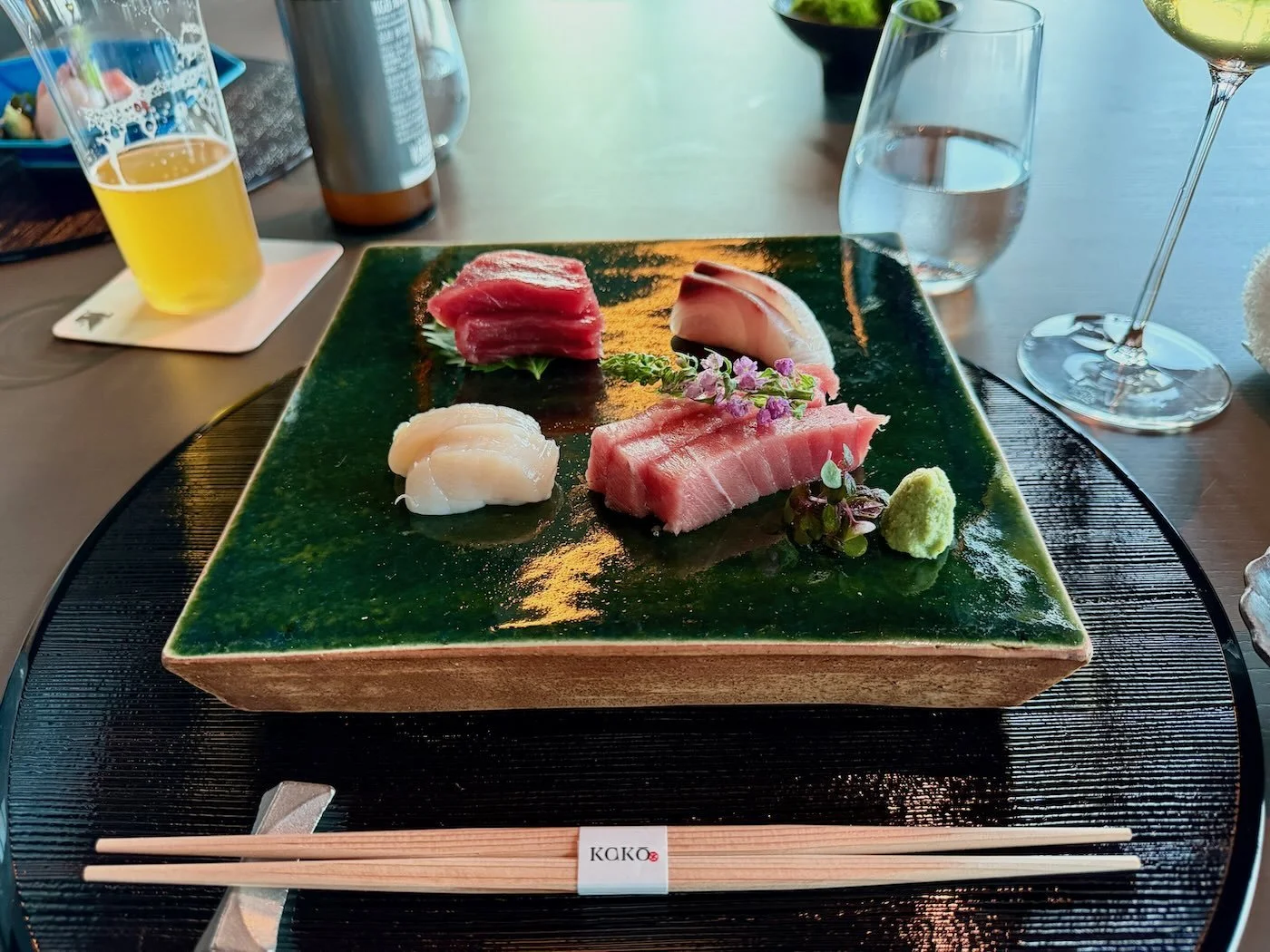
The Lounge at night for drinks and dessert
Hospitality
Overall, I'd say the staff were very polite and accommodating - as you'd expect from a hotel of this caliber. But the hotel was also relatively new, having opened just nine months prior, and I was ready for a few inconsistencies.
One request that sometimes reveals a lot about hospitality for me is asking for help with luggage-forwarding forms. I'm 100% Japanese, look Japanese, and speak Japanese fluently - I just can't write Japanese very well. So when I ask for help filling out a form, I've occasionally gotten a puzzled look or the sense that someone thinks I'm perfectly capable of doing it myself.
At the JW Marriott, I first asked for help in the Executive Lounge. The staff member handed me two forms and, even after I explained that I needed assistance, told me that English was fine and walked away. As it turns out, she was right - I later learned that English is accepted on the forms.
But downstairs, I had a completely different experience. The staff member didn't question why I needed help or tell me I could do it myself. She simply sat down with me, carefully worked through everything, and even figured out how to consolidate what I needed onto a single form.
It was a small interaction, but one I remembered. I’m praying the kind woman who helped me downstairs gets promoted to the Executive Lounge soon - they need her up there.
Who I'd Recommend the JW Marriott Tokyo For
It is Tokyo, after all
I'd recommend the JW Marriott Tokyo for travelers who want a true luxury hotel experience without feeling completely removed from the city. The rooms are beautiful, the amenities give you plenty of reasons to spend time at the hotel, and Takanawa Gateway offers a calmer side of Tokyo while still making it easy to get around.
I think it's an especially good fit for Marriott loyalists with Platinum status or higher, since lounge access and the additional benefits can add quite a bit to the stay. And if you've already spent time in neighborhoods like Shinjuku, Shibuya, or Ginza, staying here gives you a different perspective on Tokyo without sacrificing convenience.
The Takeaway
Our biggest mistake at the JW Marriott Tokyo was only staying one night.
Unlike the EDITION Ginza, which made us want to get out and explore, the JW made us want to settle in. Between the spacious room, lounge, wellness facilities, and surprisingly relaxing location, there was simply more to enjoy than we had time for.
The service wasn't always as polished as the hotel itself, and I think there are still some growing pains to work through. But the overall experience left us wanting more - and sometimes that's the simplest test of whether I'd return to a hotel.
Next time, I'm giving the JW at least two nights.
So, Which Tokyo Hotel Should You Choose?
Decisions, decisions. Seemingly as many as the grains of sand
After staying at all four hotels, I don't think there's a single winner. The better choice depends on what you want your hotel to do for your Tokyo trip.
For arriving in Tokyo: Kimpton Shinjuku
Choose the Kimpton if you want something upscale but relaxed while you settle into Tokyo. It's especially well suited to the beginning of a trip, when a welcoming atmosphere, great food on-site, and a comfortable place to recover can matter more than having every ultra-luxury amenity.
For making the hotel part of the trip: Park Hyatt Tokyo
Choose the Park Hyatt if you want the hotel itself to be part of your Tokyo experience - and you're willing to give it some of your time. If your trip leaves room to enjoy the spa, restaurants, views, and the hotel itself, this is where the Park Hyatt really shines.
For exploring Ginza: EDITION Ginza
Choose the EDITION if location is the priority and you plan to spend most of your time out enjoying Ginza. If shopping, restaurants, bars, and exploring the neighborhood matter more to you than resort-style amenities or spending time at the hotel, its concept may be exactly what you're looking for.
For the luxury all-rounder: JW Marriott Tokyo
Choose the JW if you want a little bit of everything: beautiful rooms, substantial amenities, a calmer location, and easy access to the rest of Tokyo. It's probably the most well-rounded of the four, and it's particularly compelling if you can take advantage of Marriott elite benefits.
The Question I'll Ask Before Booking
Before this trip, I probably would've compared these hotels primarily by the usual things: rooms, service, amenities, location, and of course, how many points they cost.
After staying at all four back-to-back, I realized there's an equally important question: What role do I want this hotel to play in my trip?
That sounds like a small distinction, but it completely changes how I look at luxury hotels in Tokyo. A hotel can be objectively excellent and still be the wrong choice for the trip you're planning. And a hotel that doesn't look as impressive on paper might end up being exactly what you need at that particular moment.
That's ultimately what these four hotels taught me. I'm still interested in finding Tokyo's best hotels - I'm just more interested in understanding when they're at their best, and how they fit into my travel rhythm.
