A gorgeous room, remarkable hospitality, memorable sushi, and one surprise after another - our one-night stay left us already planning a return.
I felt incredibly well cared for.
I had a really hard time boiling the Waldorf Astoria Osaka experience down to just a few words. Indulgent and decadent bounced around for a while, but ultimately, I kept coming back to the feeling of being pampered.
What surprised me most wasn’t just the room, the amenities, or even the service itself. It was how often the hotel seemed to create opportunities to take care of us.
More on that later.
First Impressions
Our first impression of the Waldorf Astoria Osaka was actually a little confusing.
We took a taxi from Osaka Itami Airport, which came to about 7,800 yen. A bit steep, yes, but it was rush hour, we had several bags, and our driver handled all of them for us, so I had no complaints.
What did briefly worry us was where he left us.
After pulling up to the enormous Grand Green Osaka South Building, our driver more or less muttered that this was where the hotel was and sent us on our way. We had apparently arrived at the back of the building, where there was no grand Waldorf Astoria entrance, no line of bell staff, and - at least initially - no one waiting to help with our luggage.
For a luxury hotel, it was a slightly anticlimactic start.
Thankfully, the confusion lasted all of about a minute.
As soon as we walked inside, we spotted clearly marked Waldorf Astoria signage, and hotel staff on the ground floor quickly greeted us, took every piece of luggage off our hands, and escorted us upstairs to the main lobby on the 28th floor.
And that was the arrival I had been expecting.
Opened in 2025 as the brand’s first property in Japan, Waldorf Astoria Osaka occupies the upper portion of a 39-story tower within Grand Green Osaka, the enormous new development reshaping the Umekita area beside Osaka Station. Its guest rooms are perched up high - between the 31st and 38th floors.
The height becomes immediately apparent when you step into the lobby.
It's bright, elegant, and surprisingly inviting, with abundant natural light, touches of greenery, and enormous windows pulling the Osaka skyline into the room. Despite all the polished stone, soaring ceilings, and unmistakable luxury, it didn't feel cold or overly formal. Staff were warm and professional without being stiff, and the entire space felt remarkably relaxed for a hotel of this caliber.
Then we walked toward Peacock Alley.
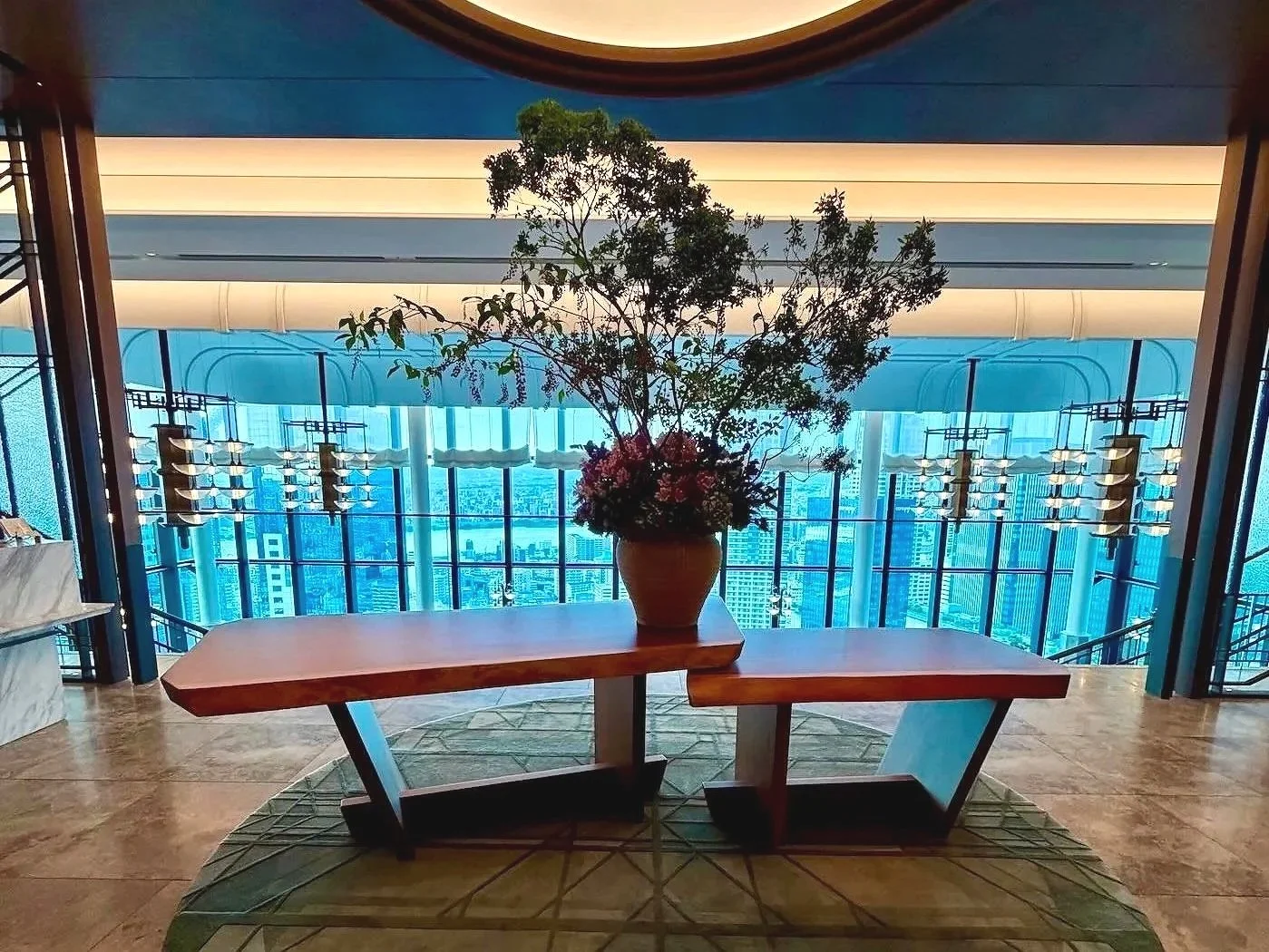
Right off the elevator, a spectacular view of Peacock Alley awaits, with the Osaka skyline as its backdrop.
This might have been my favorite first impression of the entire hotel. The lounge opens into a dramatic, light-filled space with triple-height ceilings and huge windows overlooking Osaka, making the city feel almost like part of the decor. Hilton designed Peacock Alley as one of the hotel's signature spaces, complete with panoramic skyline views and an outdoor terrace.
And the views are spectacular.
Standing there for the first time, looking out over Osaka from nearly 30 floors up, it was hard not to feel like we'd arrived somewhere special.
Our entrance may have been a little less glamorous than expected, but once we were upstairs, the Waldorf Astoria set the bar very, very high.
The Room
Our personal concierge, Aki-san, showed us to our room - and this was probably the moment when the hotel really started to sink in.
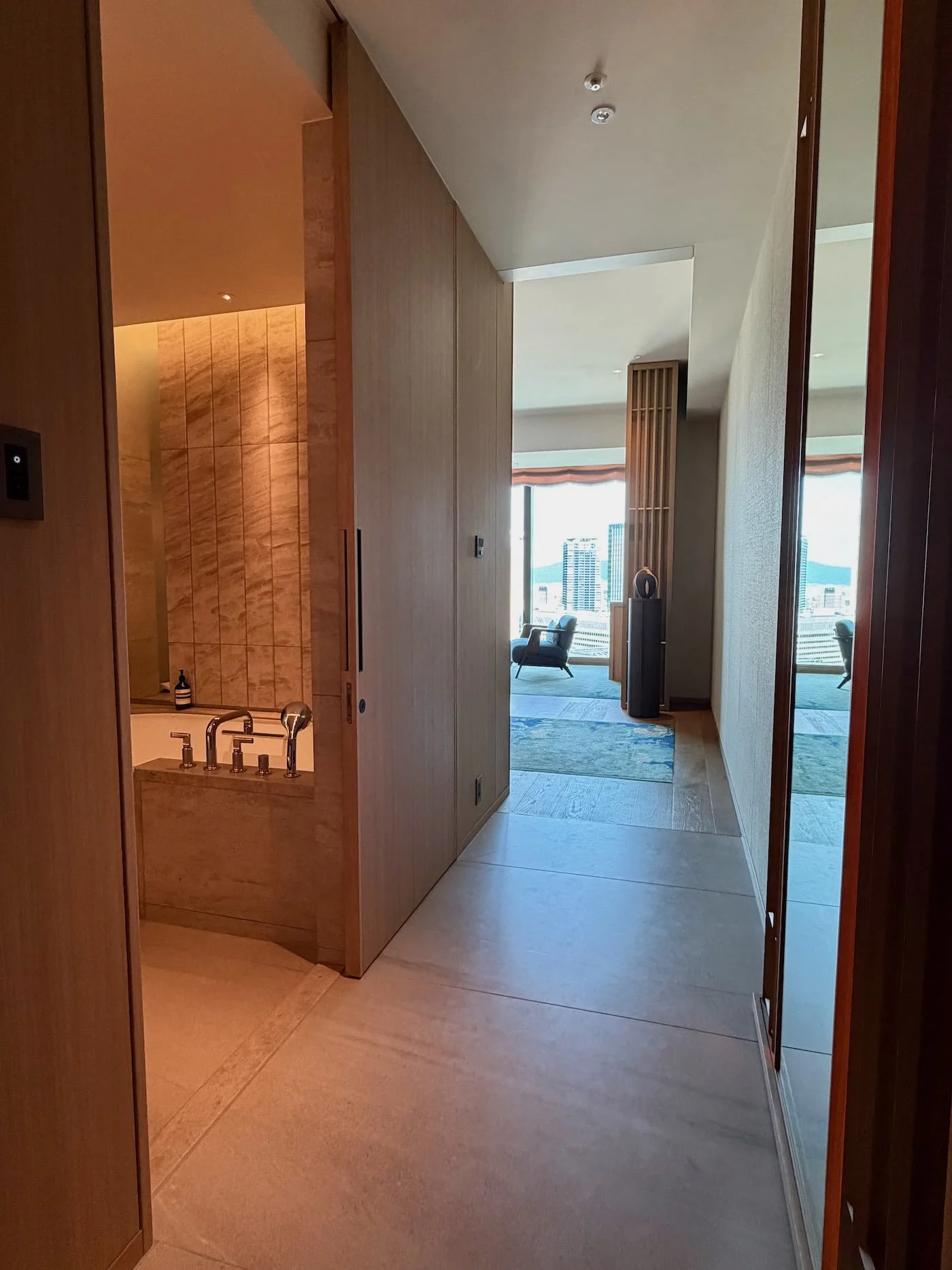
The room was gorgeous.
I realize I've been throwing words like beautiful, elegant, and luxurious around quite a bit already, but the Waldorf Astoria Osaka makes it difficult not to.
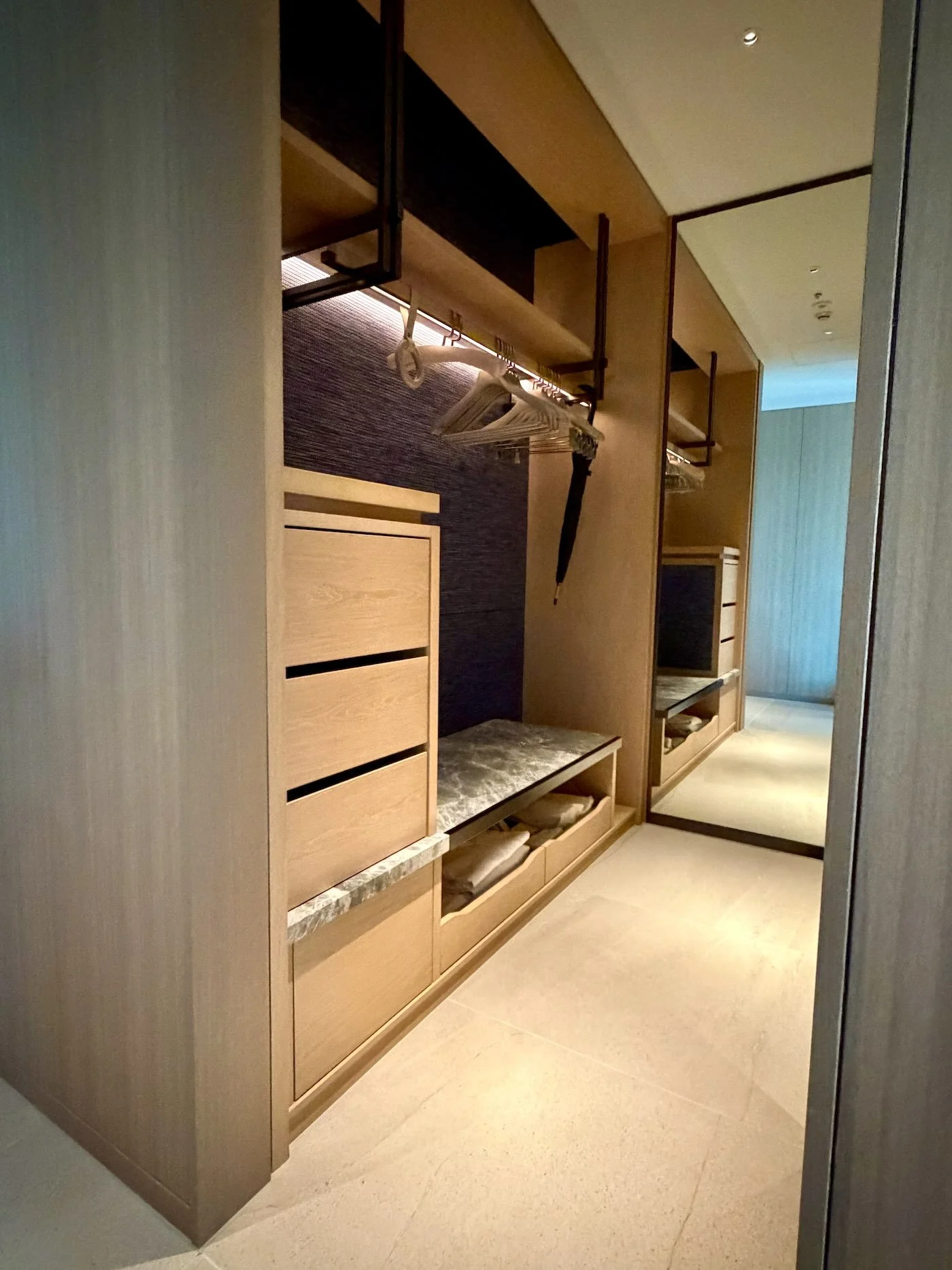
What I loved most was that the room didn't feel like someone had simply filled a big space with expensive furniture. Everything felt unusually cohesive - the colors, the materials, the lighting, the Japanese details, even the way the sitting area related to the windows.
It was modern without feeling sterile, unmistakably luxurious without becoming flashy, and distinctly Japanese without resorting to obvious clichés.
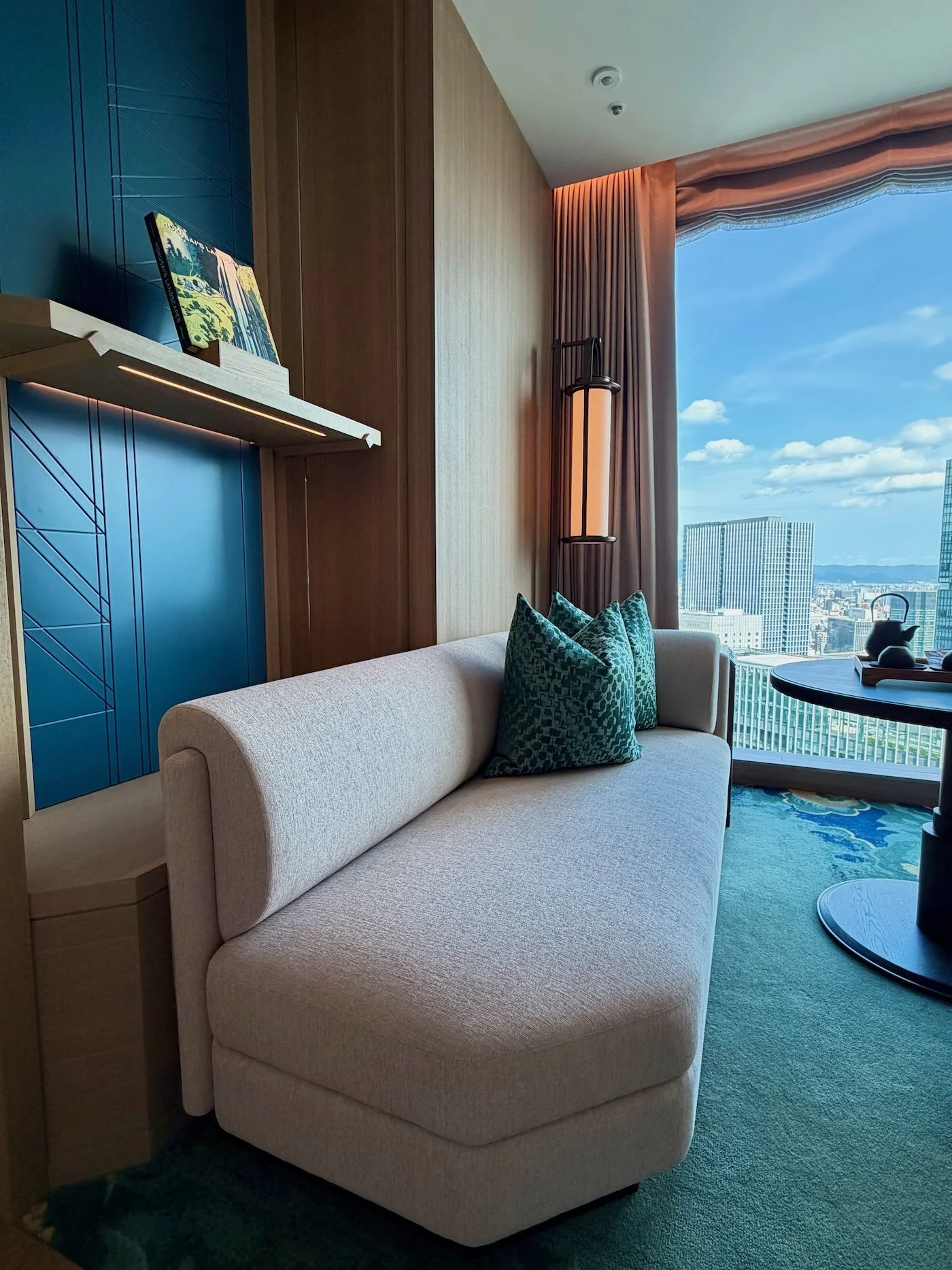
There's actually a reason for that. Architect André Fu designed the hotel around a blend of Waldorf Astoria's Art Deco heritage and Japanese craftsmanship. In the guest rooms, that shows up in details like kumiko screens, painted washi panels, shoji-inspired lampshades, interlocking timber-work, and even a traditional matsunoha motif worked subtly into the bed frames.
I definitely wasn't standing there analyzing the symbolism of the bed frame at the time.
I just knew that I really, really liked the room.
The color palette helped a lot - warm woods and soft neutrals balanced with deeper greens and blues, so the room felt calm without falling into the usual sea of beige.
More importantly, it was comfortable and functional. There was enough space to settle in, a cozy sitting area by the windows, plenty of room around the bed, and a bathroom with an excellent tub and shower.
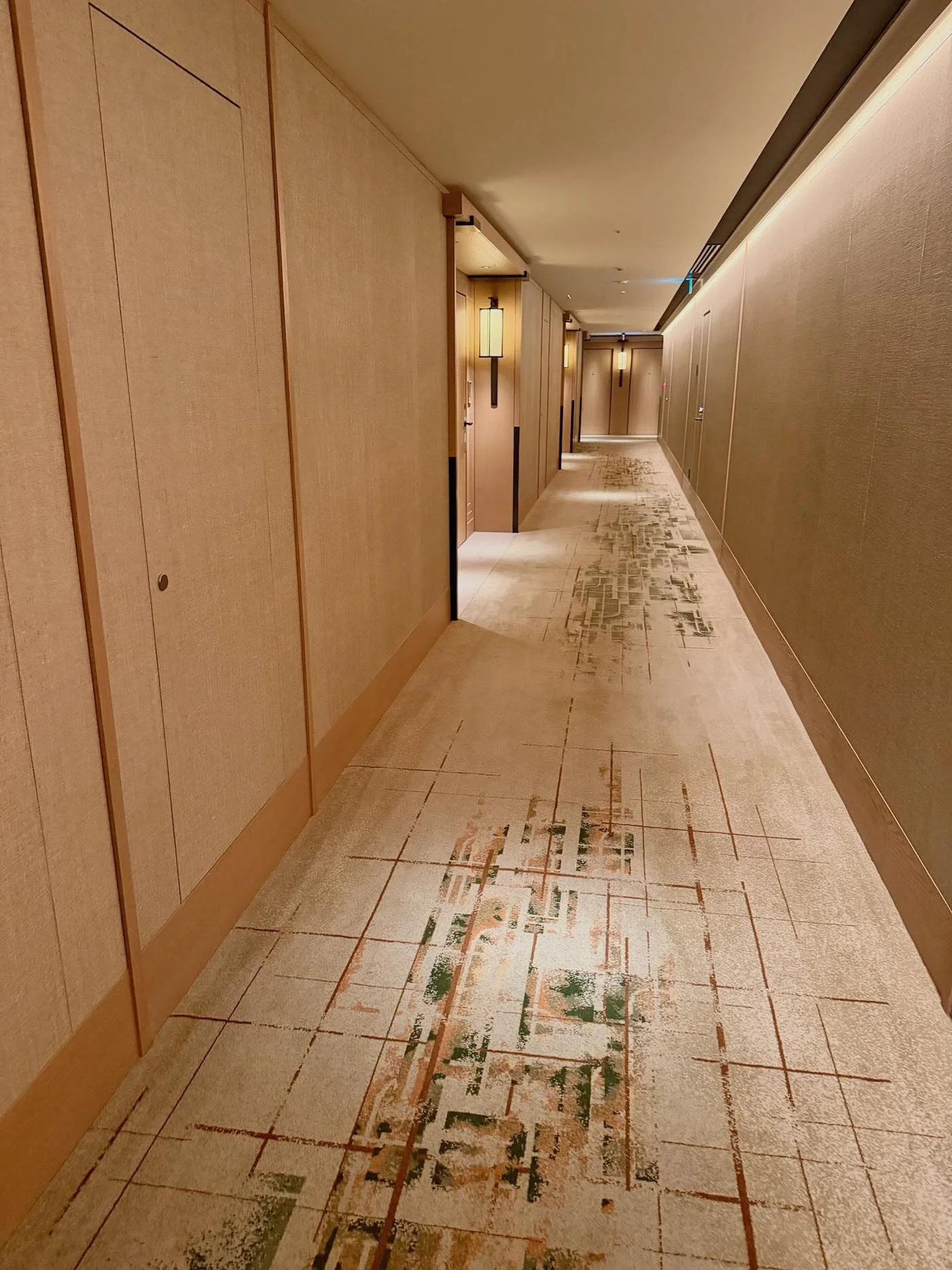
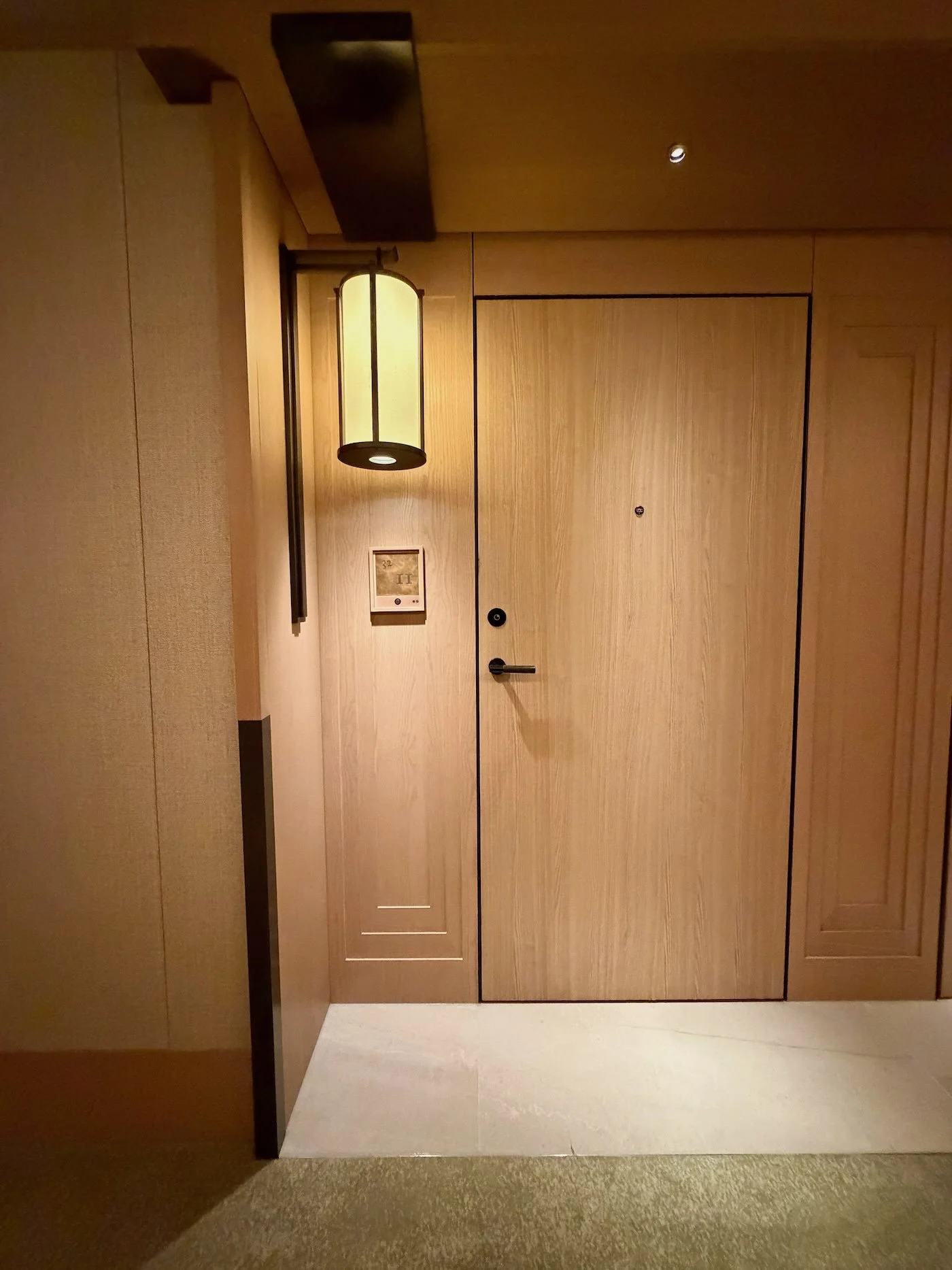
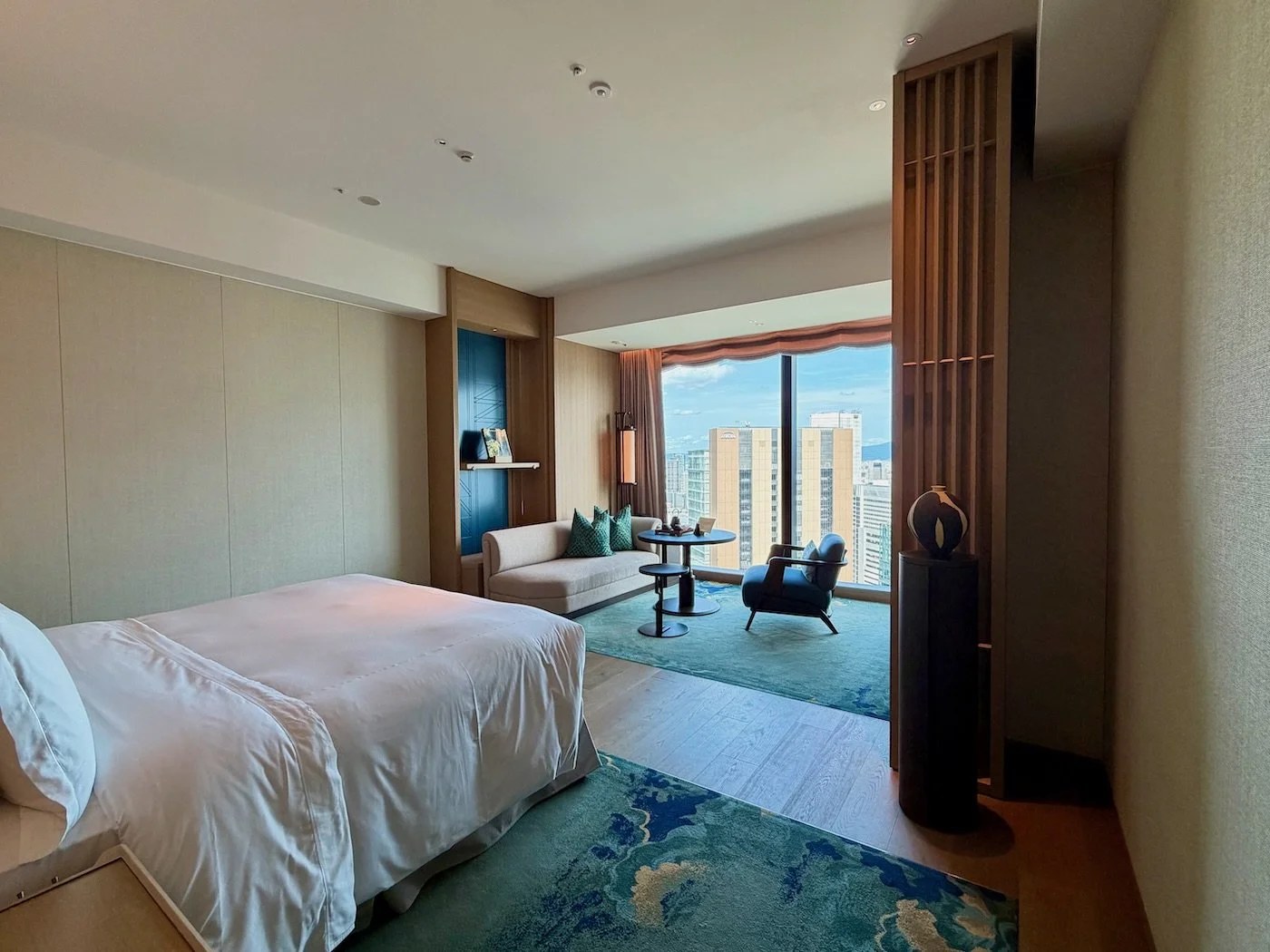
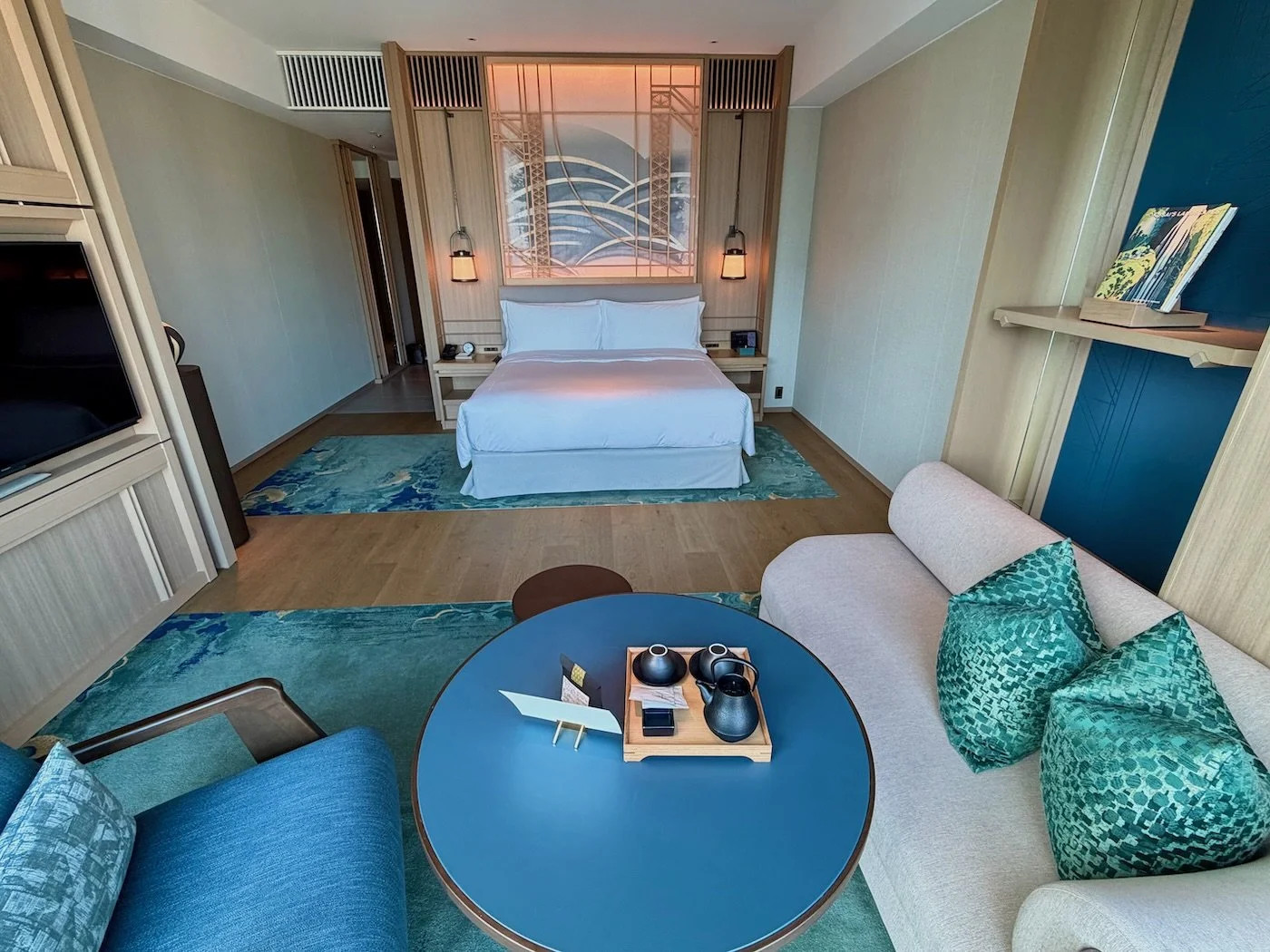
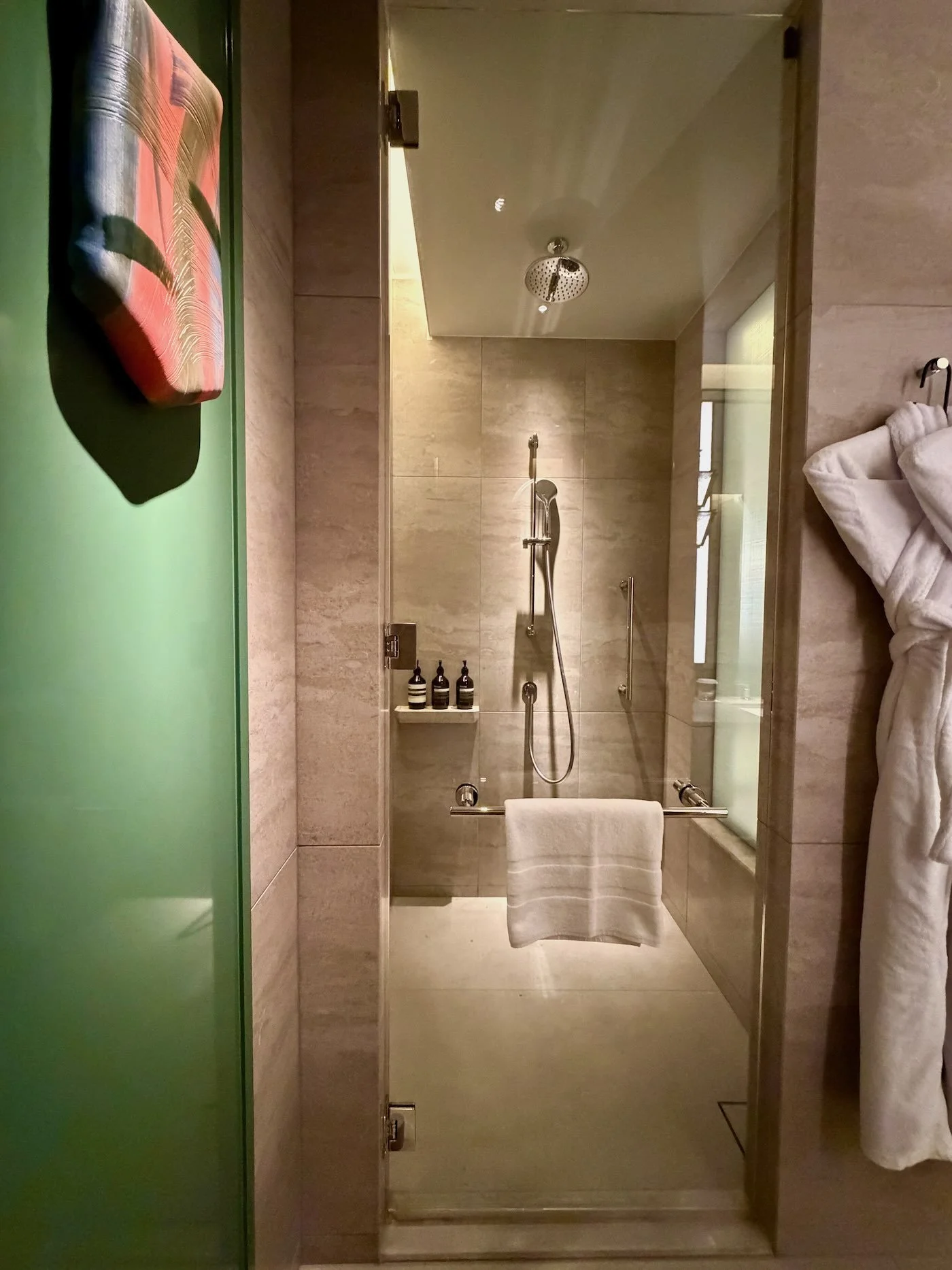
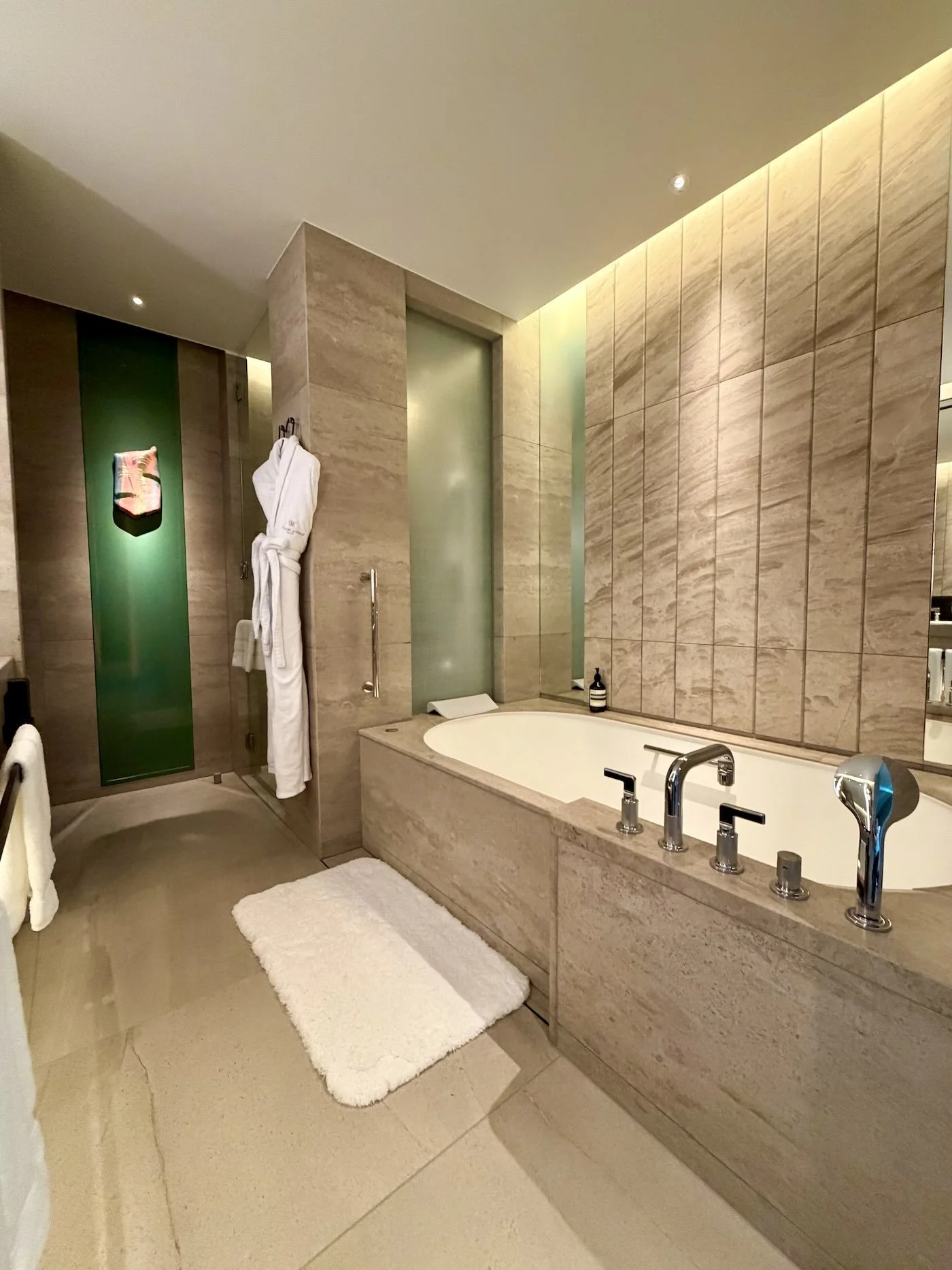
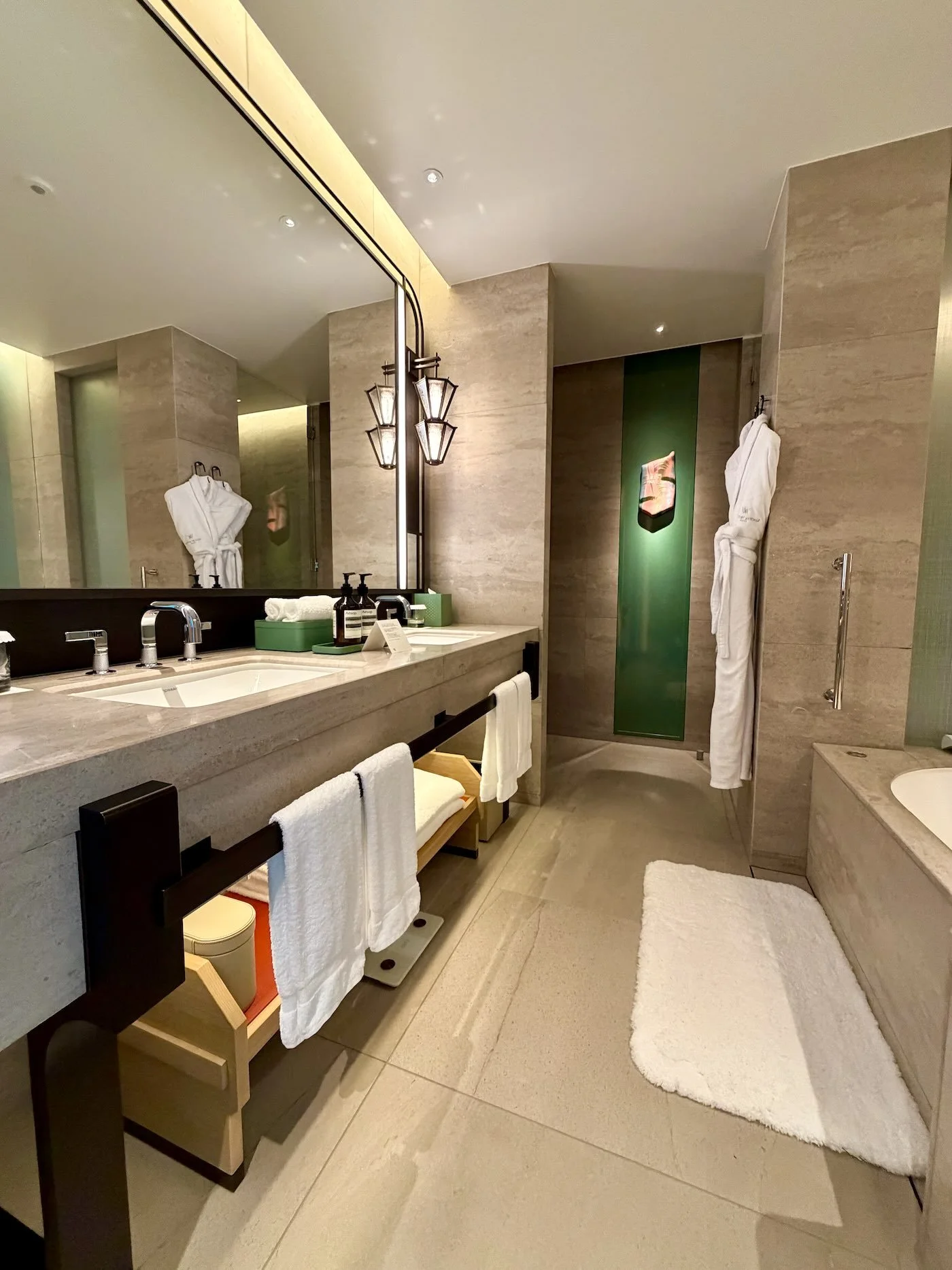
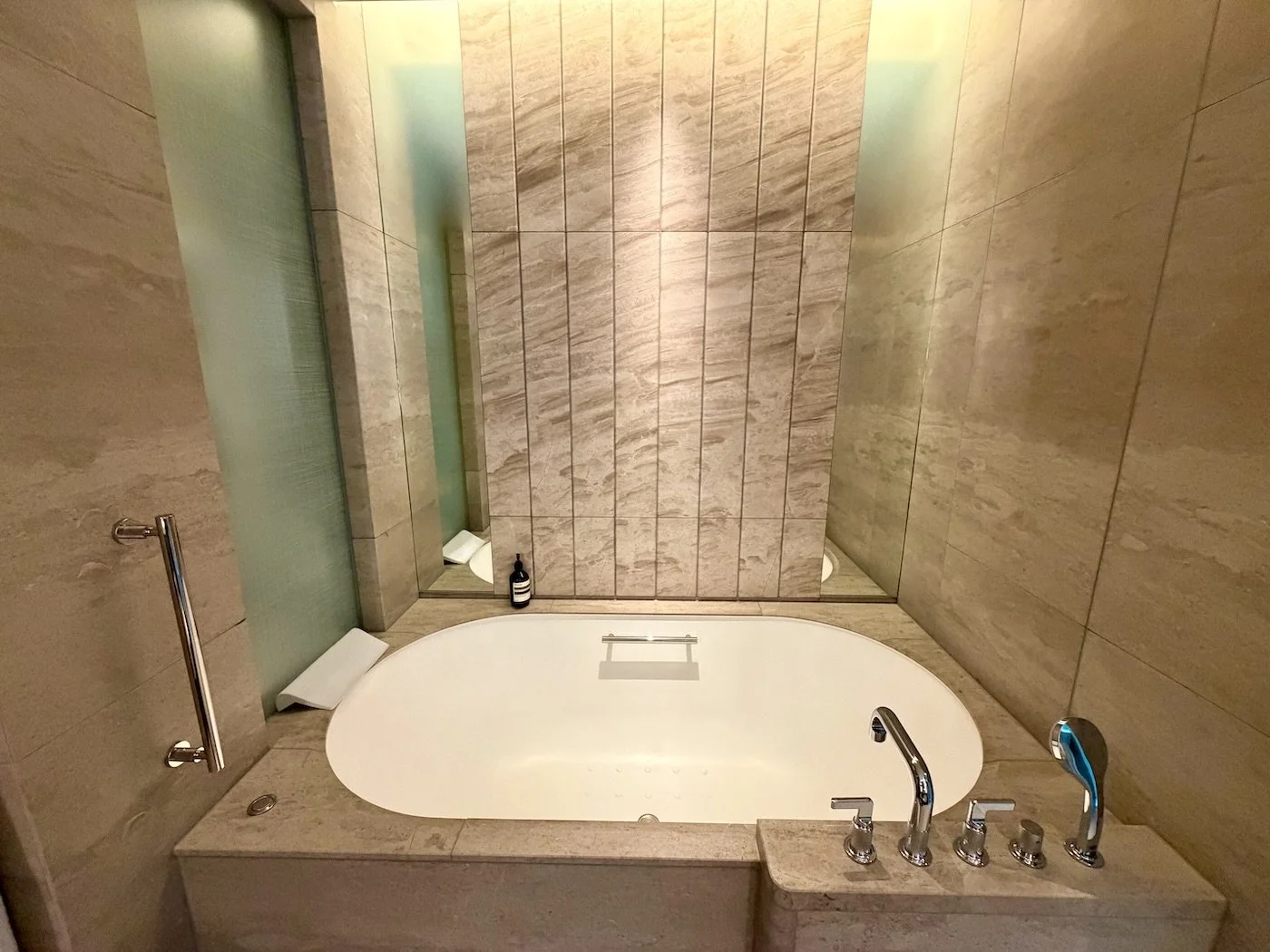
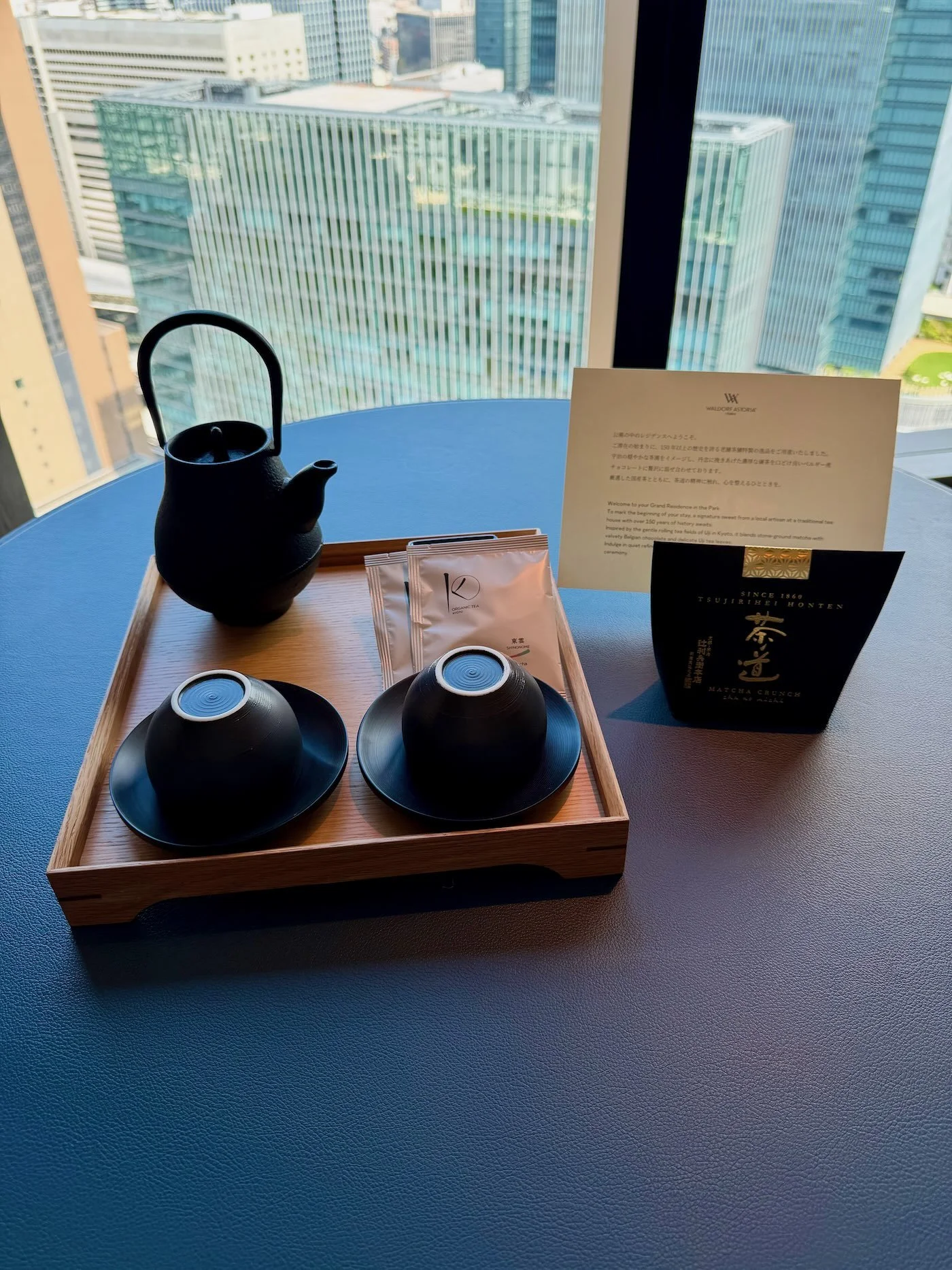
The room came stocked with some excellent Japanese teas, so at one point we made ourselves a couple of cups and took a little break on the couch, watching everything happening below.
And then there was the chocolate.
Waiting for us in the room was an elegantly packaged box of matcha chocolate from Tsujirihei Honten - an Uji tea company whose history dates all the way back to 1860, near the end of the Edo period.
The chocolates were ridiculously good.
We're already very easy targets when it comes to matcha, but these were next level.
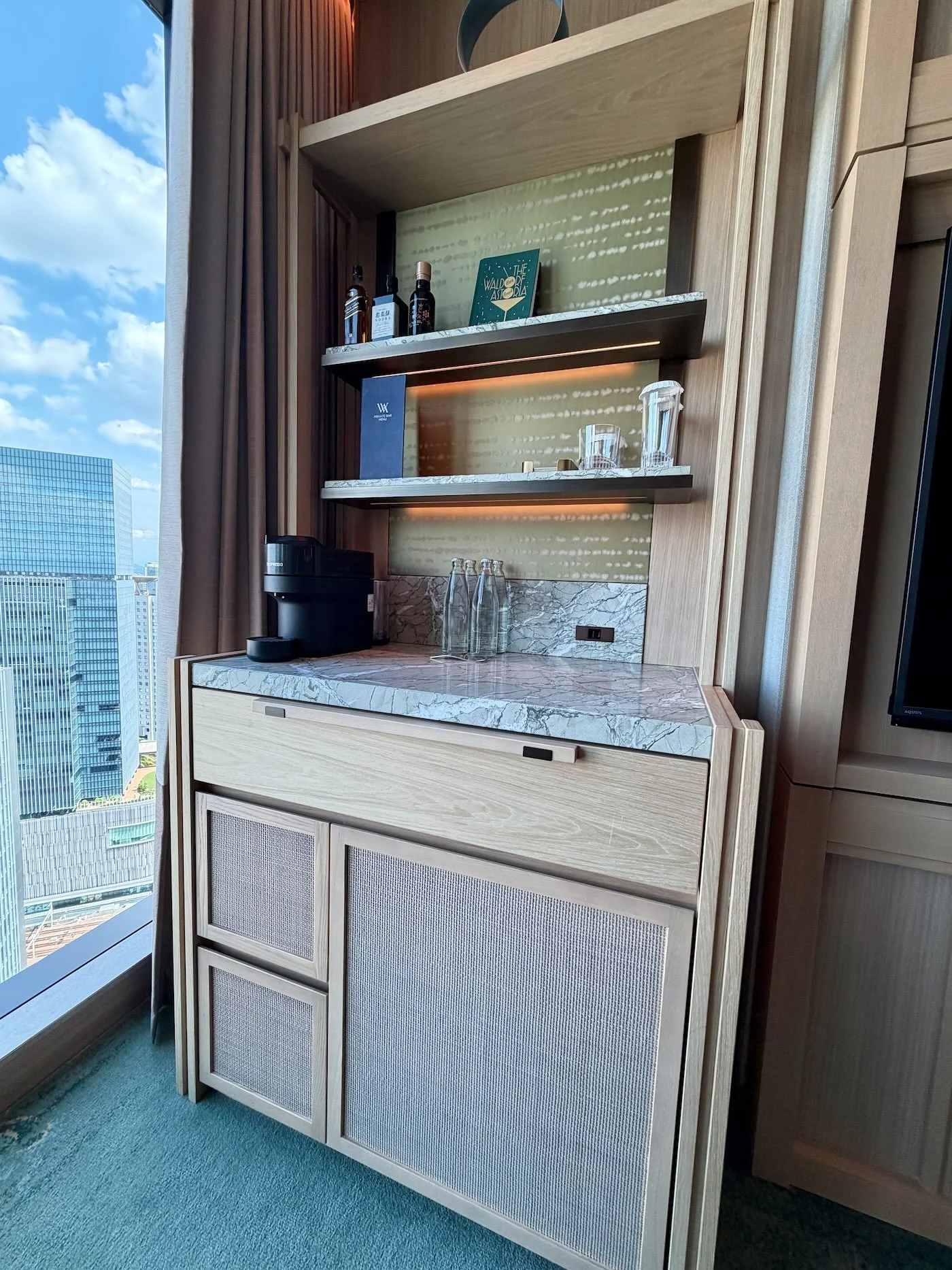
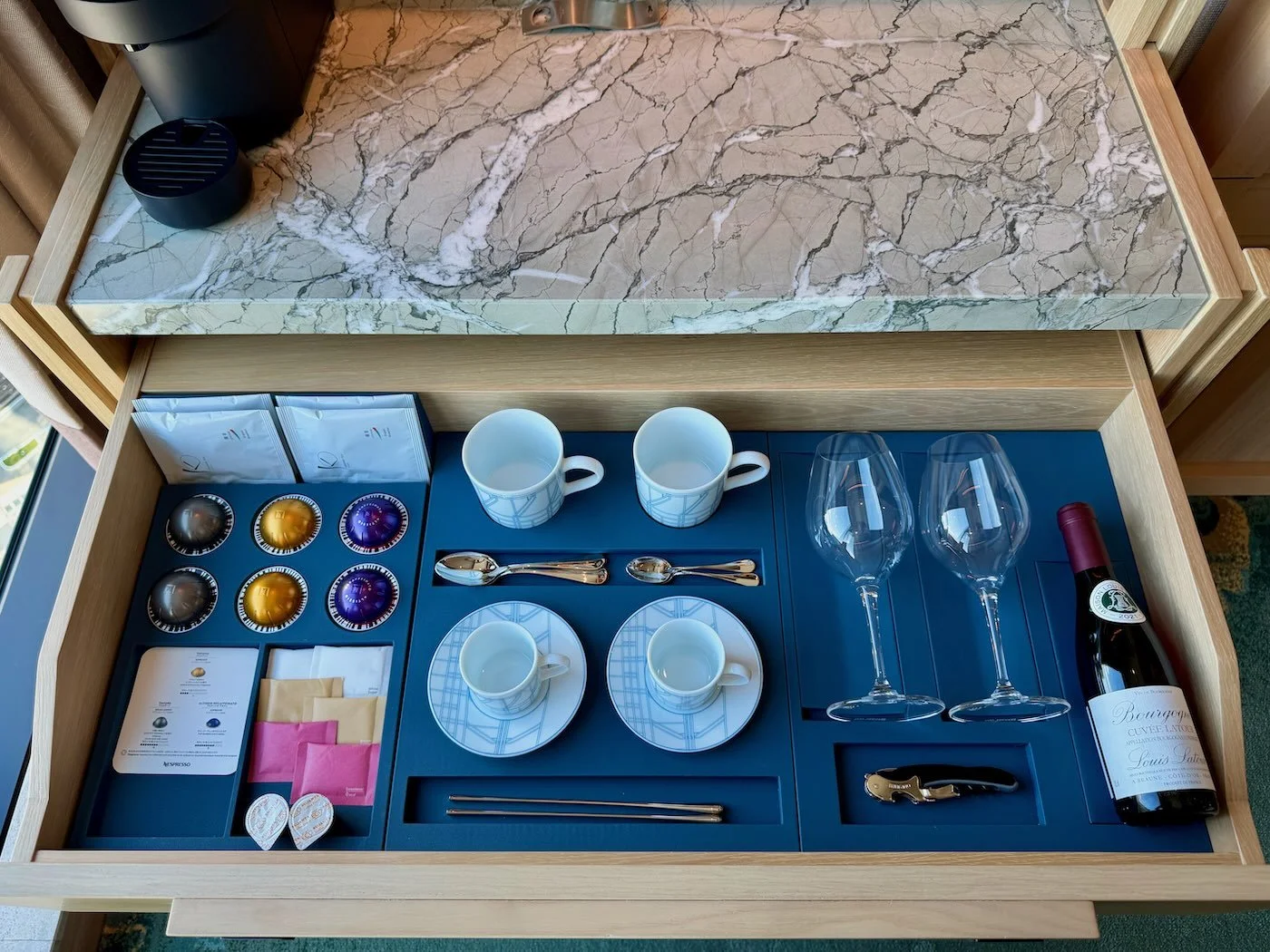
And then the bed.
Cory thought it was one of the most comfortable beds of our entire trip. Considering how many very nice hotels we'd already slept in by this point, that's saying something.
Looking back, I think that's what impressed me most about the room overall. It photographed beautifully, the views were spectacular, and there were plenty of expensive-looking details - but none of that came at the expense of comfort.
It was a room we wanted to look at.
But more importantly, it was a room we wanted to be in.
And for a one-night stay, that became something of a problem.
Hospitality at its Finest
Hospitality as refreshing as the natural light that finds its way into the 28th-floor hallways.
I have never experienced such tasteful hospitality in any other hotel.
Correction.
I have - but never this thoroughly. That sounds a little sticky, but I don’t mean it in a bad way.
Even at one of our long-standing favorites, the Ritz-Carlton Kyoto, the hospitality is exceptional whenever you interact with the staff. But those moments tend to happen when you naturally cross paths with them.
At the Waldorf, the personal concierge team seemed to go a step further. They actively looked for opportunities to help - sometimes before we even realized we needed it.
Our concierge, Aki-san, almost single-handedly made us fall in love with the hotel through her attentive, thoughtful care.
On our way out for some shopping, she caught sight of us and came over to ask where we were headed.
At first, I felt a tinge of annoyance because I didn’t really think we needed her help, and I just wanted to get out without making small talk.
But I was so wrong.
We were headed to the Hankyu Mall, where we were hoping to visit a handful of matcha shops. I was about to head outside and walk for a few minutes in the summer heat, but Aki-san immediately showed us how to go downstairs and which exit to follow through the underground passage instead.
That way, we wouldn’t have to bake in the blazing midday sun.
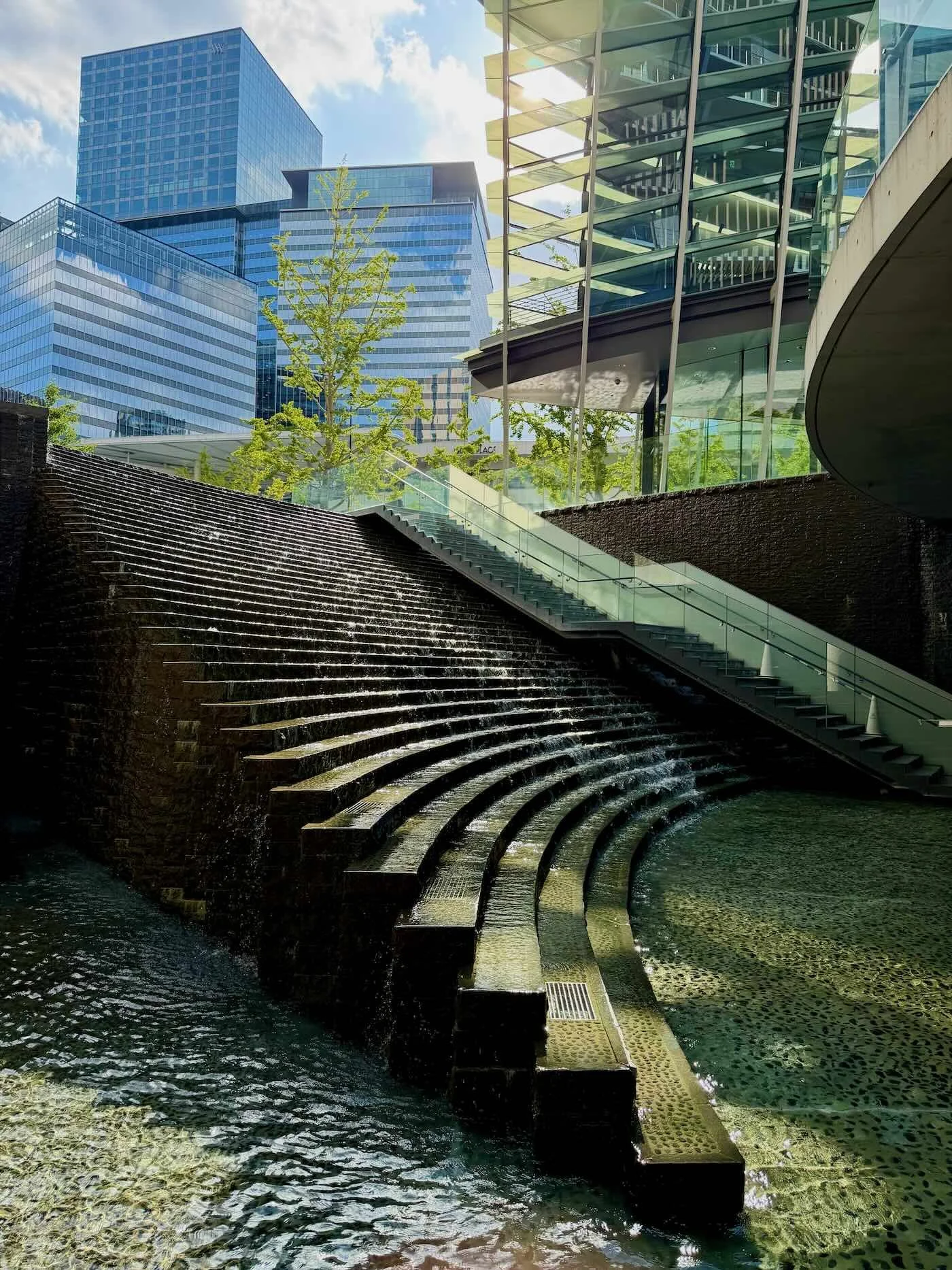
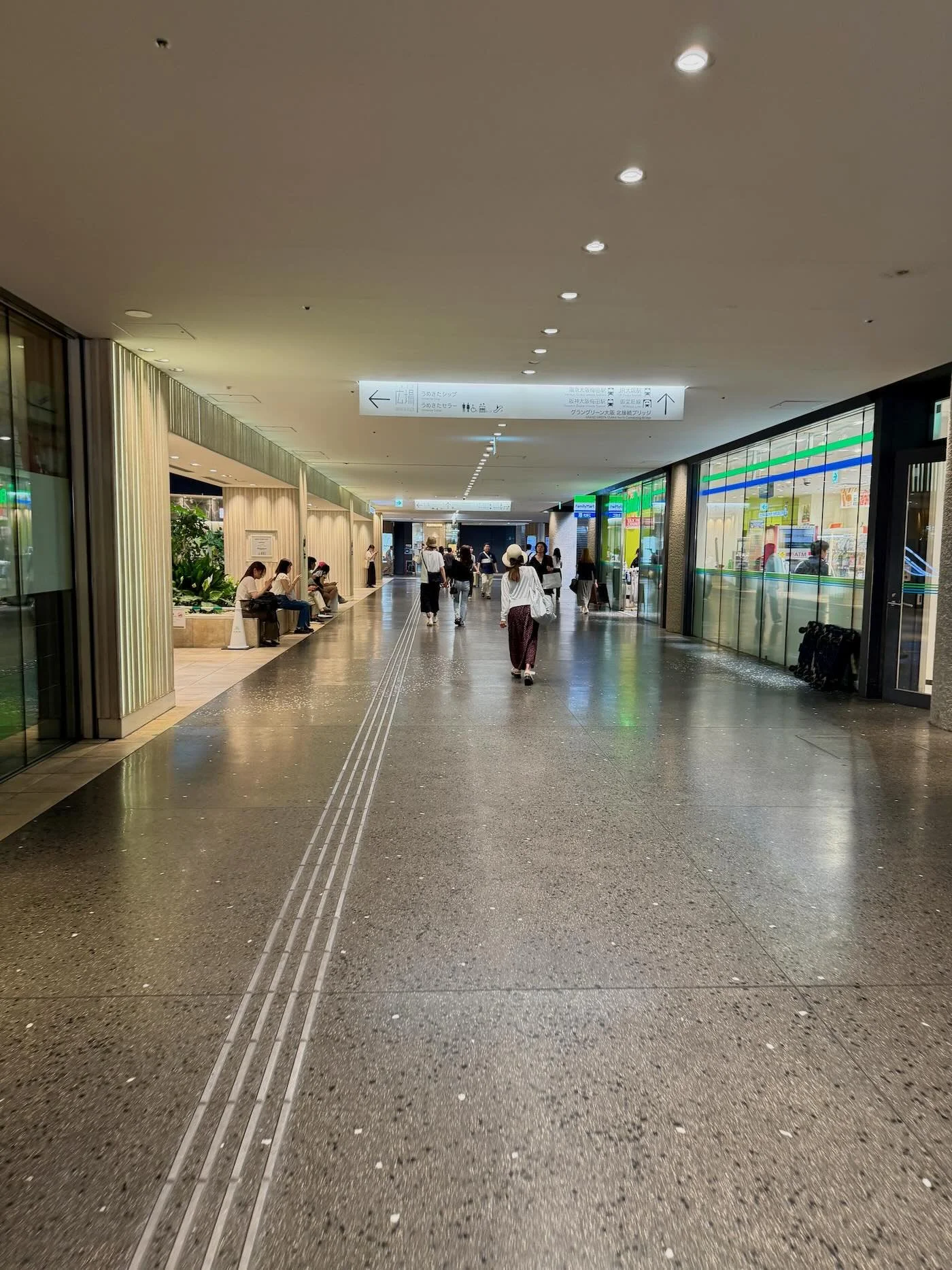
After we almost melted walking ten minutes in Tokyo, we probably should’ve learned. But for the sake of delicious matcha, apparently a little sacrifice felt warranted.
We were so grateful to Aki-san for stopping our mad plan. The underground passage was much more comfortable, and although parts of it were open-air, it turned into a fun, leisurely stroll past stores and restaurants - just the kind of walk we’d been missing in the summer.
And surprisingly, this wasn’t the last we saw of Aki-san either.
Sushi Experience at Tsukimi
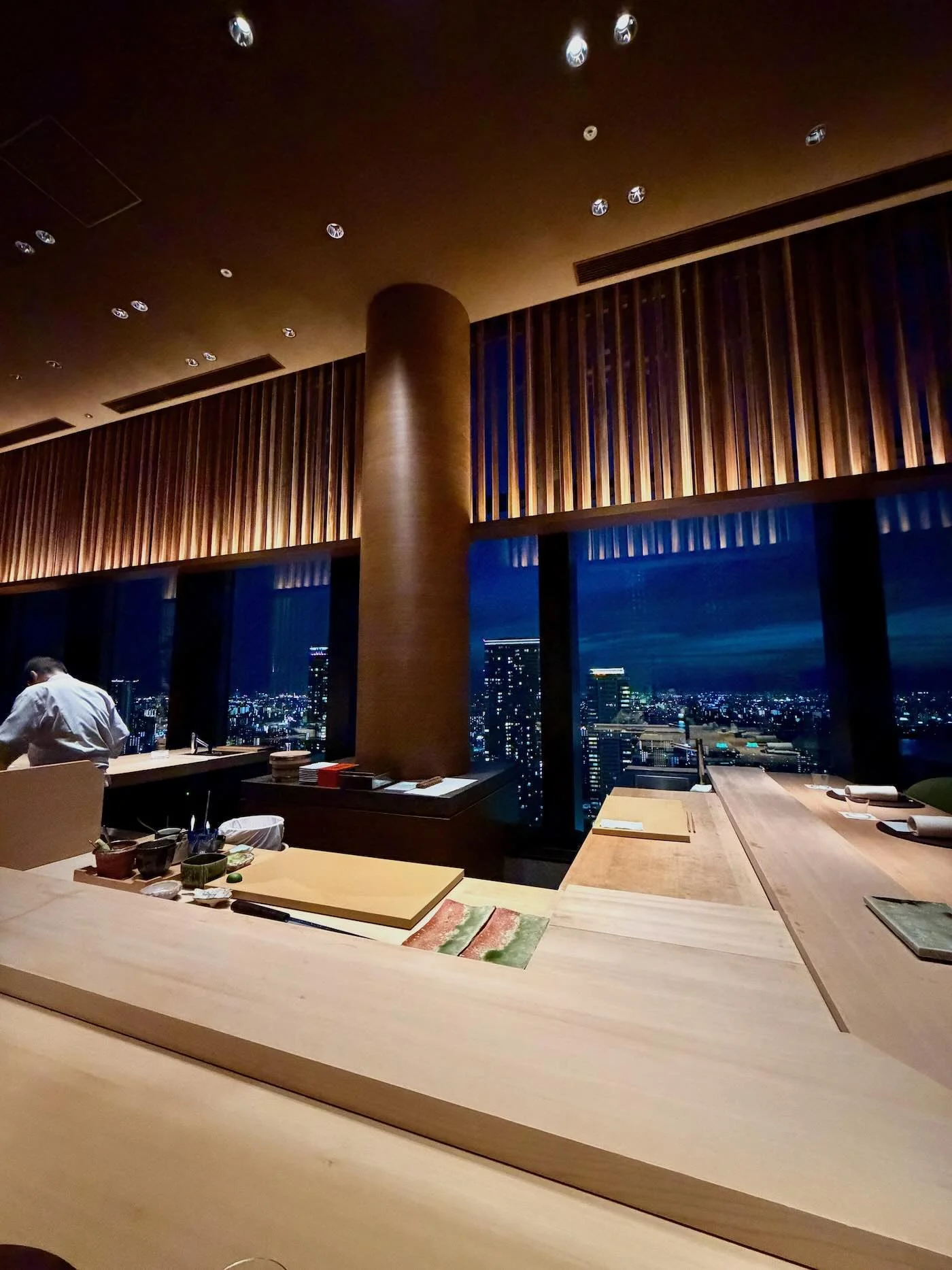
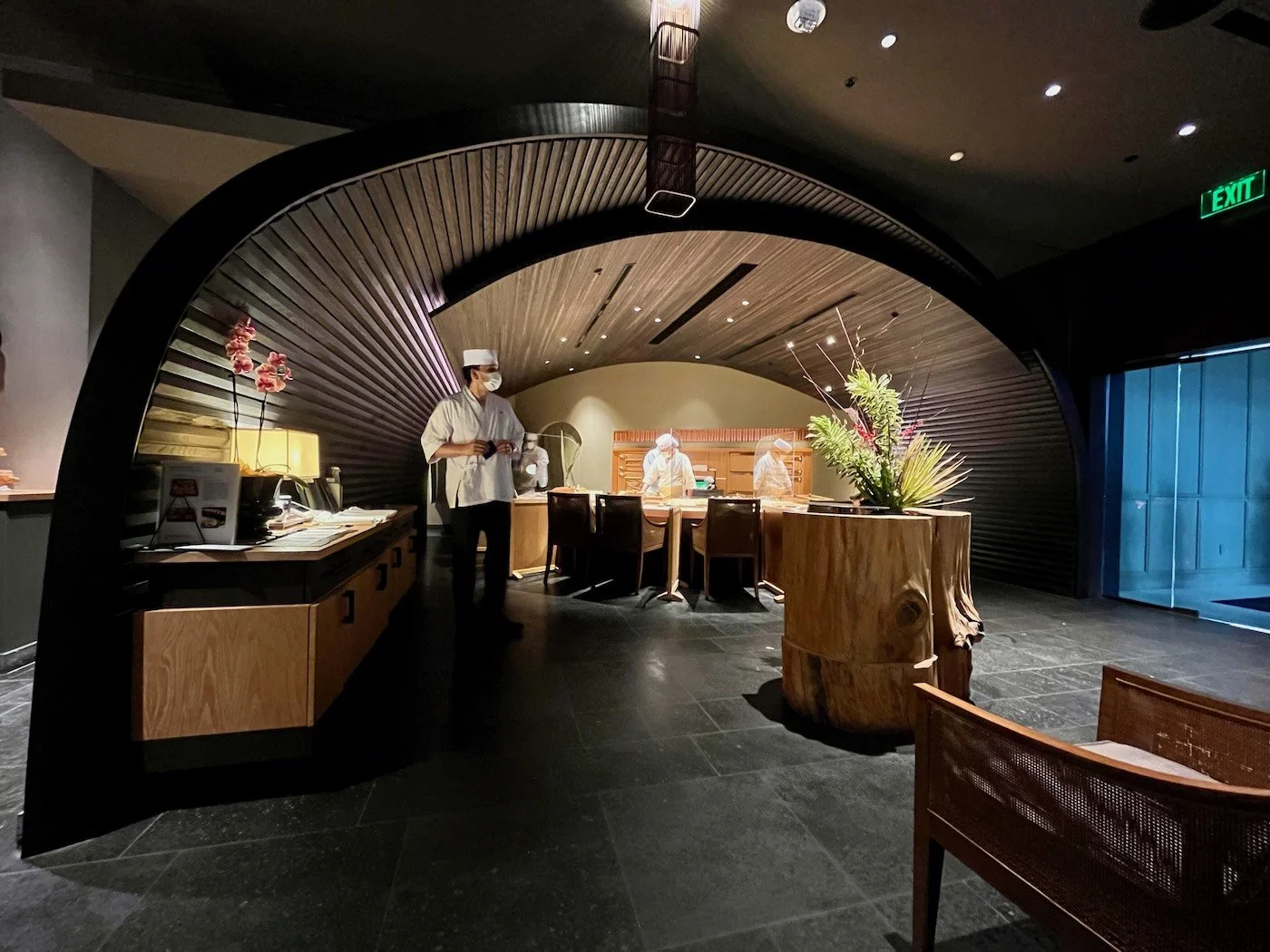
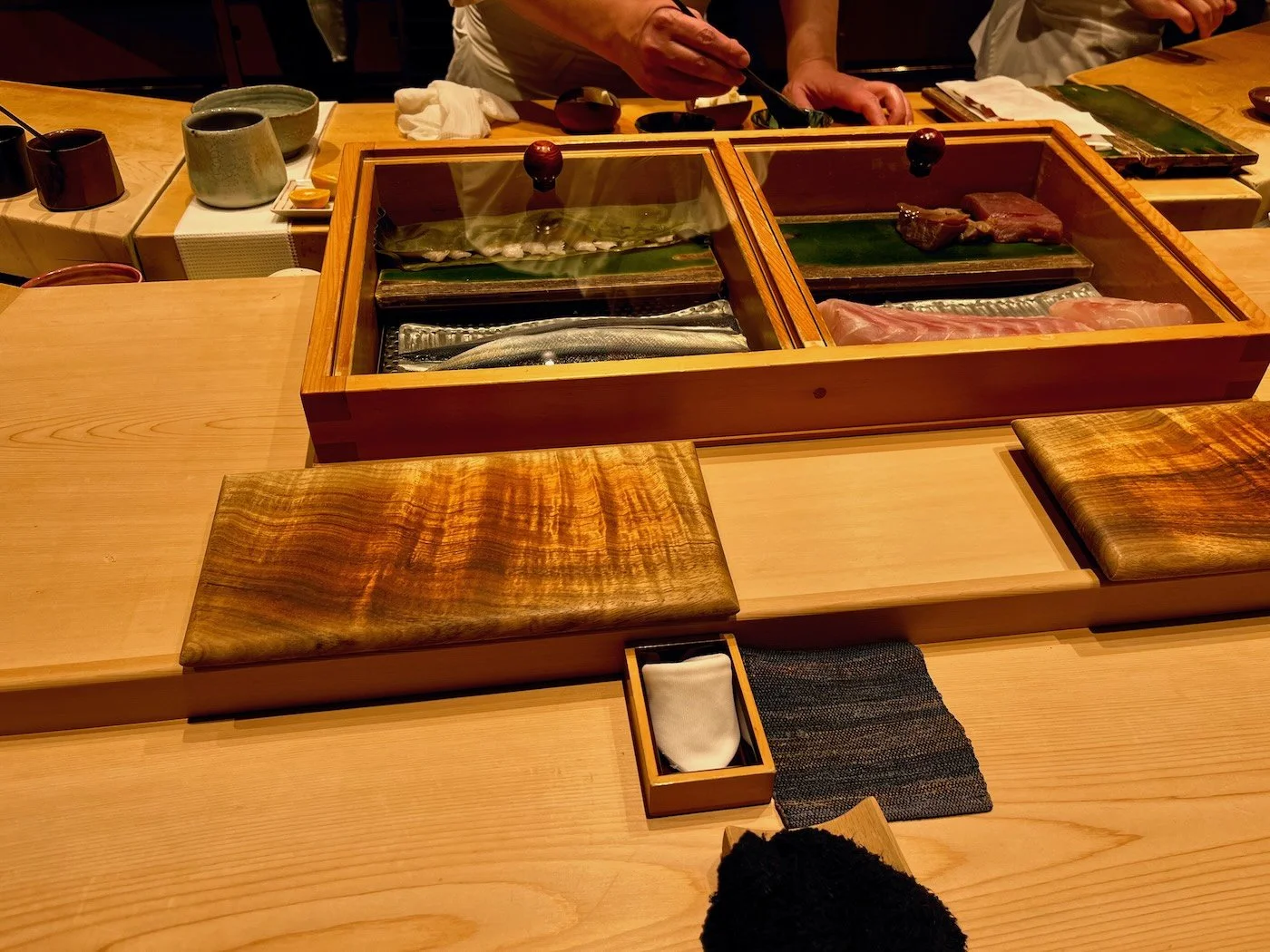
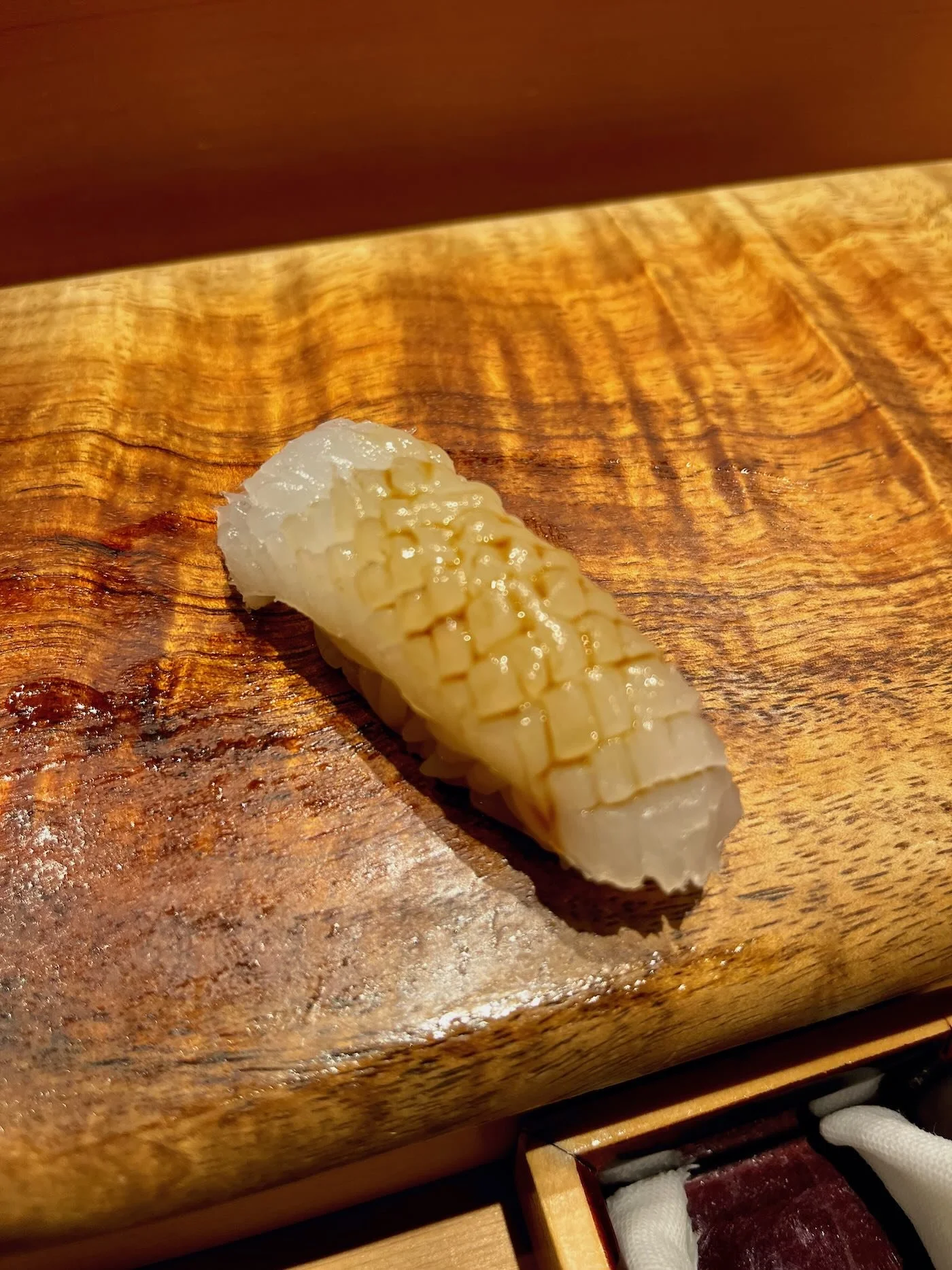
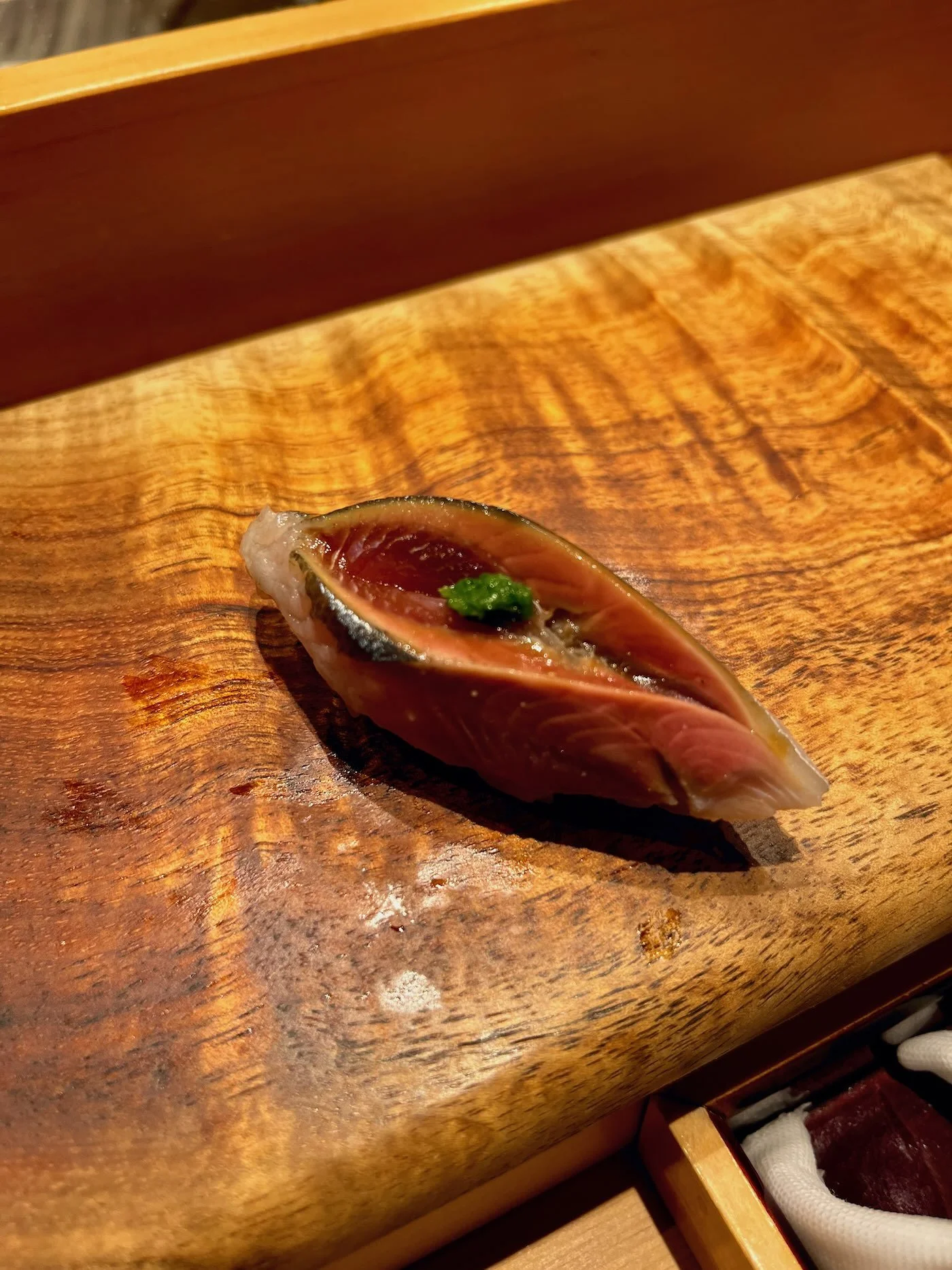
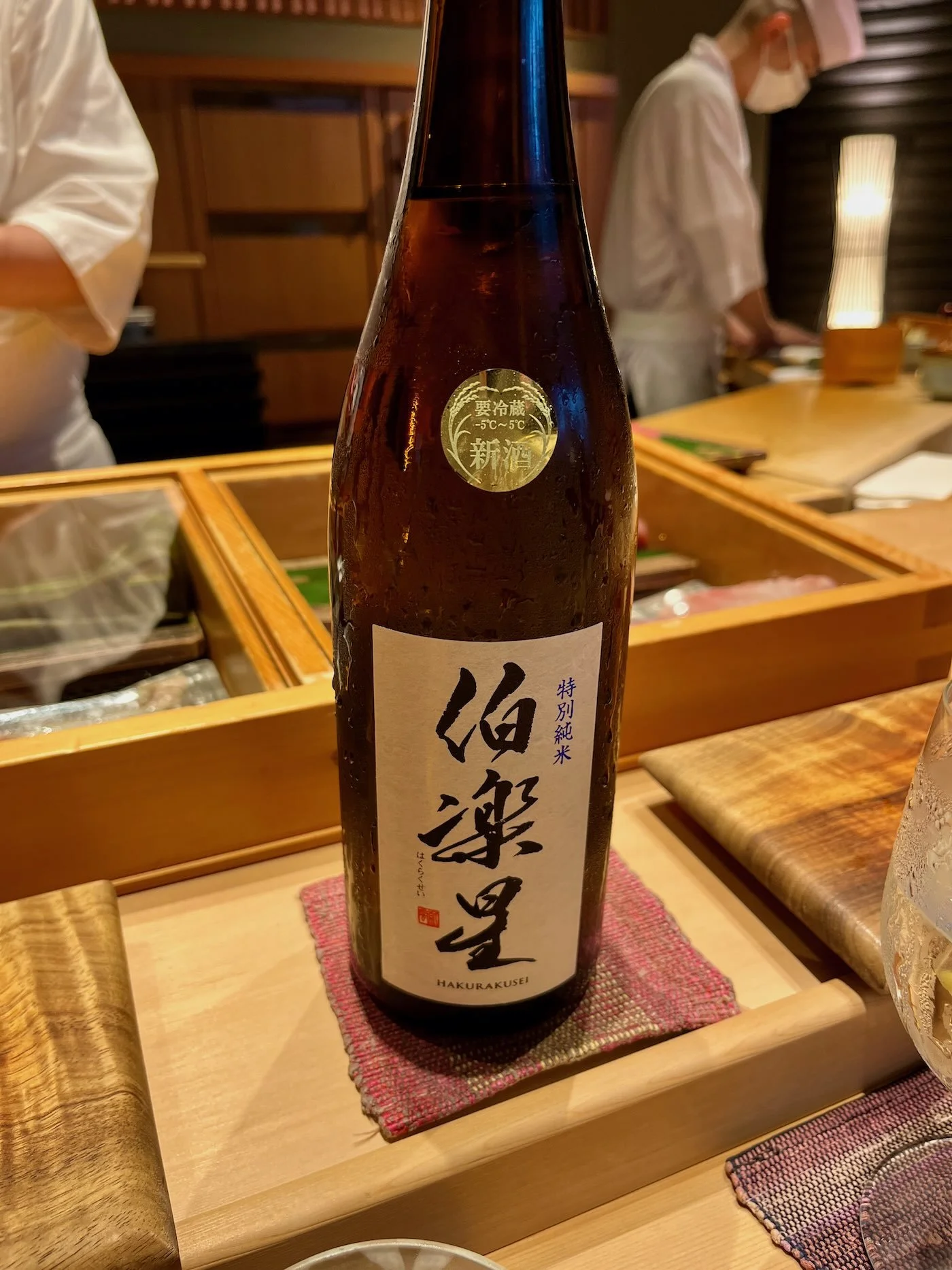
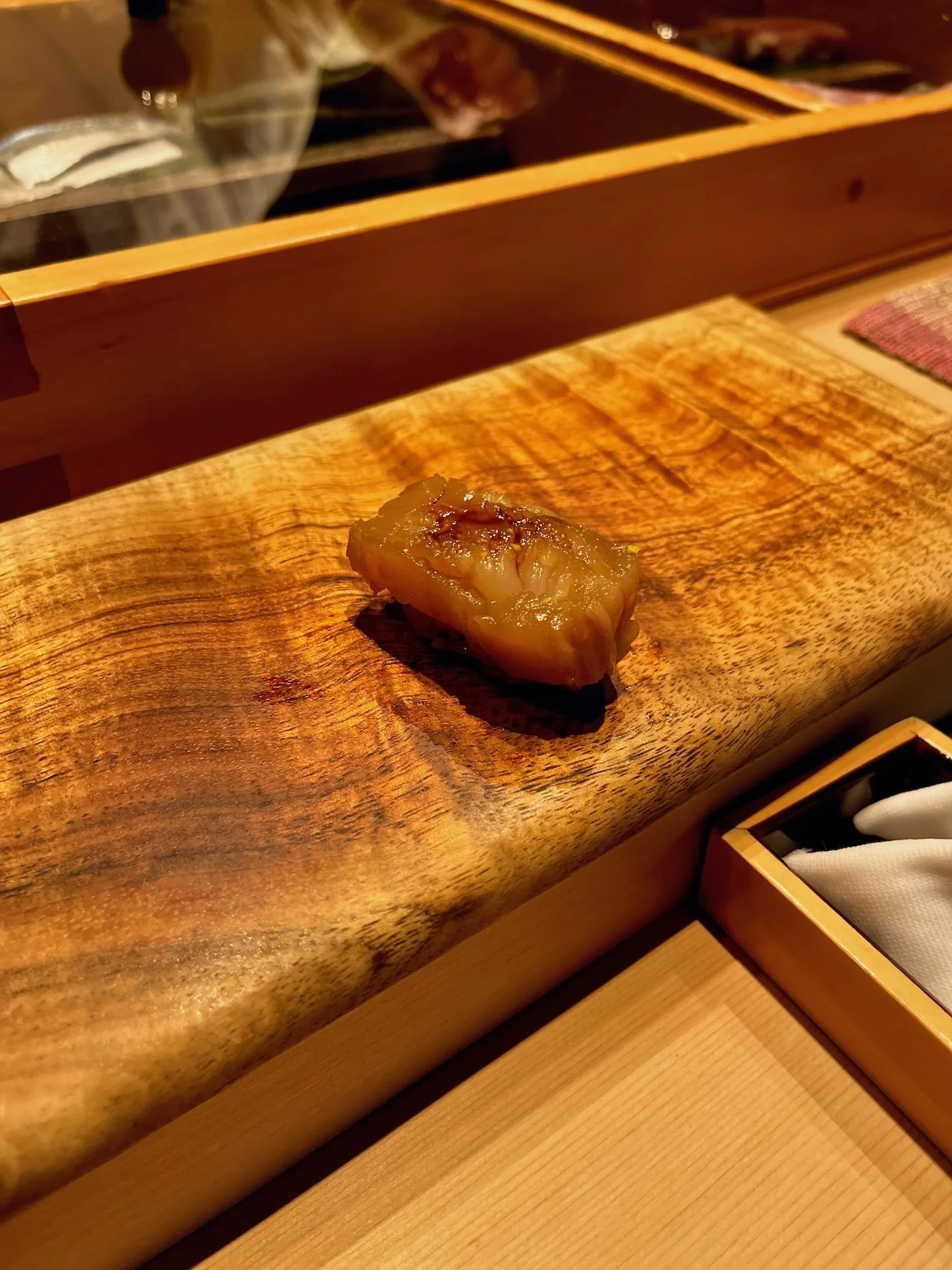
Tsukimi is located on the 29th floor, and its sushi side centers around an intimate 14-seat counter serving omakase made with seasonal fish sourced from around Japan. The restaurant describes its style as Edo-style sushi, but the setting itself feels decidedly modern - especially with Osaka unfolding beyond the windows.
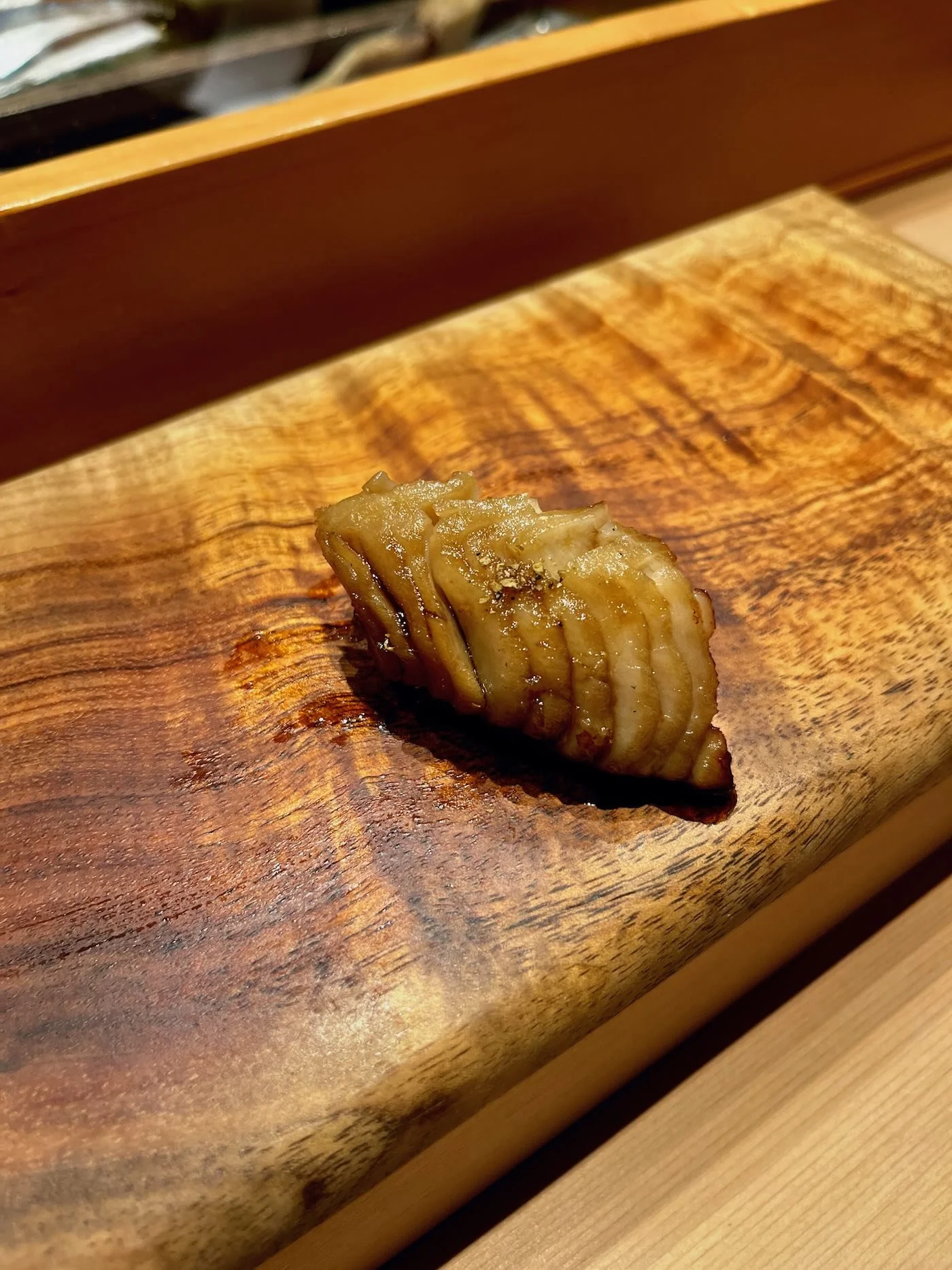
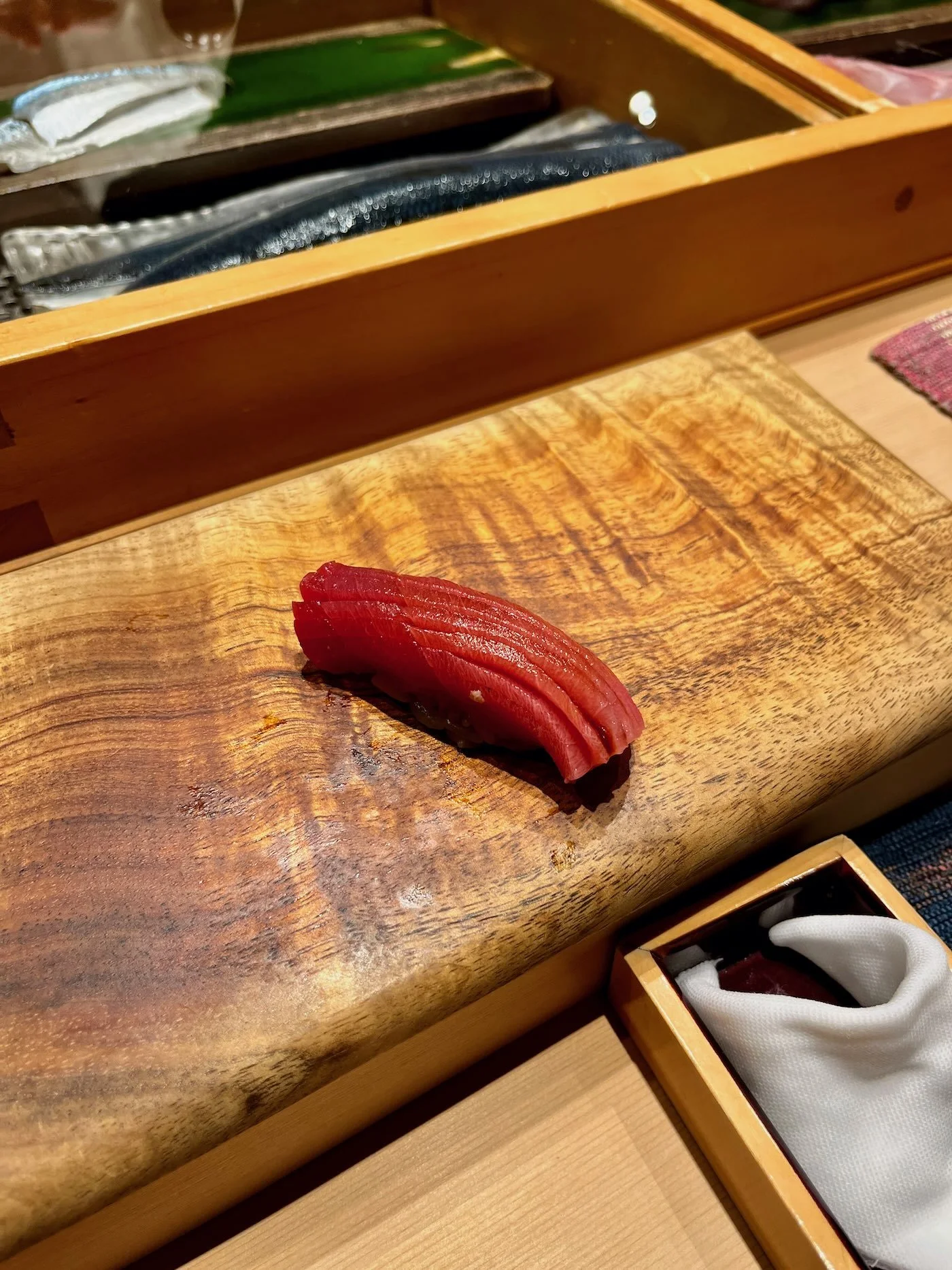
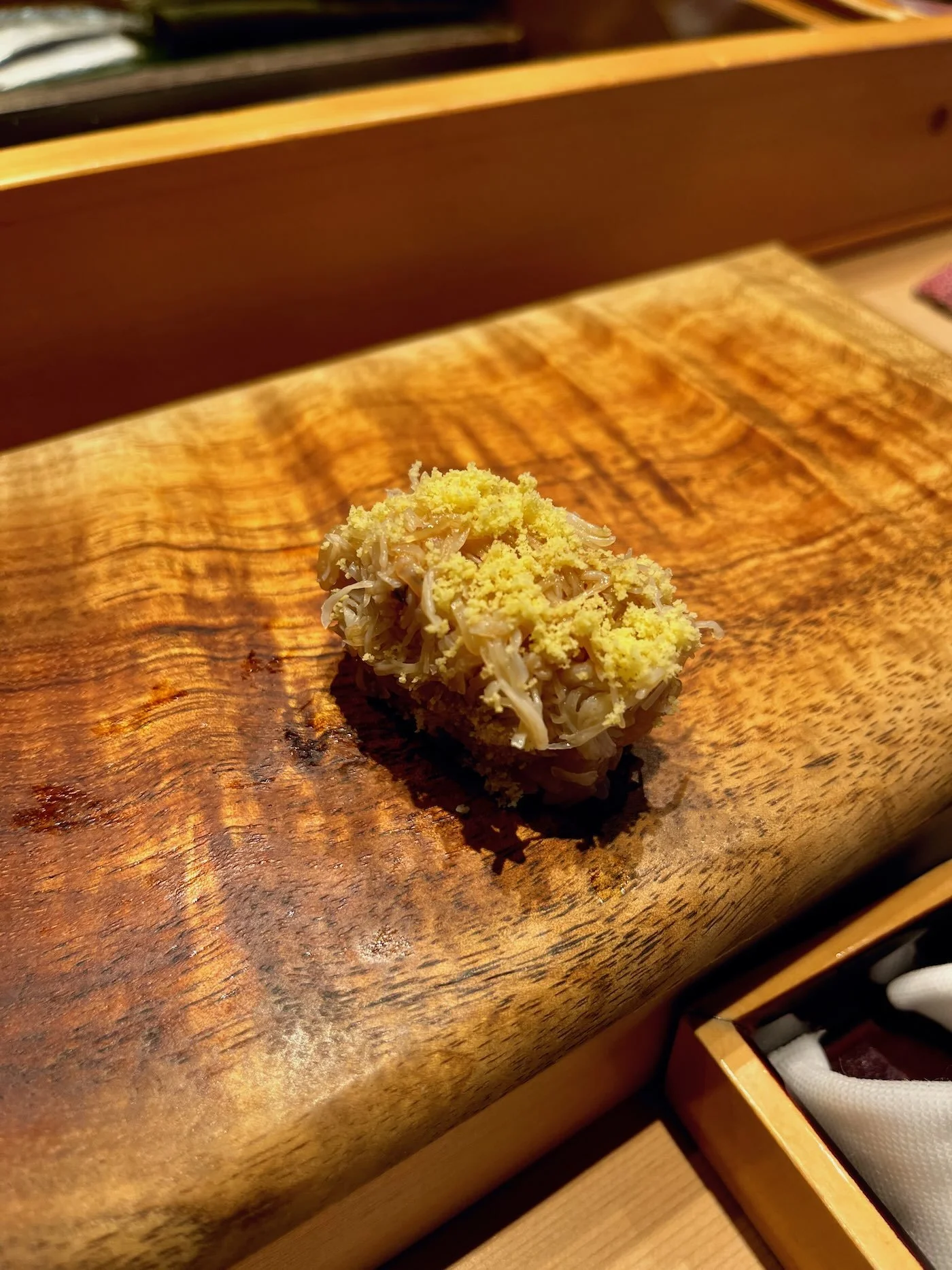
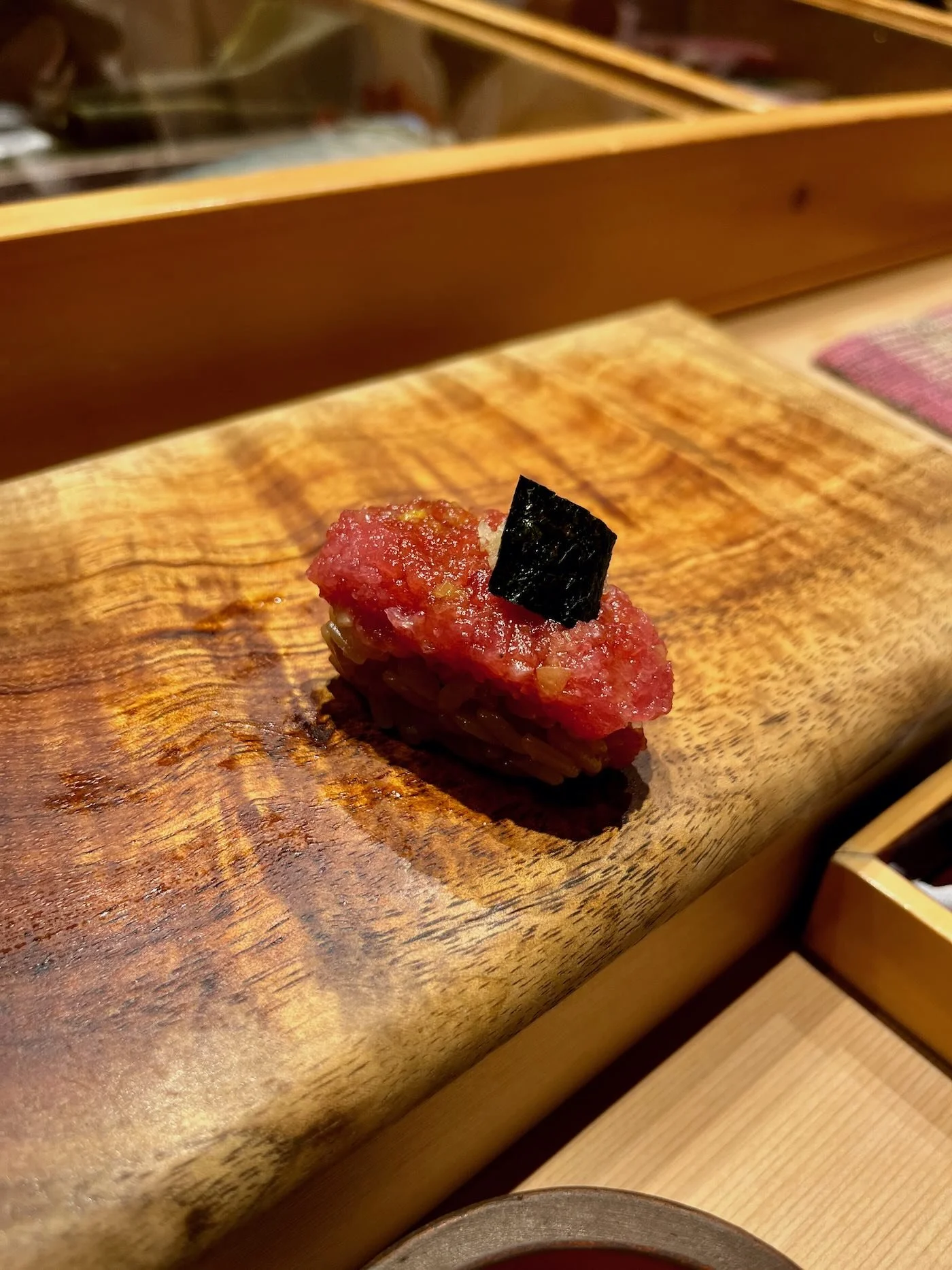
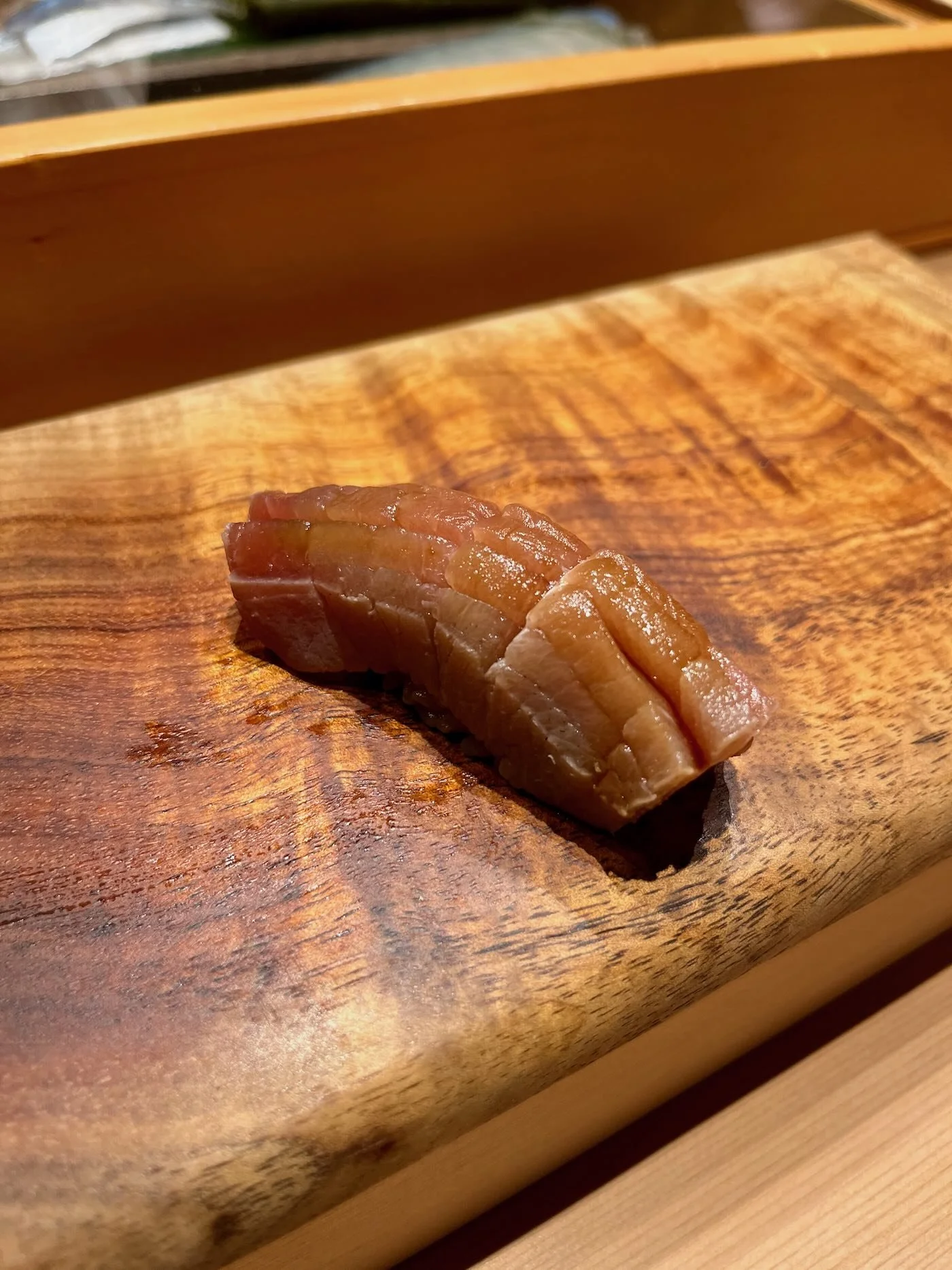
The meal was very enjoyable from beginning to end, and aside from one appetizer, everything was great and very high quality. The akami (red-meat tuna) and bafun uni (don’t look up what bafun means) were my personal favorites, while Cory loved the chu-toro and ama-ebi (sweet shrimp). We both “revisited” a few pieces at the end of the course - ordering repeats of our favorites - and were very satisfied.
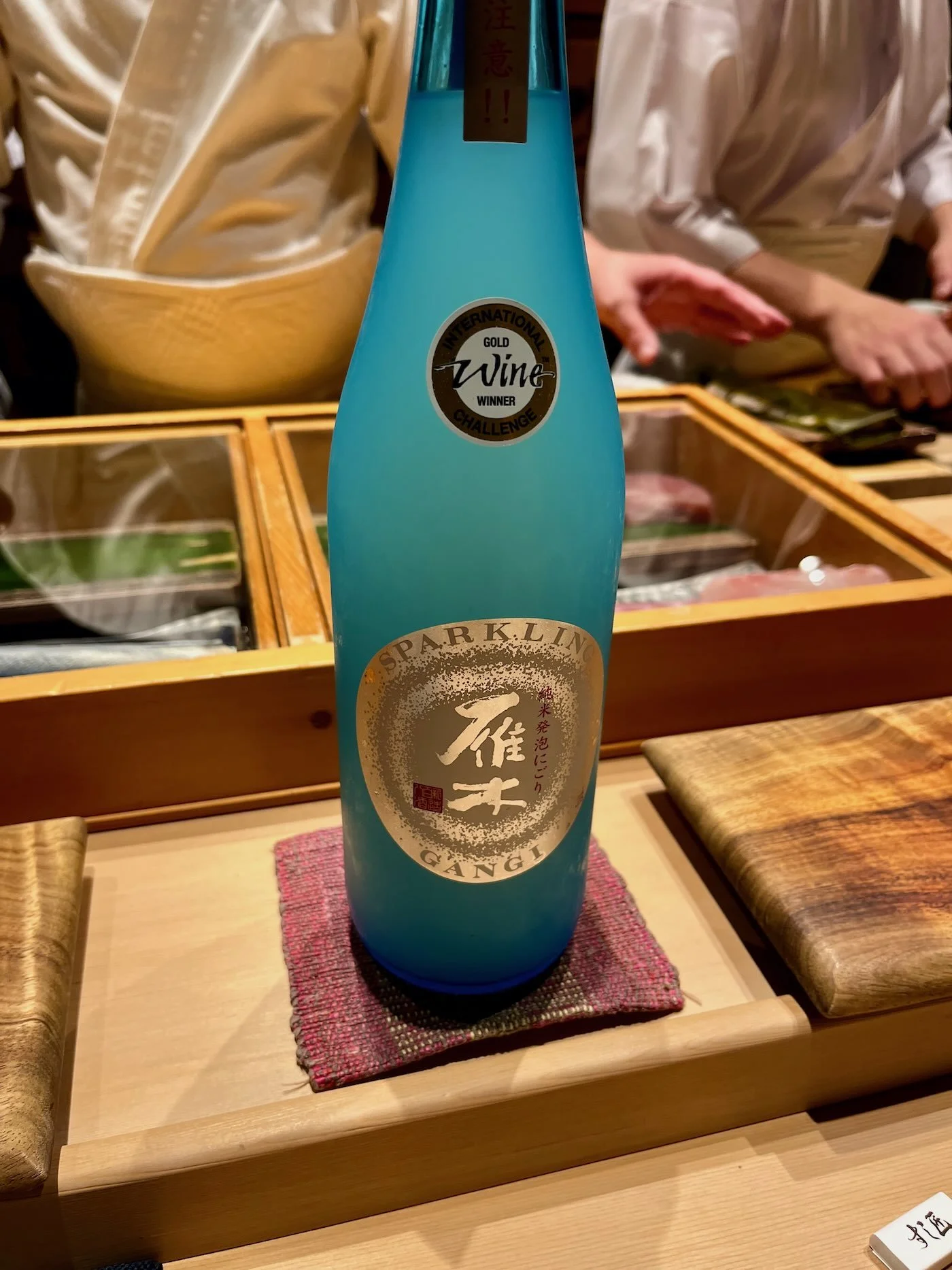
I distinctly recall forgetting to snap a few photos, since I was so engrossed in the moment. But here are a few photos of what we enjoyed.
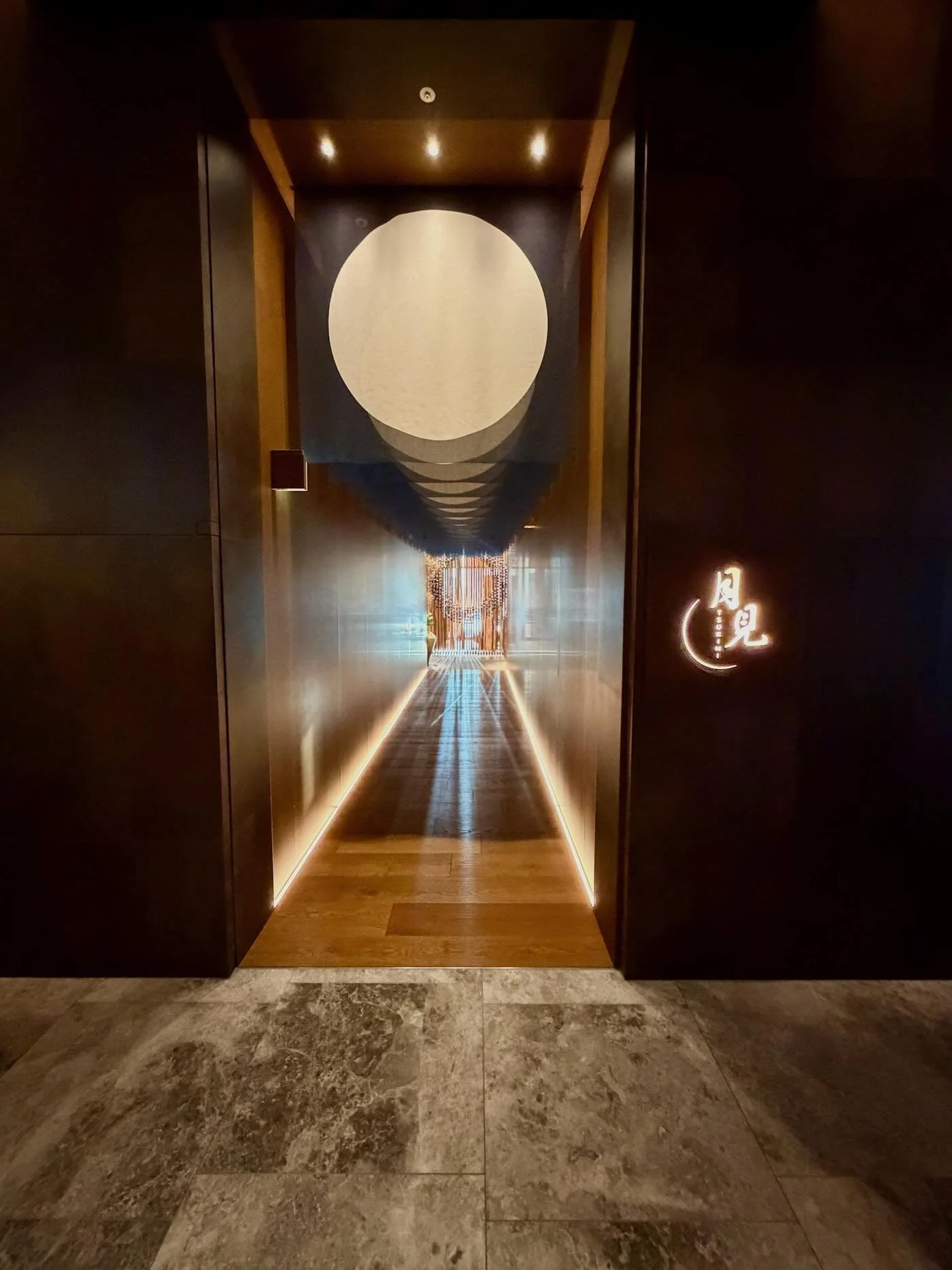
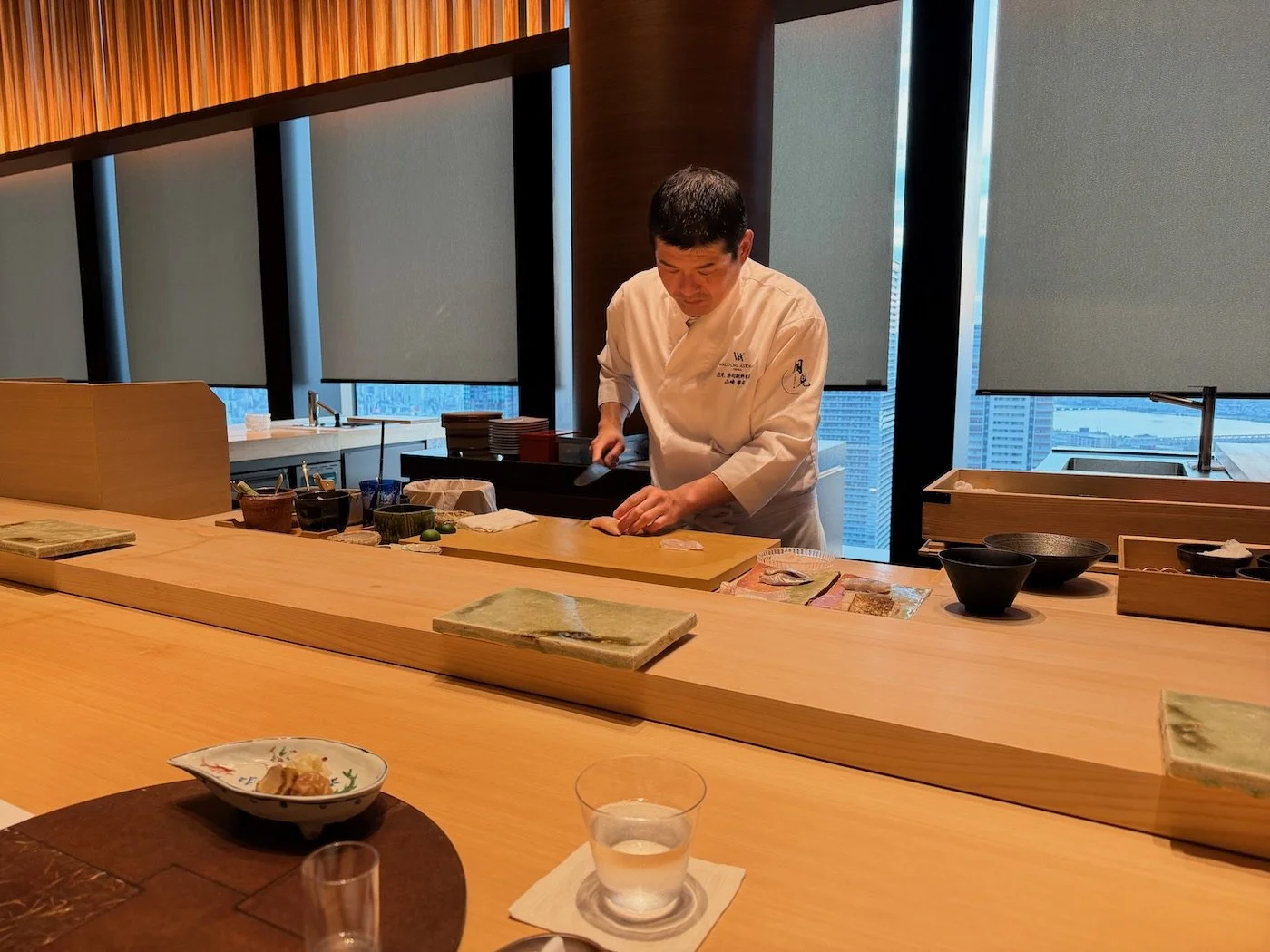
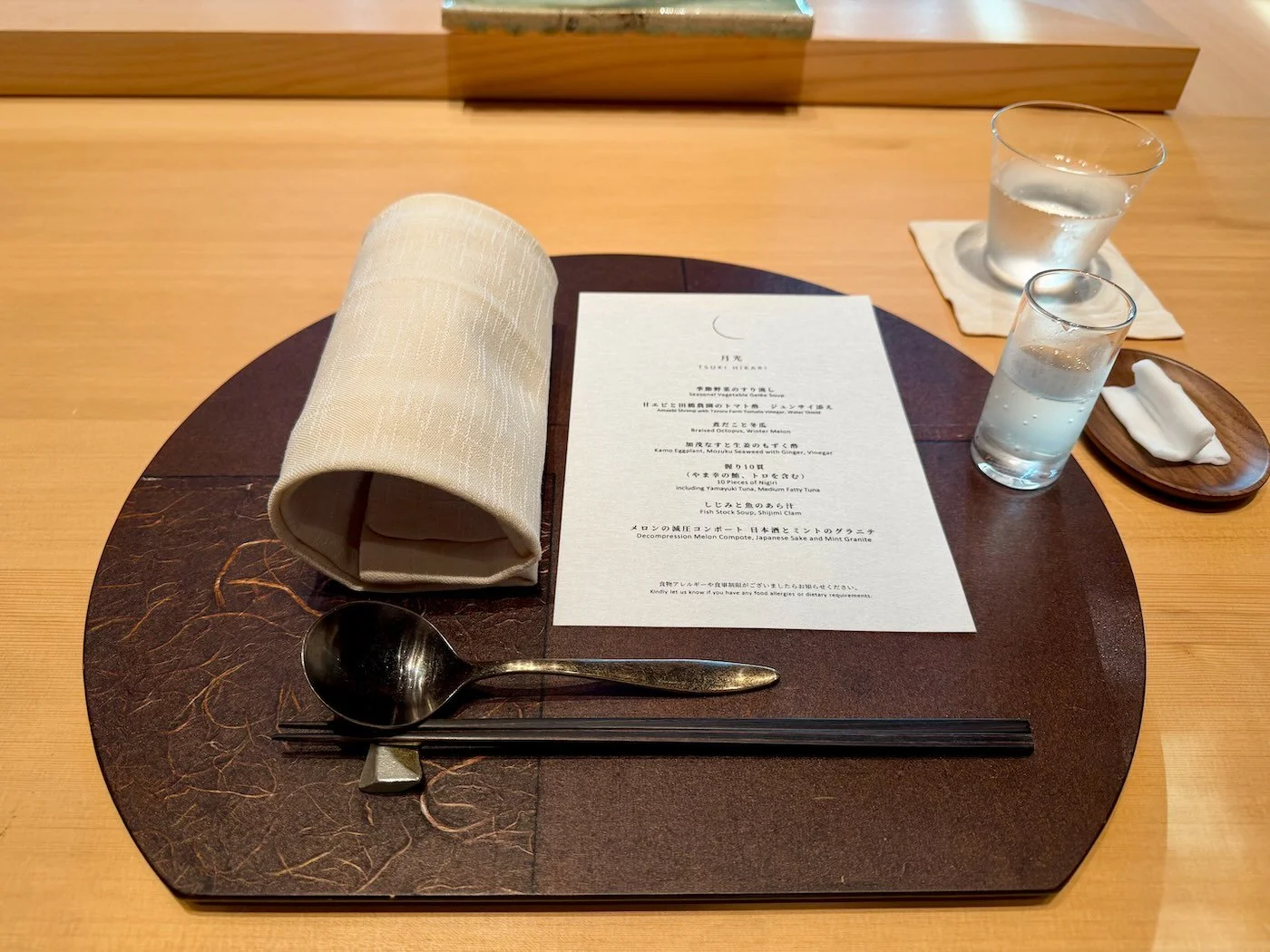
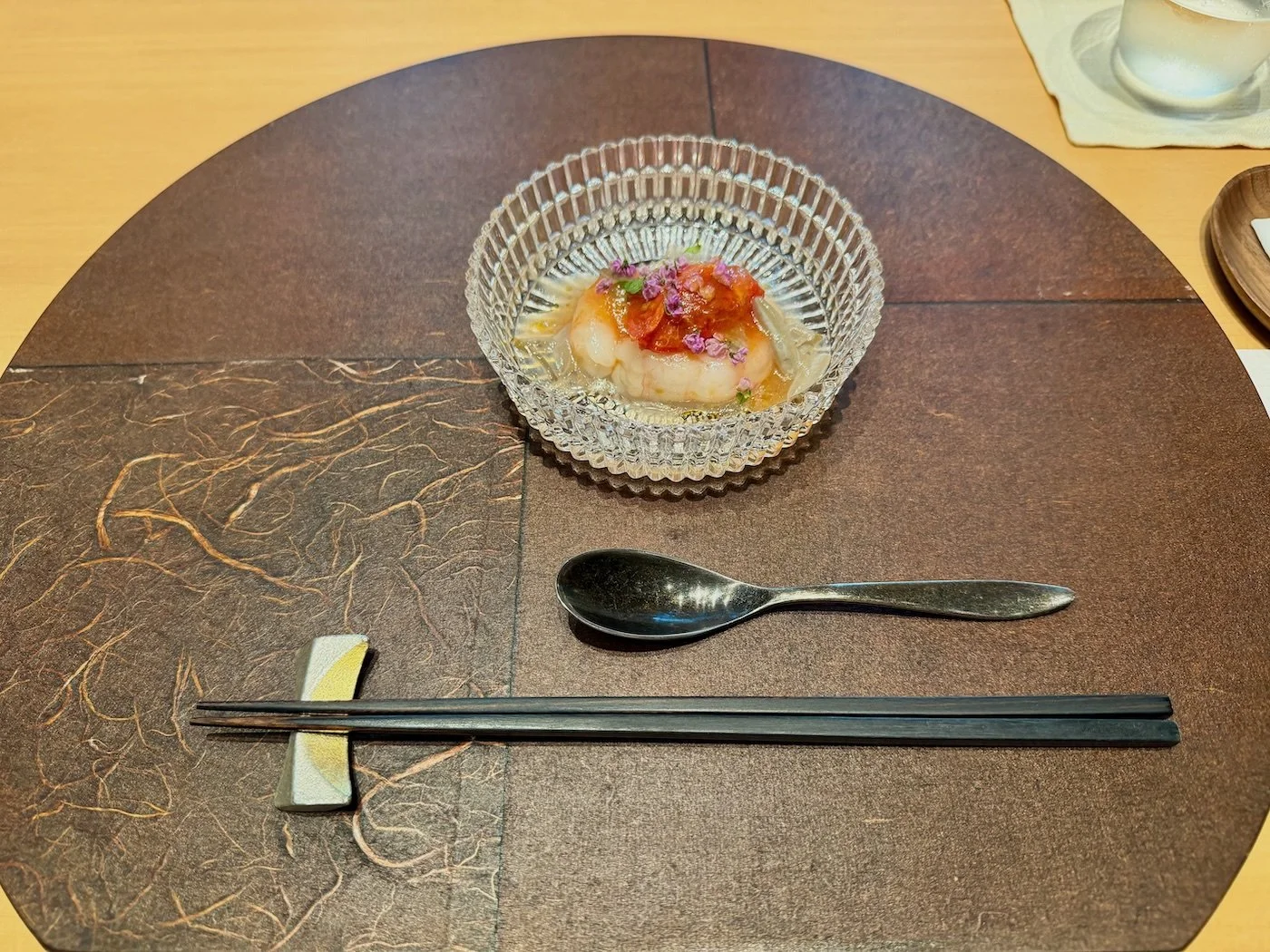
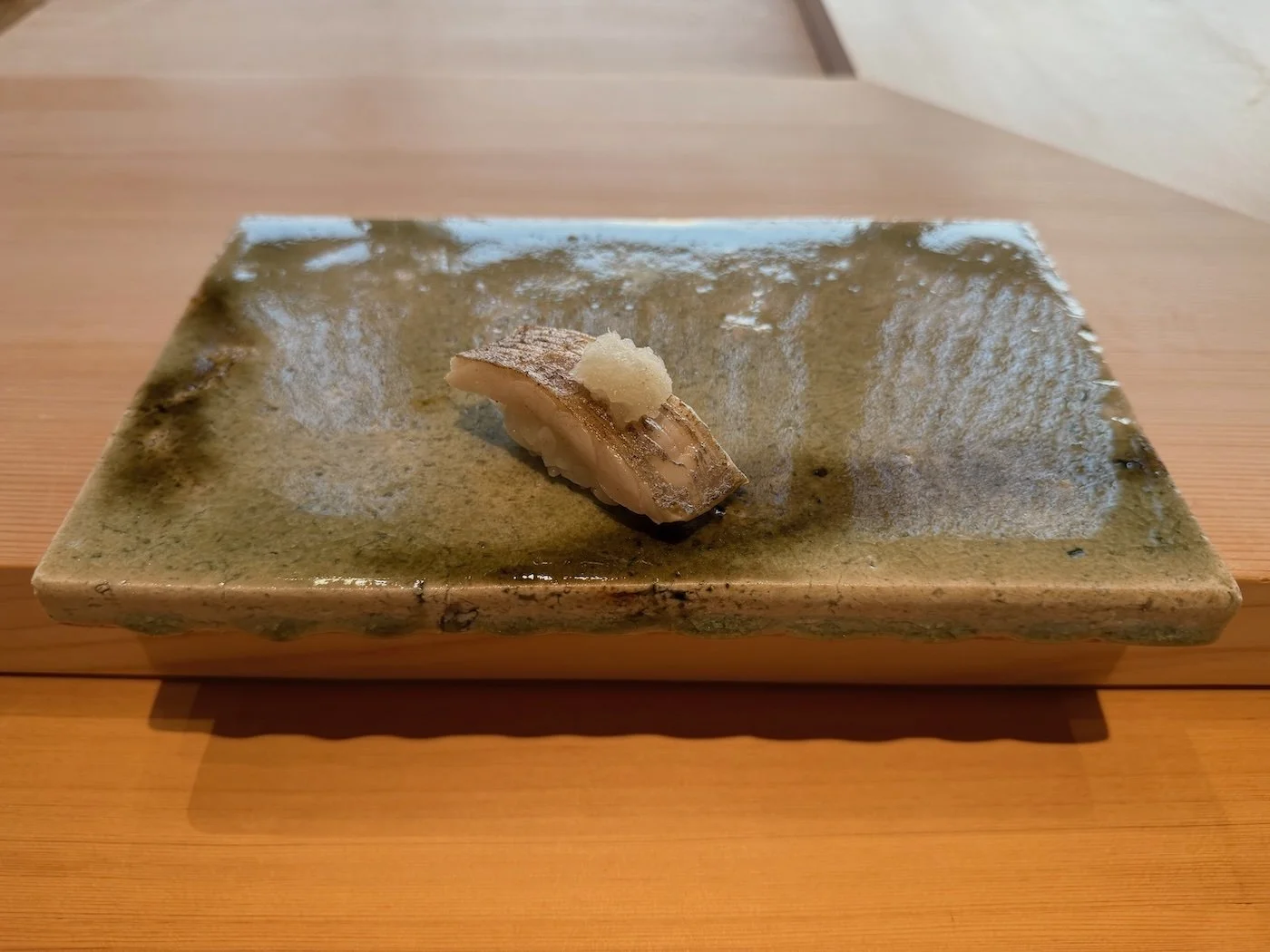
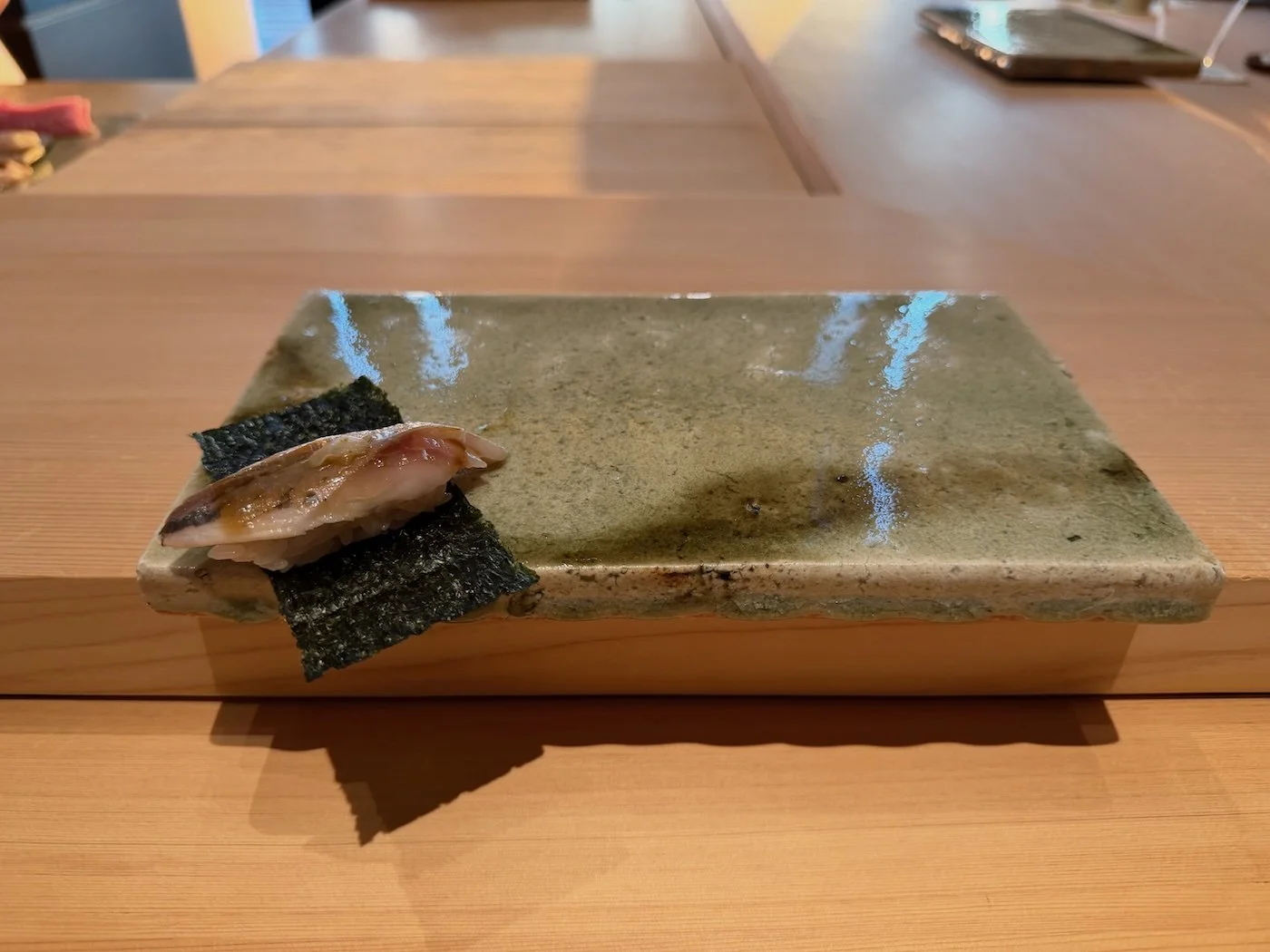
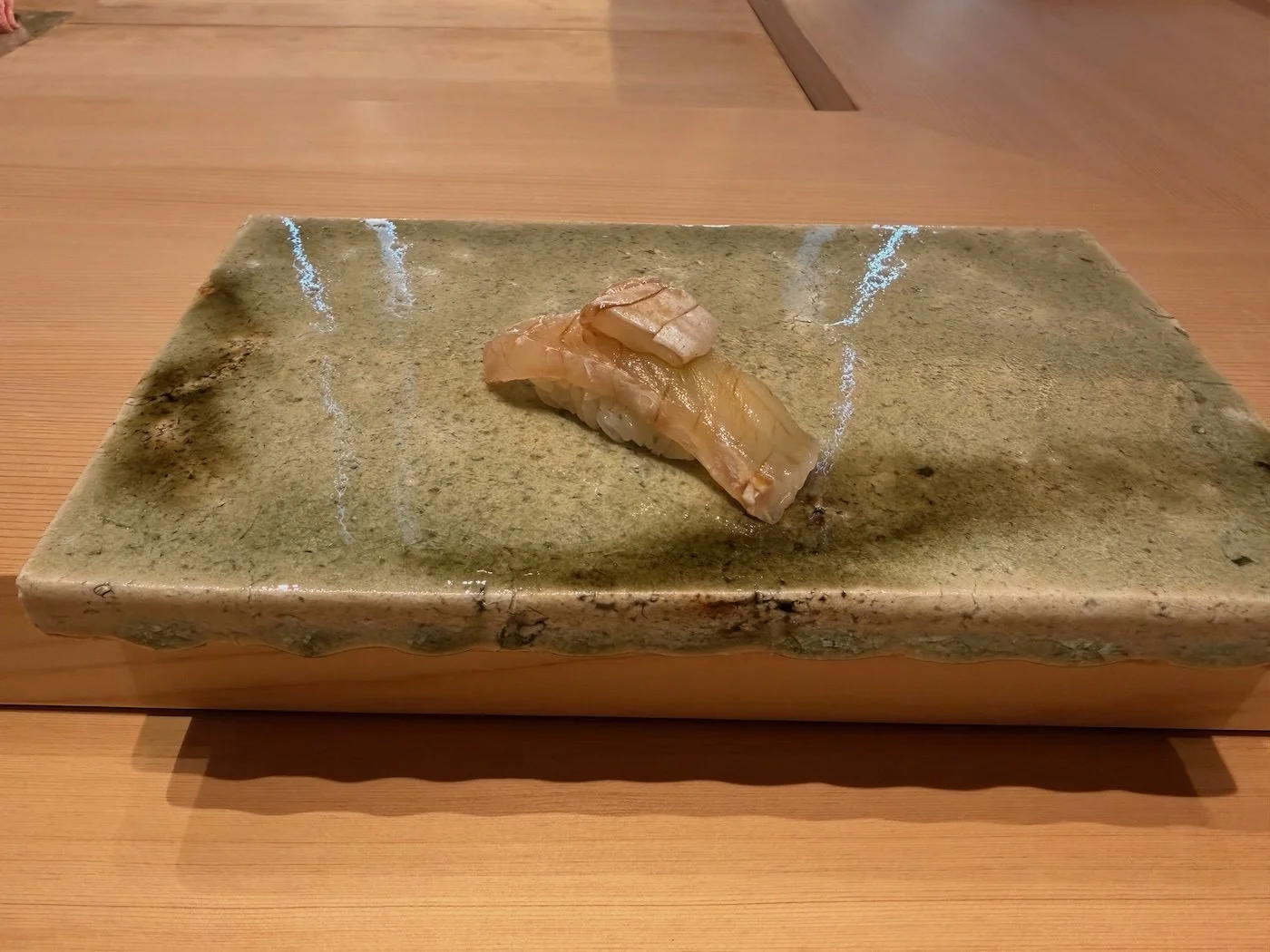
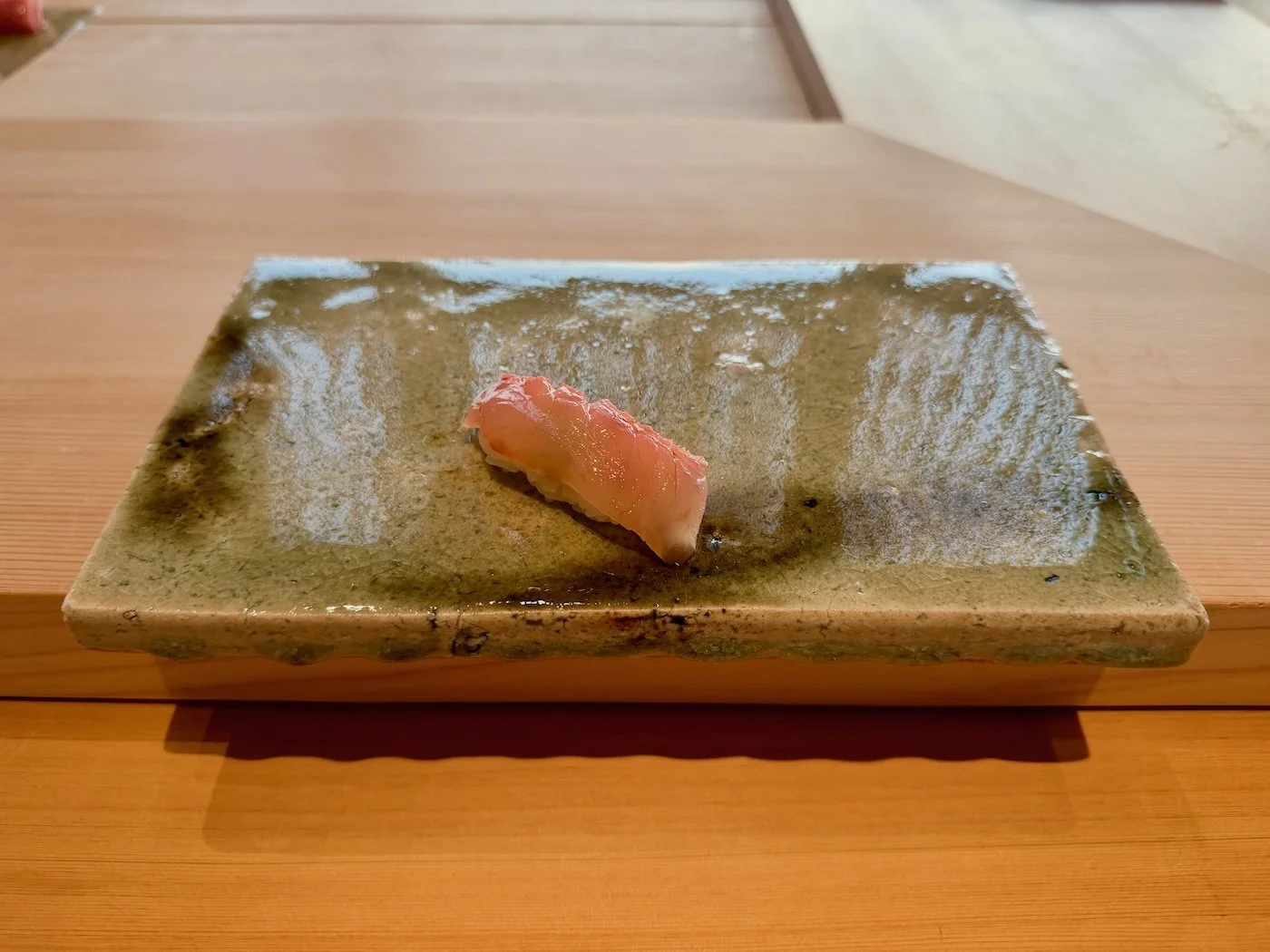
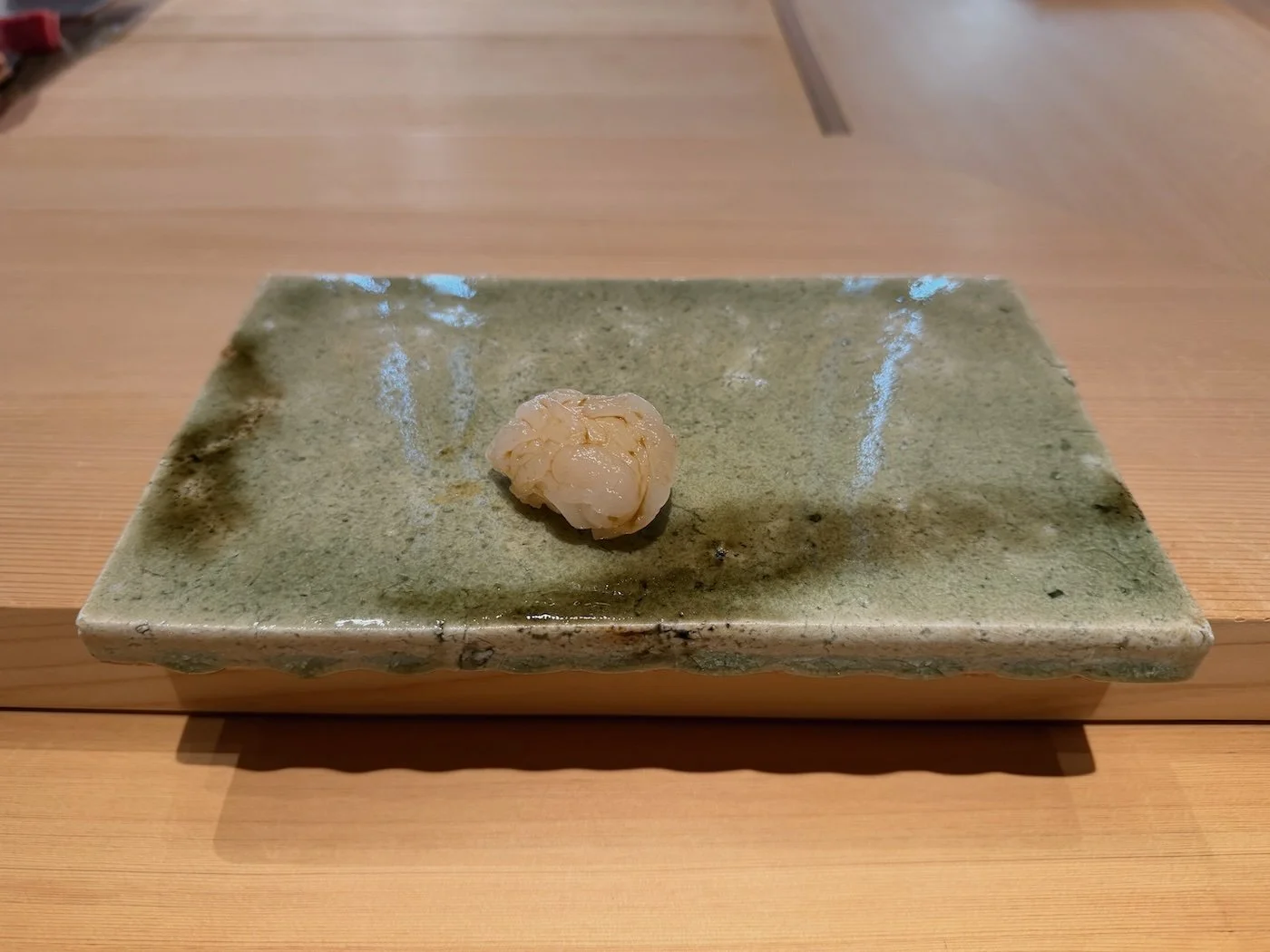
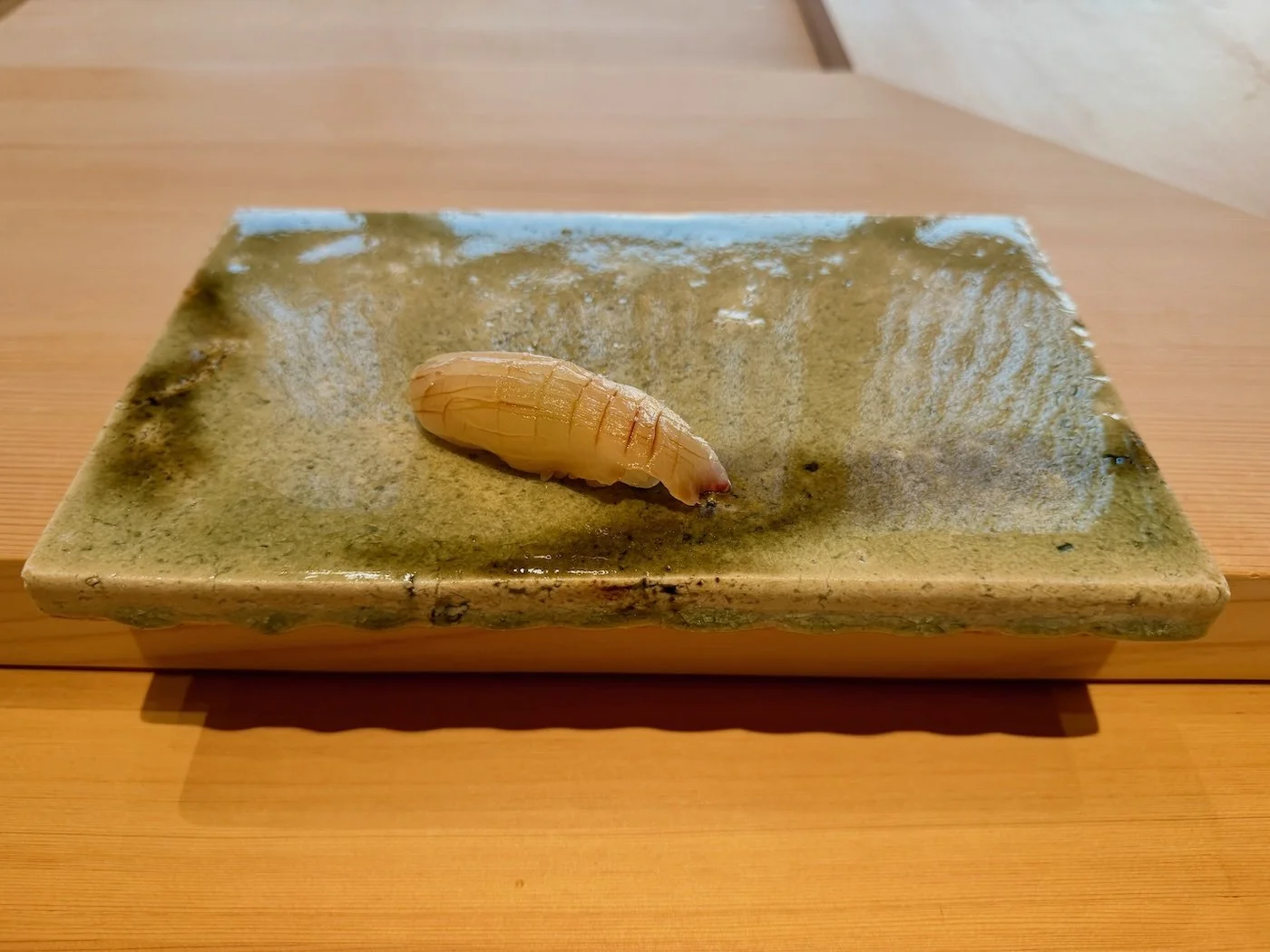
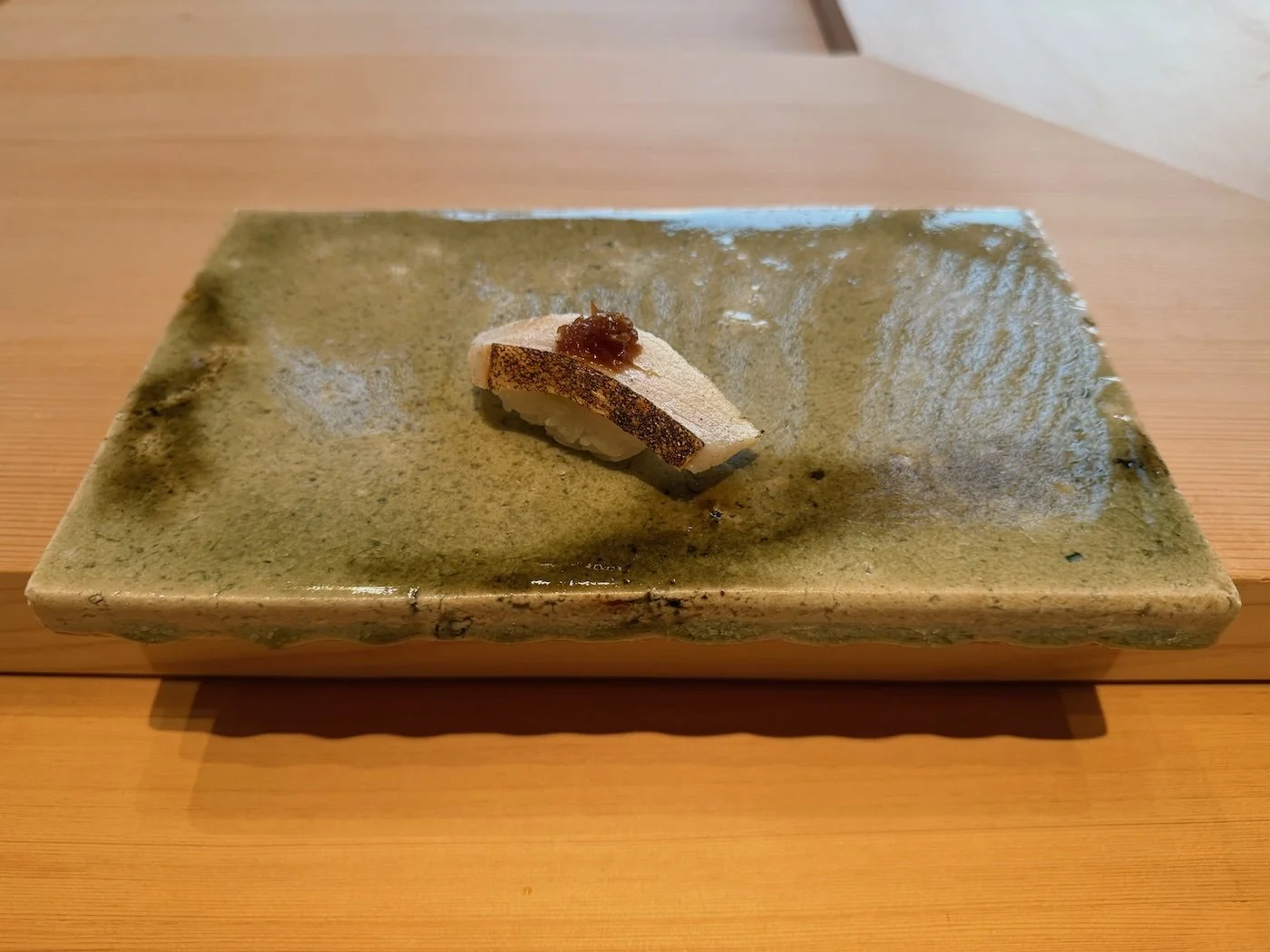
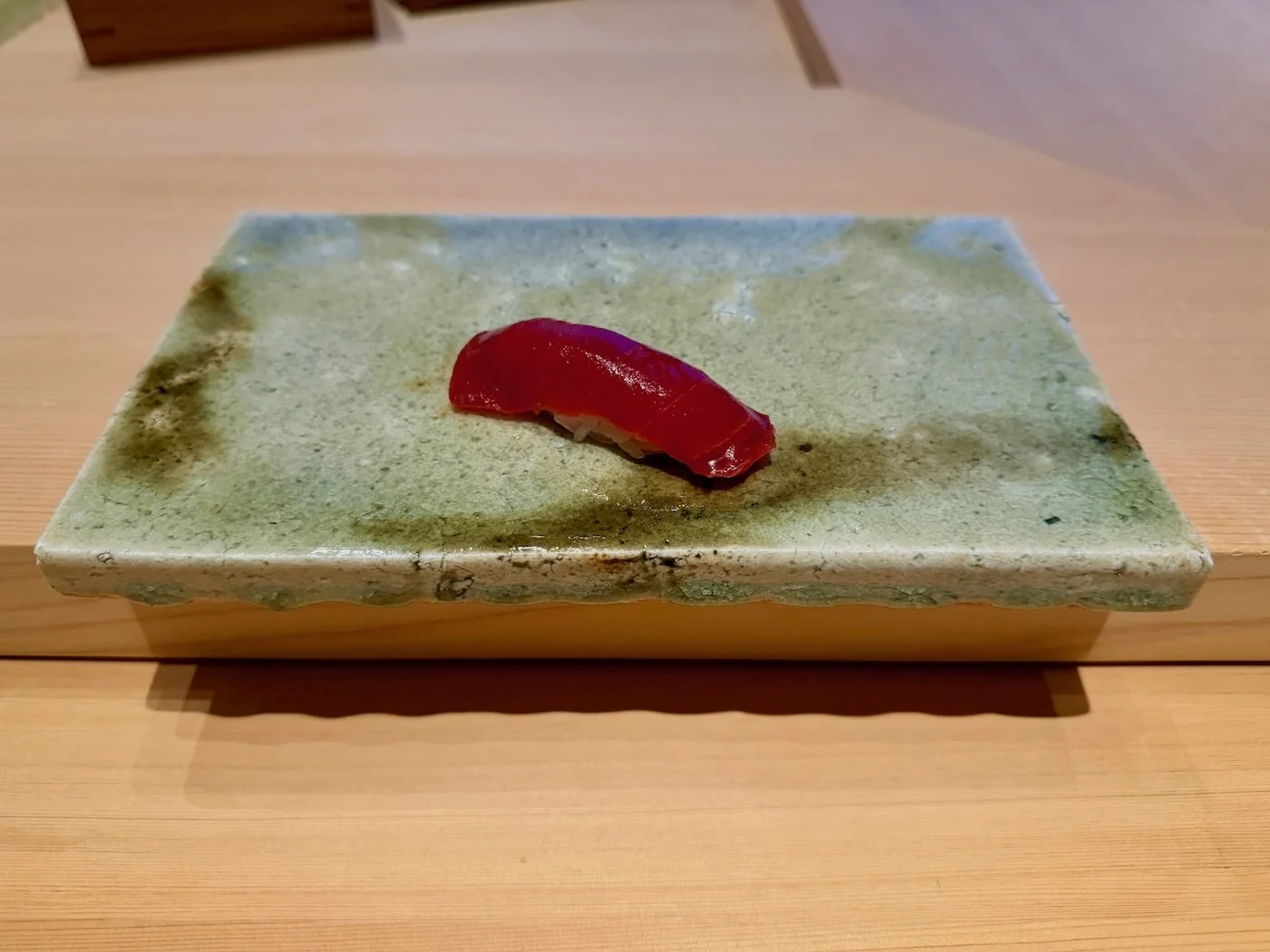
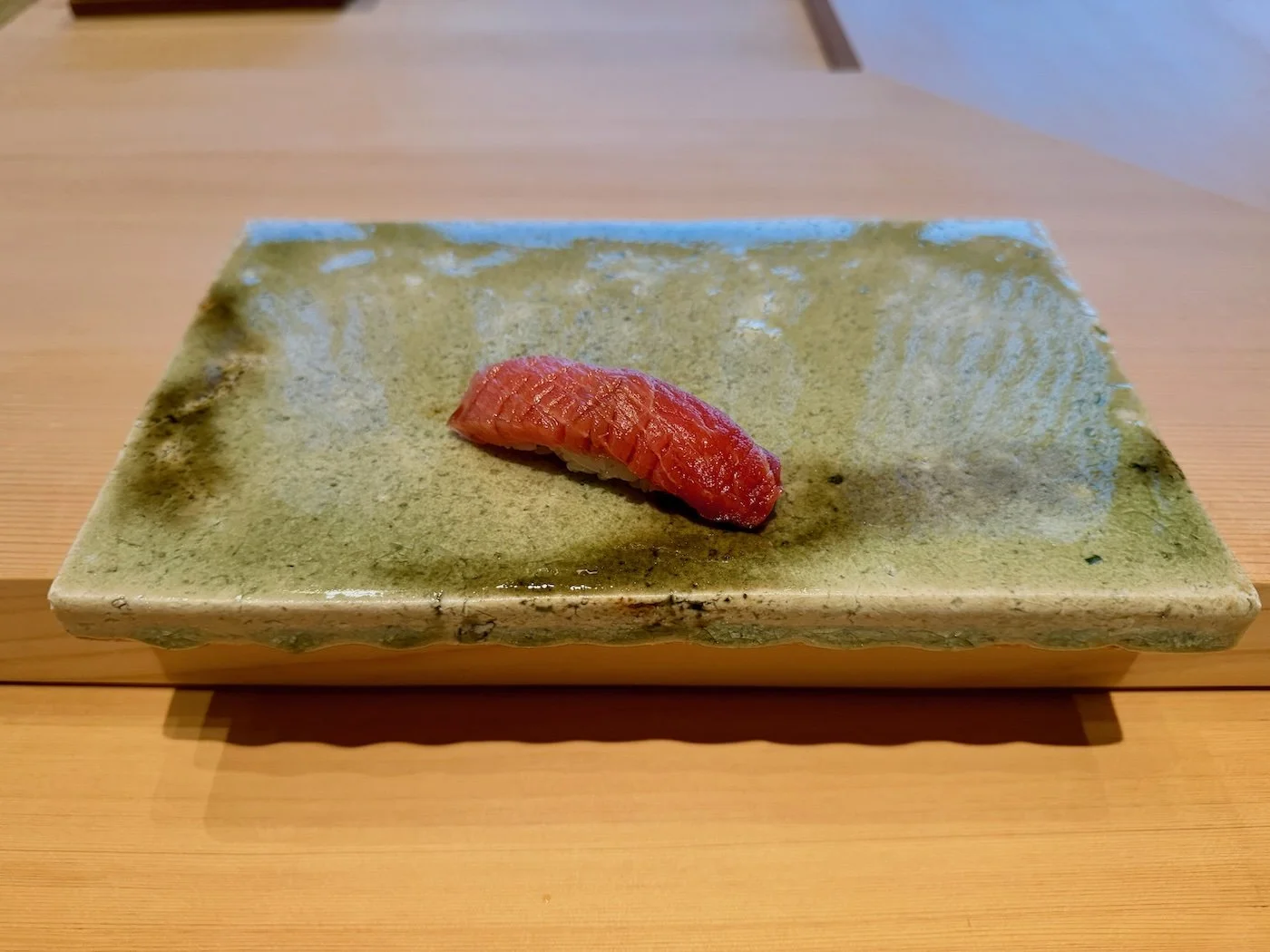
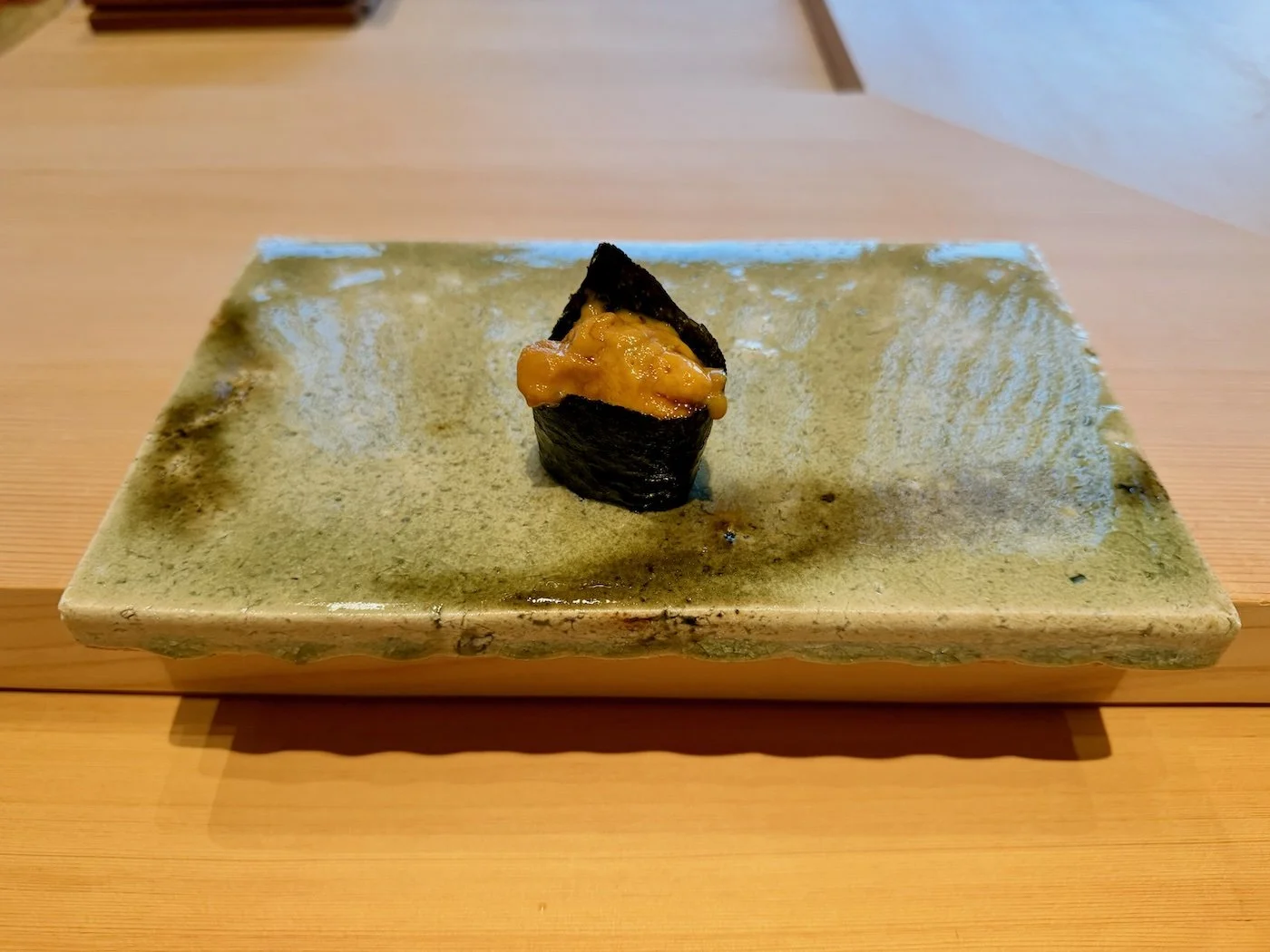
Our chef was very kind and knowledgeable. When we asked if it was alright to snap a few pictures, he said with a huge smile, “Please, snap away!”
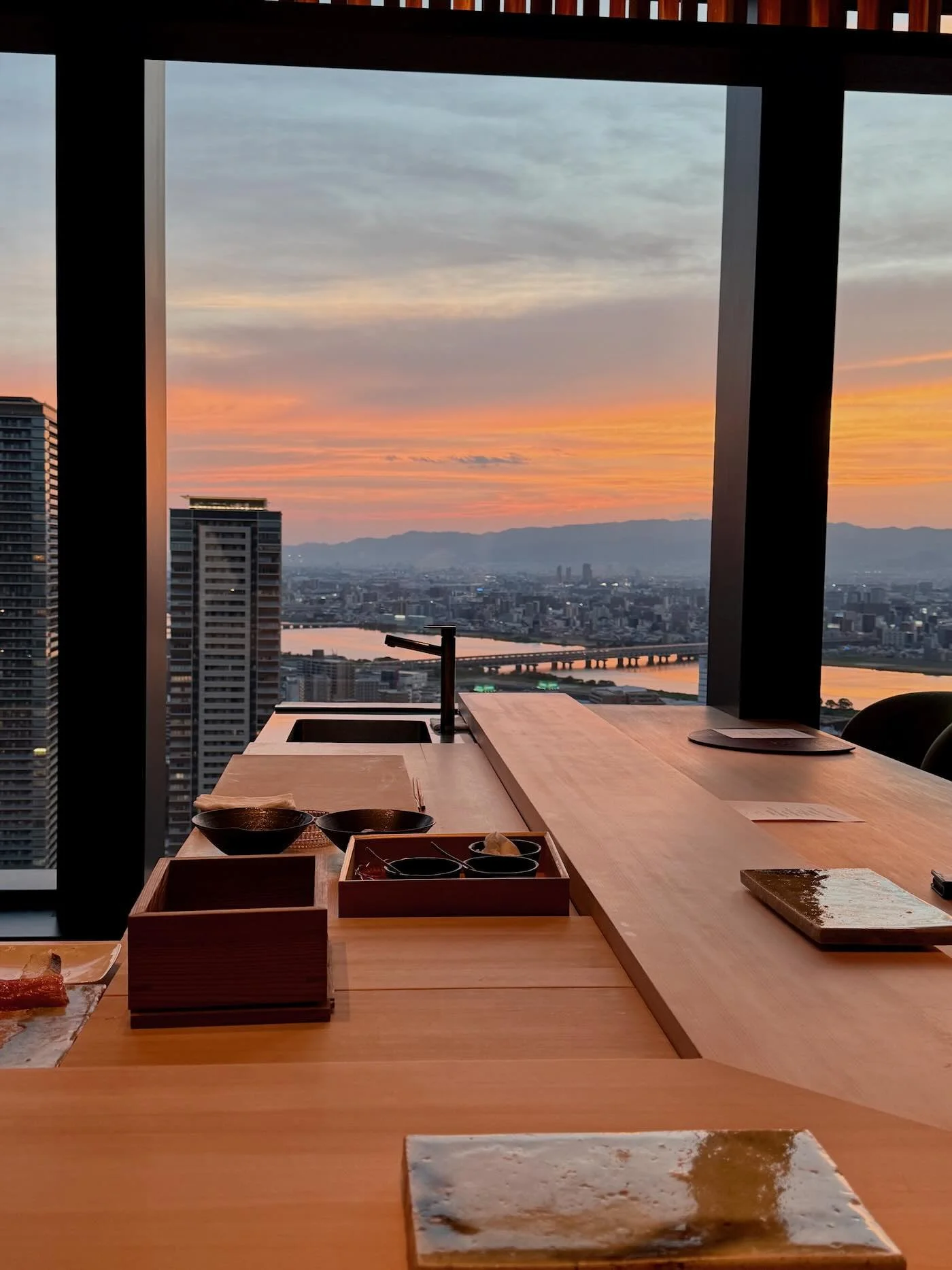
We’re glad he did, because some of the scenery we caught behind him as he worked was nothing short of breathtaking.
Mid-meal, we were pleasantly surprised to see Aki-san again. She knew we had a reservation, so she stopped by to ask us how the matcha-hunting went and how our meal was going.
In all honesty, surrounded by extremely put-together and well-dressed guests, we initially felt a little out of place. But Aki-san chatting with us somehow made us feel like we belonged there and even more welcome at that elegant sushi counter.
This was sadly the last time we saw Aki-san, but what she had waiting for us in our room after the meal was incredibly heartwarming.
When we got back, there was a brand-new box of those amazing matcha chocolates!
Not only that, but there was also a handwritten note with a beautiful montage of the cities we’d traveled to during the trip.
The crazy part? She remembered the details of all our little conversations. She brought us another box of chocolates because we’d raved about them earlier, and she remembered every city on our itinerary except Tokyo - only because we’d never mentioned it! Aki-san is the real deal, people!
We really felt quite pampered in that moment - who were we to receive such thoughtful gestures? We were only staying one night, and there was a chance Aki-san would never see us again.
Obviously, one night wasn’t enough - and, as it turns out, we’ll be returning quite soon - but wow.
Aki-san really went the extra mile for us, and I have a feeling we’ll be comparing future hotel stays to the way she took care of us.
Now, back to the meal.
We received a 30% Hilton Honors discount, and it was applied automatically without me having to mention it - a small detail that made the benefit feel even more polished.
I'm actually slightly shocked that they’d give such a steep discount. There were at least six other people eating at the counter on a weeknight, and it didn’t seem like the restaurant needed any convincing.
A Rabbit-Hole Question: Was It Worth It?
Would we go back without the discount?
That’s a little harder to answer.
We absolutely enjoyed our meal, and it was hands down the best sushi we had on this trip. We also went to an Otaru, Hokkaido-based sushi restaurant in Tokyo, had a counter-seat meal at Ginza Onodera Honten, and finally returned to our favorite conveyor-belt sushi restaurant, Kaiten Sushi Ginza Onodera Kyoto.
Japanese people often use the phrase “cospa,” short for “cost performance” - essentially, how much quality and enjoyment you’re getting for what you paid. Obviously, the higher the quality and lower the price, the better the cospa.
With that in mind, yes, this was the best sushi on this trip - but was it the best cospa sushi?
At Onodera Honten, we paid roughly 30,000 yen for the two of us, including a drink each and a few “revisited” pieces. That was a solid meal. I think the price was mostly justified, but maybe we could’ve found something just as good somewhere else for slightly less.
Tsukimi at the Waldorf, with a similar amount of food and drink, came to 50,700 yen even after the 30% discount.
The intimate atmosphere coupled with the beautiful sunset unfolding in the background was an absolute 10/10. With the higher quality came a higher price - and one that I’d struggle to justify on a repeat visit without a discount.
What’s throwing my judgment off slightly is that the very next day, we went to our favorite place: Kaiten Sushi Ginza Onodera Kyoto.
We got to pick exactly what we wanted and even found a few new favorites along the way. We ate our hearts out, and it came to roughly 8,000 yen per person with drinks - 16,000 yen total.
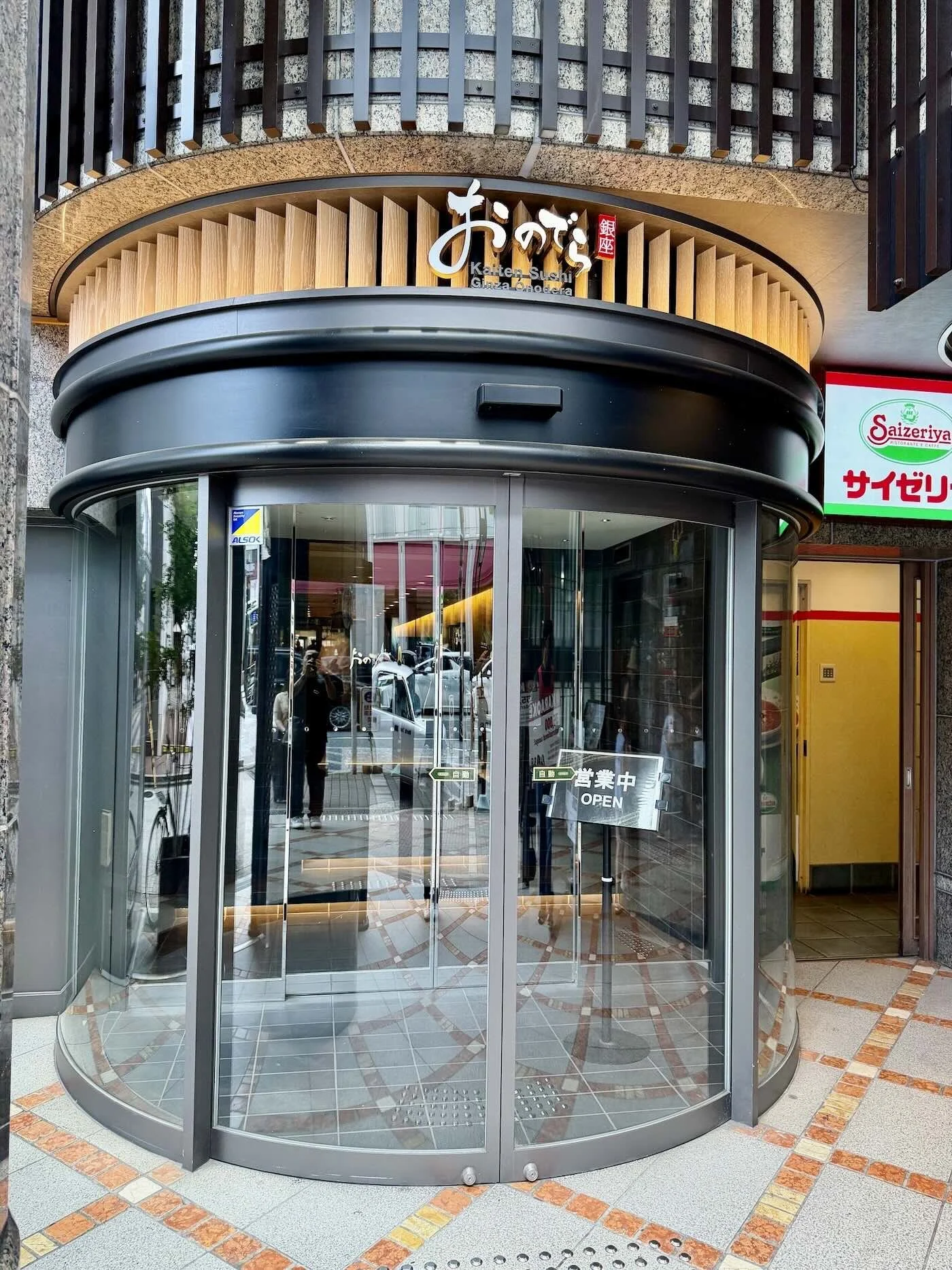
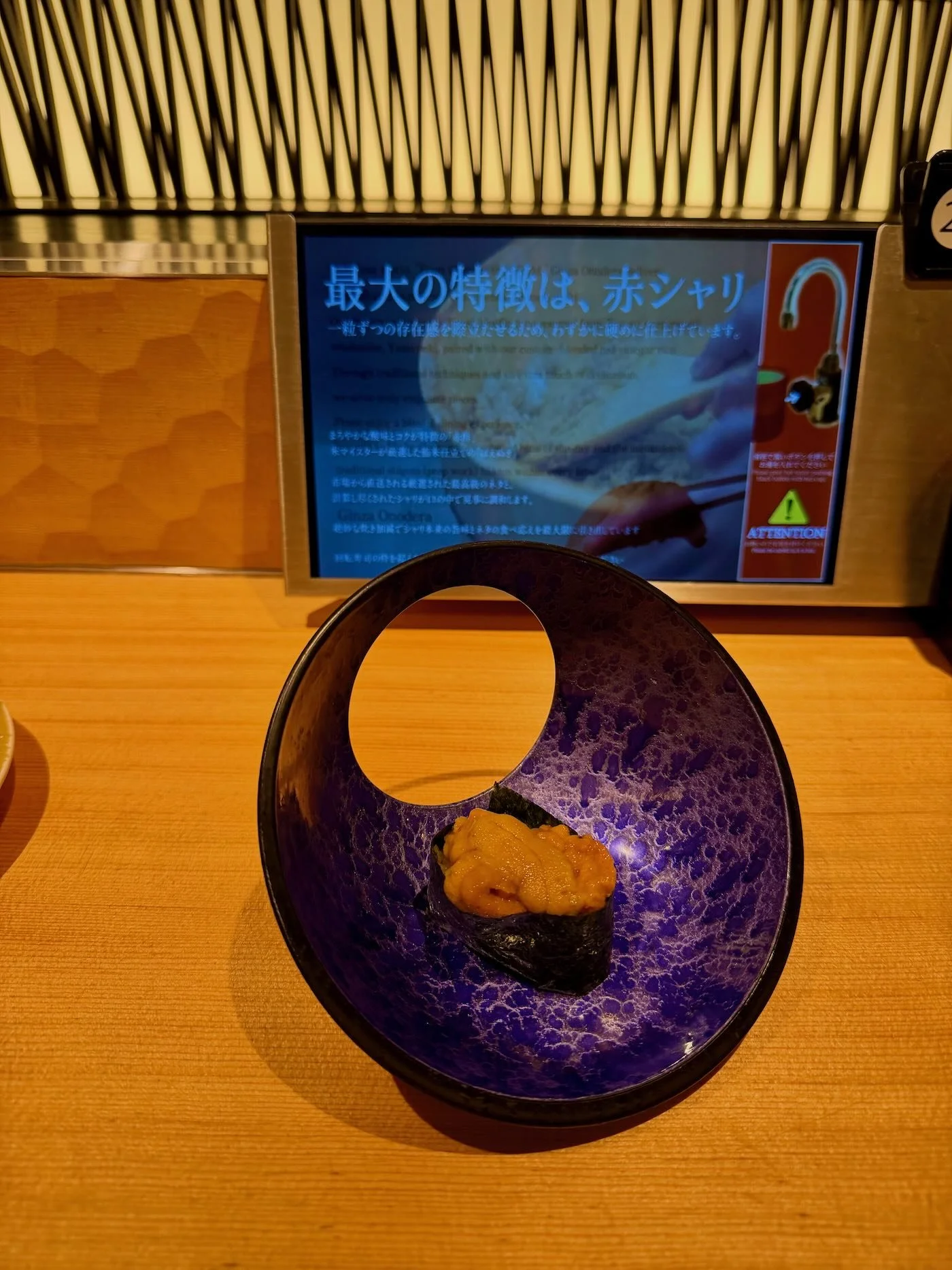
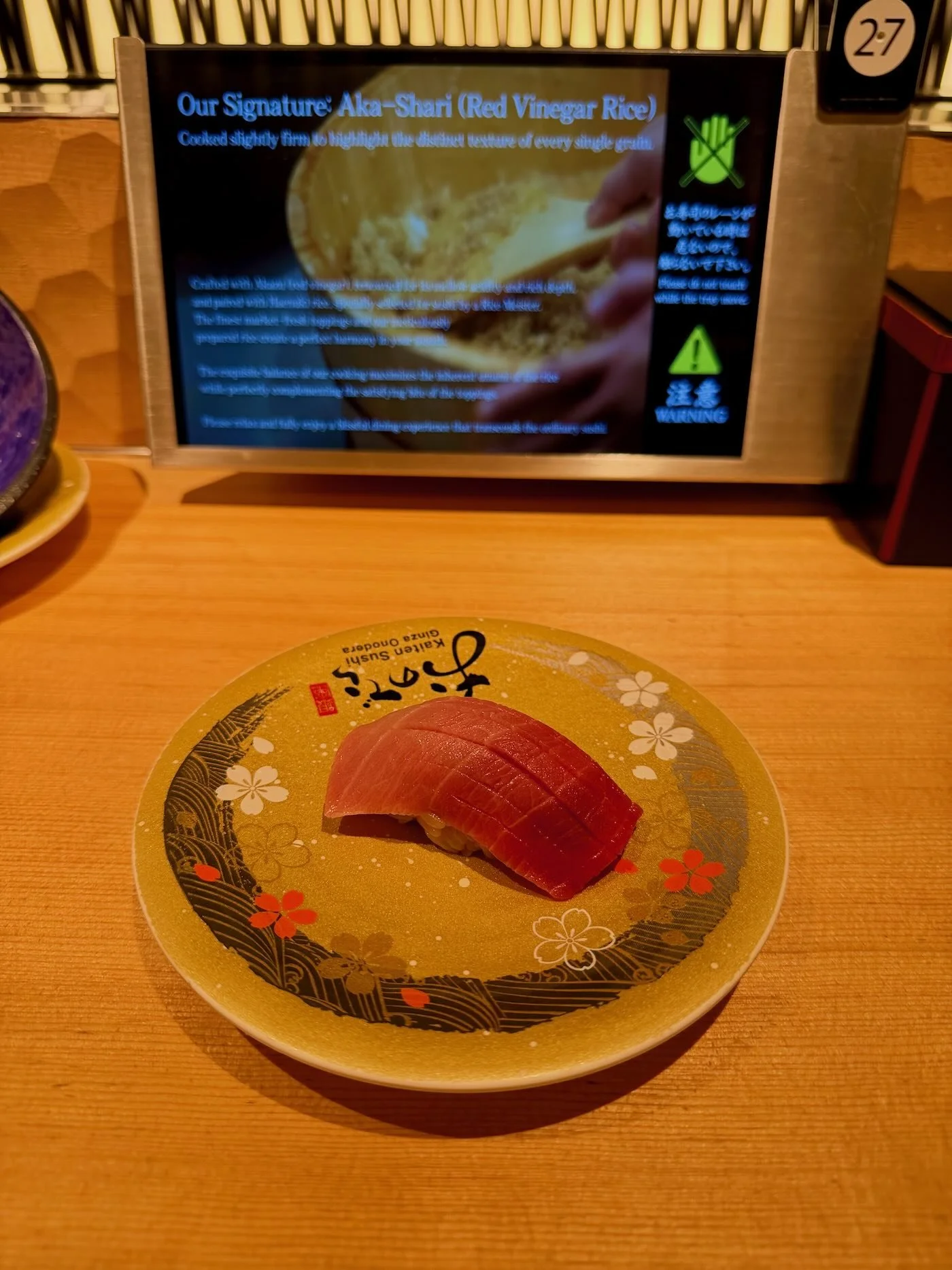
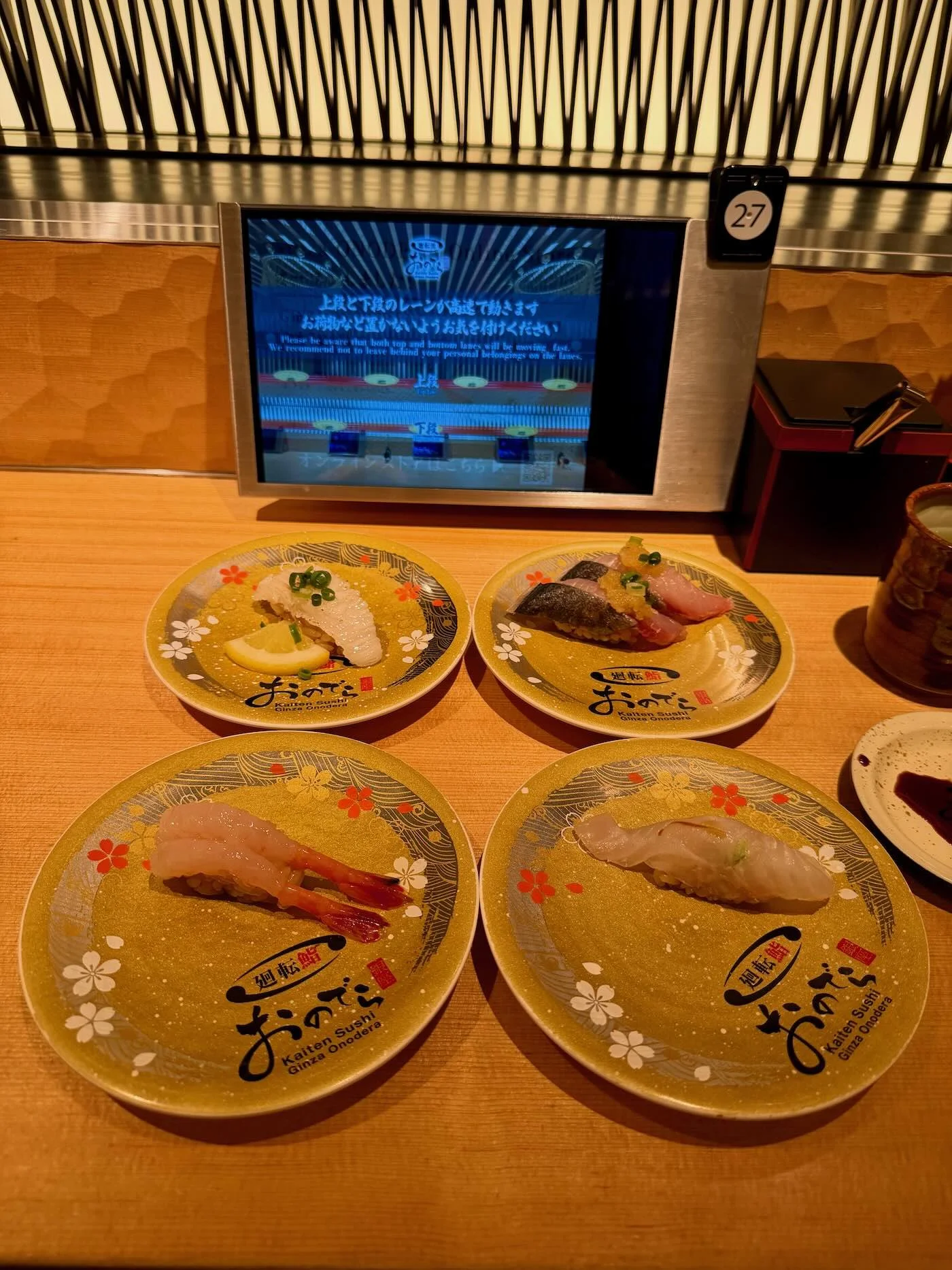
That’s still a lot to pay for kaiten sushi in Japan, but we think the quality and experience justify the cost.
What’s scary is that my level of satisfaction and happiness after eating at Tsukimi and Onodera Kyoto was fairly similar.
The photos we got to take at Tsukimi and the atmosphere were unparalleled, but in terms of pure enjoyment of the food and drinks, I wouldn’t rate the two very differently.
And maybe that boils down to the whole cospa way of thinking.
One final complication is that the most we’ve ever spent on sushi before is on an omakase at Sushi Sho at the Ritz-Carlton Residences, Waikiki Beach, led at the time by legendary sushi chef Keiji Nakazawa. (For what it’s worth, Keiji Nakazawa's Sushi Sho in New York currently offers a $450 omakase and has three Michelin stars.)
For two people, with drinks, we spent about $700 on our anniversary dinner - something we almost never do - which would equate to roughly 110,000 yen today.
Unlike Tsukimi, at Sushi Sho, there was no dramatic scenery - just pure craftsmanship. Each piece of Edomae-style sushi featured red-vinegar-seasoned rice and a finishing brush of soy glaze.
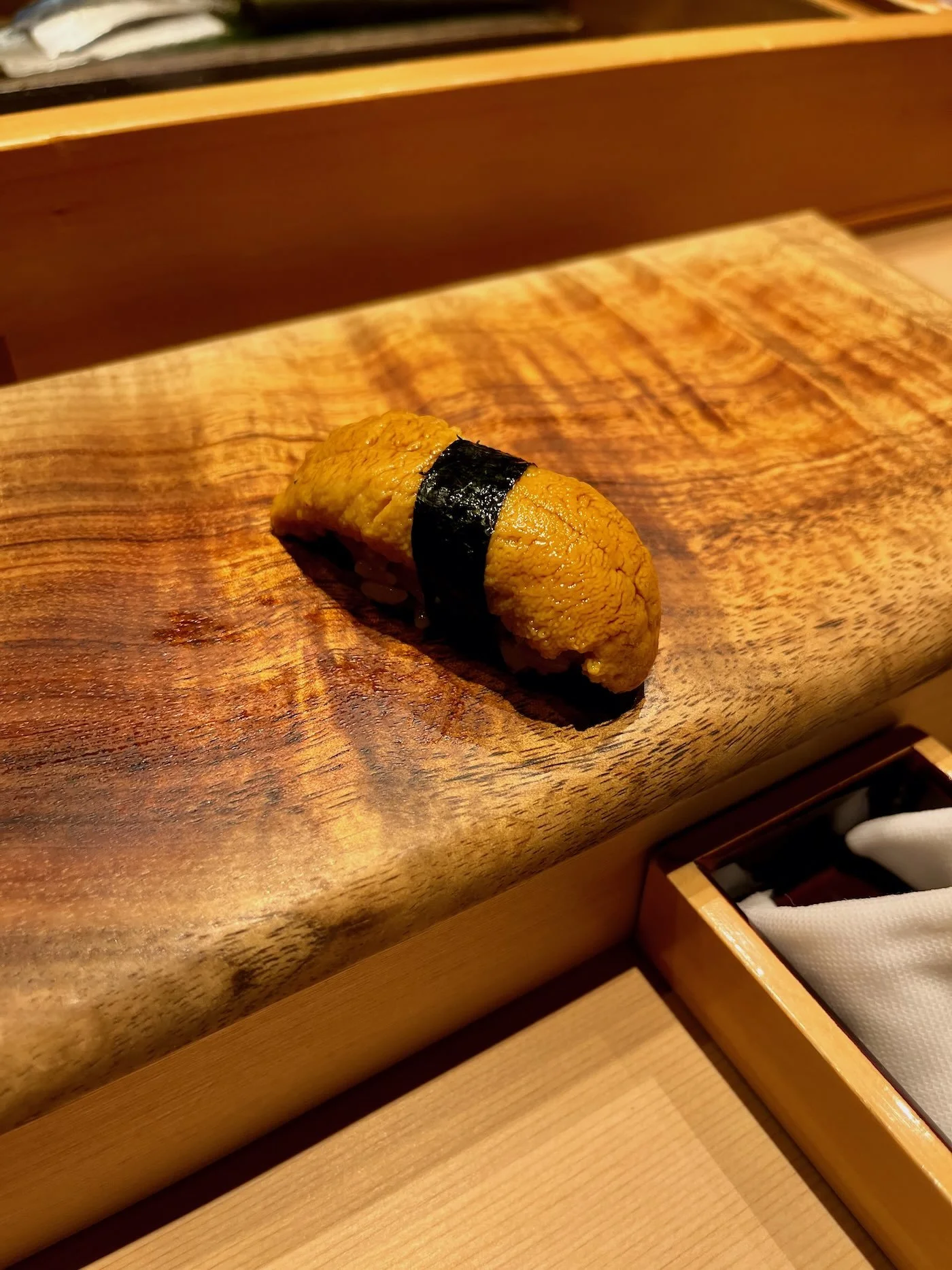
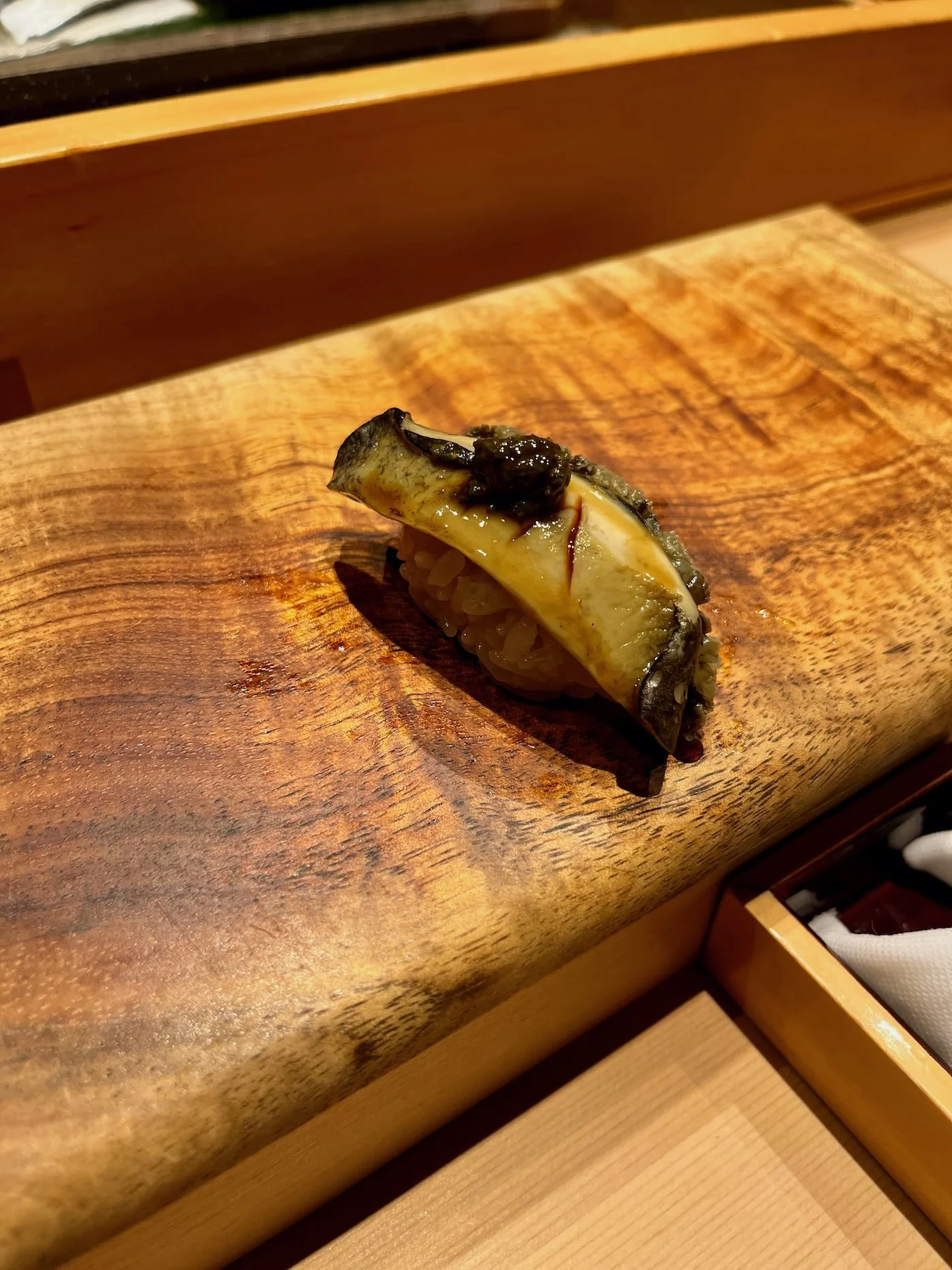
But as crazy as this sounds, if I could enjoy that omakase again, I would probably save up for that extremely special meal again.
It was, unequivocally, the best meal of my life.
So, with cospa in mind, was Sushi Sho worth it?
A resounding yes.
Was Tsukimi, at roughly half the cost of that meal, worth it?
I think so…
And this is where “worth it” gets complicated.
The sushi rabbit hole is indeed very deep, but I believe that at the end of the day, it’s what you feel and how much joy a particular meal sparks that really counts.
So, the final verdict?
For anyone visiting the Waldorf Astoria Osaka, a visit to Tsukimi is worth your while.
Whether it becomes a repeat is totally up to you and your preferences.
Amenities
I tried so hard not to look like a weirdo taking this photo from outside the pool area that the quality suffered… But you get the idea.
The Waldorf Astoria Osaka has an excellent wellness setup, and I really enjoyed the complimentary spa facilities.
The pool is immaculate - bright, polished, and framed by brilliant city views. More importantly, it was wonderfully quiet during our visit. There were hardly any other guests around, which made the whole experience feel even more relaxing.
The dry sauna and steam room were also excellent, and it became a very nice way to wind down at the end of the day.
There was, however, one tragic omission.
No cold plunge.
For most people, that probably won't matter at all. For me, it does. I really like alternating between the sauna and cold water, and without that reset, I find it harder to do multiple sauna rounds.
That’s probably the biggest reason I didn’t spend as much time in the wellness area as I did at Park Hyatt Tokyo. The Waldorf’s facilities are every bit as polished and beautifully maintained, but Park Hyatt Tokyo feels a little more indulgent to me - especially with the cold plunge and the small extras like snacks and nicer drink options around the pool and spa area.
Still, I’m being very picky here.
The Waldorf’s pool and sauna are a serious operation, and I’d happily use them again. If you don’t care about cold plunges nearly as much as I do, you will be just fine.
Breakfast - Good, But Not Memorable
But… it looks so perfect.
Breakfast was probably the one part of our stay that felt merely good rather than exceptional.
The food quality was high overall, and we enjoyed the meal just fine. My espresso drink was excellent, the pastries were nicely done, and there was plenty to choose from.
But nothing really wowed us.
Part of the problem may have been our expectations. By this point, nearly everything else at the Waldorf had been so polished and memorable that a perfectly good breakfast somehow felt a little underwhelming.
Please don’t look at that sad piece of pineapple on my small plate! That’s literally all I found on my first fruit expedition.
The buffet also felt slightly caught between Japanese and Western breakfast styles without either side standing out quite as much as I hoped. And surprisingly, I didn’t find much seasonal fruit that I particularly cared for - the fruit spread actually looked kind of sad.
The Osaka Station Hotel has completely ruined me in that department.
That remains my gold standard for hotel buffet fruit - all-you-can-eat mangoes, melons, strawberries, grapes, and other expensive fruit that I would happily make an entire breakfast out of.
So yes, Waldorf Astoria Osaka breakfast was good.
Even though breakfast was included for us through Hilton Honors Gold status, and I should never complain about free food, it just wasn’t one of those breakfasts I’d wake up excited to eat again.
But take this with a grain of salt. We only had one breakfast there, and I’m sure there were things on the menu we missed. Maybe I just wasn’t in the mood for bread that morning, when in fact the pastries were where the real highlights were hiding.
Heck, someone next to us could've been having the time of their lives with all the varieties of pastries there.
Who really knows?
You'll just have to go taste it for yourself.
Points, Cash, and How I’d Book It Next Time
For our stay, we used 120k Hilton points for the night.
That wasn’t necessarily because it was the absolute best use of Hilton points available to us. We had a Free Night Reward as well, but we chose to use that at Sowaka Kyoto, where our night was priced at 150k points.
The standard cash rate at the Waldorf was roughly $500 for our date. We were upgraded, so the room we actually received would’ve been closer to about $575.
Given those numbers, a Hilton Free Night Reward is probably my favorite way to book this hotel when one is available.
And that is exactly what we’re hoping to do when we return in January.
We’d gladly stay more than one night next time, but we only have three nights in Osaka planned - and I just booked one of those at the Osaka Station Hotel with Specialty Salon access as a bit of a sanity check.
I need to know whether that lounge is really as absurd as I remember.
Apparently, I’m not alone. Ben Schlappig of One Mile at a Time recently called the Specialty Salon one of the best hotel club lounges he’s ever visited, highlighting things like all-day Laurent-Perrier Champagne, afternoon tea, caviar, and made-to-order beef and lobster in the evening. And I respect his taste, as a long-time fan and reader of his blog.
So, realistically, another one-night Waldorf stay is probably all we can squeeze in.
For anyone else, though, I think two nights or more would be the sweet spot.
One night is absolutely enough to experience the hotel - and you’ll be very well taken care of.
The danger is that one night may only make you want another.
One Last Surprise on the Way Out
When it was time to check out, I split some of the room charges between Cory’s and my American Express Platinum Business cards so we could use our quarterly $50 Hilton credits. The front desk agent very graciously processed everything for me without any fuss.
Then we explained where we were headed next and asked if she could call us a taxi.
She didn’t mention anything unusual. She simply told us that our ride would be prepared downstairs, gave us a courteous smile and bow, and sent us on our way.
We had absolutely no idea what was waiting for us.
Down on the first floor, we finally got a better look at the hotel’s actual entrance. A large family with children was climbing into a very nice luxury SUV, and nearby, a Mercedes-Maybach sat with its doors open.
I remember looking at it and thinking, yeah, well, that’s the kind of clientele who actually stay here on cash.
Meanwhile, I was waiting for someone to point us toward our taxi.
Instead, an Italian gentleman took our luggage and started walking directly toward the Maybach.
For a second, I almost said, I think you have the wrong people.
And then it hit me.
At the Conrad Osaka, the hotel’s “company car” - a Lamborghini Urus - had unexpectedly driven us all the way to Itami Airport for free.
Apparently Osaka luxury hotels have decided that this is something we should get used to.
Either it’s Osaka, Italian hospitality, or a new luxury trend.
Or all three.
Whatever it was, thank you.
Sadly, the Maybach ride was much too short to fully enjoy. Cory was still trying to figure out how to turn on the massage function when we were practically there.
I mean, should I add a new profile? Should I??
But the most helpful part actually came afterward.
We were heading to Kyoto for our final two nights and needed the Hankyu line, not Osaka Station or a JR train. With medium-sized luggage, we were especially interested in avoiding unnecessary stairs and complicated station entrances.
Our driver understood immediately.
Instead of simply dropping us off and leaving us to figure it out, he showed us the route he personally takes to work every day - a shortcut that brought us much closer to the right entrance with very few stairs.
The juxtaposition of the glamorous Mercedes, the suited gentleman, and the narrow shortcut he showed us still makes me laugh a little. Here was someone working for arguably one of the best hotels in Osaka, yet the interaction felt completely human and unpretentious. He wasn’t just performing luxury service - he was showing us the same practical route he takes to work every day. I really appreciated that.
And his route saved us a surprising amount of hassle.
And somehow, that felt like the perfect ending to our stay.
Even after we had checked out, handed over our keys, and technically stopped being guests, the Waldorf Astoria was still finding ways to put a smile on our faces.
Final Verdict
The Waldorf Astoria Osaka is for anyone who wants to feel genuinely special.
What impressed me most is that this never felt like empty luxury. Despite being a large hotel, the service still felt personal, thoughtful, and remarkably consistent.
We would return in a heartbeat - and, in fact, we’re already planning to.
The points cost is certainly high, but I think this is one of those hotels where the points feel well spent. Cash rates can also be surprisingly reasonable for this level of luxury. In my own searches, comparable hotels in Kyoto or Tokyo often cost considerably more, so if the Waldorf falls within your budget, I think it’s an especially compelling splurge.
Relative to some of our favorite hotels in Japan - Park Hyatt Kyoto, Park Hyatt Tokyo, Ritz-Carlton Kyoto, and Andaz Tokyo - the Waldorf fits comfortably into that group. They all have very distinct identities and appeal, but the Waldorf holds its own among them.
If anything, its defining quality is how thoroughly it takes care of you.
From Aki-san checking in on us throughout the stay, to the handwritten note and chocolates waiting in our room, to the surprise Maybach ride and the driver showing us his own shortcut to the station, the hotel kept finding ways to make us feel looked after.
That’s what I’ll remember most.
And if you’re looking for a hotel in Osaka that will give your trip a little extra spark, this is the one I’d be most excited to recommend.
They’ll take it upon themselves to pamper you until you forget you ever had it any other way.
Continue Your Journey
How Many Hilton Points Do You Need for a Japan Trip? Budget-Friendly vs. High-End Award Stays
The Ritz-Carlton Kyoto: The Hotel That Changed How We See Luxury in Japan
The Framework I Use to Plan Every Japan Trip With Points - Part 2: Hotels
Four Luxury Hotels in Tokyo - What They Taught Me About Choosing the Right One
